 Keji Mustapha
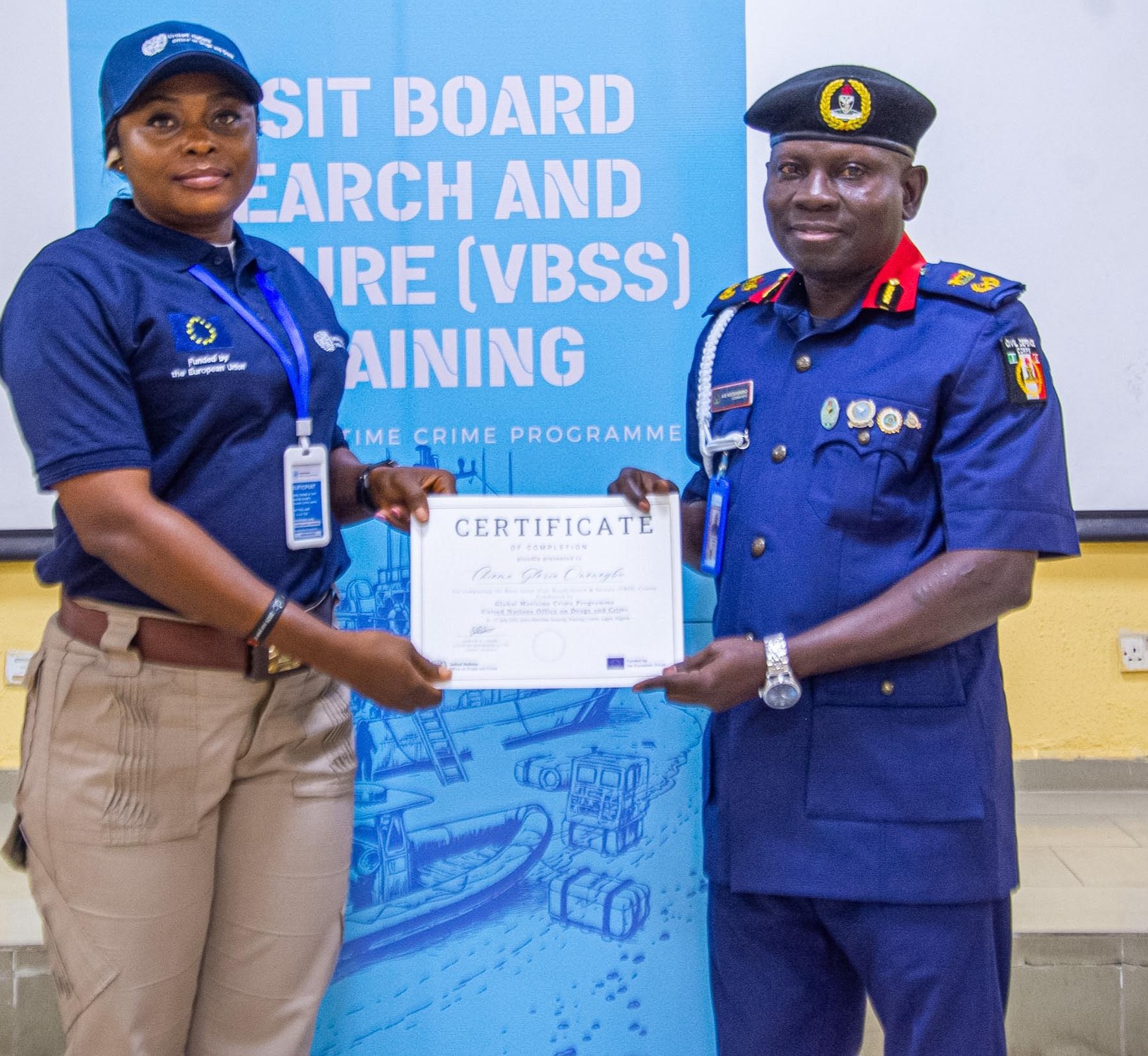
Pix:Assistant Commander of Corps, Onoja John Attah
By Isiaka Mustapha, Editor-In-Chief, People’s Security Monitor
Across Nigeria’s mineral-rich regions, a growing crisis is unfolding. From Zamfara’s gold fields to Kogi’s lithium deposits, illegal mining syndicates are plundering the nation’s resources, degrading the environment, and fueling insecurity in rural communities. The rise in unlawful mining has become a major national concern, posing serious threats to economic stability, environmental safety, and community peace across the country.
In response, the Federal Government created the NSCDCSpecial Mining Marshals, a dedicated strike force under the Nigeria Security and Civil Defence Corps (NSCDC) tasked with reclaiming the nation’s solid mineral assets from the grip of lawless operators.
Launched in early 2024 under the guidance of Dr Dele Alake, Minister of Solid Minerals Development, and Professor Ahmed Abubakar Audi, the Commandant General of NSCDC, the initiative represented a bold step toward protecting one of the country’s most valuable sectors.
Yet, as the scope of the problem widens, it has become increasingly clear that the current manpower of the Special Mining Marshals is insufficient. Reports of illegal operations continue to surface across multiple states, with criminal groups often armed, organized, and emboldened. If Nigeria must win this war, security experts argue, the Marshals must be urgently expanded, retrained, and re-equipped to match the sophistication of their adversaries.
The early successes of the Marshals demonstrate what the unit can achieve when properly supported. Working closely with the Ministry of Solid Minerals and the Nigerian Army, the NSCDC has recorded significant breakthroughs in dismantling illegal operations, neutralizing criminal networks, and restoring government presence in long-abandoned mining zones.
At the forefront of this evolving campaign stands Assistant Commander of Corps, Onoja John Attah, the officer entrusted with leading the Mining Marshals. His appointment brought structure, discipline, and a sense of mission to the fledgling force. Under his command, the Marshals have transformed from a symbolic unit into a dynamic security formation operating in some of Nigeria’s most hostile terrains.
Colleagues describe ACC Attah as an unflinching field commander, analytical yet fearless, methodical yet compassionate. He has built a reputation for being a patriot willing to face life-threatening situations in defense of national interest. “Illegal mining is not just an economic crime; it is a war against our sovereignty,” Attah once remarked during a field inspection in Nasarawa State. His words echo the deep conviction that drives his service.
Despite limited resources, Attah’s leadership has produced tangible results. His men have conducted coordinated raids, recovered weapons, seized stolen minerals, and arrested key figures behind illegal operations. Still, the demand for manpower and logistics far outweighs the unit’s current capacity. Many mining zones remain unsecured, leaving vast stretches of mineral-rich land exposed to criminal exploitation.
This underscores the urgent need to strenthening the ranks of the NSCDC Special Mining Marshals. Expanding their numbers and training new recruits would not only increase operational reach but also deepen intelligence capacity. It would enable the NSCDC to establish permanent surveillance in vulnerable regions, coordinate more effectively with local governments, and sustain pressure on the illicit mining economy.
Rigorous training remains central to this vision. Every new operative must undergo advanced tactical instruction from intelligence gathering and surveillance technology to community engagement and environmental protection. The goal is not just to enforce the law but to build a corps of professionals who understand both the security and socio-economic dimensions of mining governance.
Under the guidance of Professor Audi, the NSCDC has already introduced specialized programmes in logistics management, field operations, and intelligence-led enforcement. Expanding these efforts will ensure that every new officer is battle-ready, disciplined, and capable of handling the high-risk nature of the assignment. With the right investment, the Special Mining Marshals could evolve into one of Nigeria’s most effective internal security assets.
For ACC Onoja John Attah, this expansion is not merely a bureaucratic necessity; it’s a matter of national urgency. He understands the stakes better than anyone ranging from the dangers his men face daily, the power of illegal networks, and the devastating human cost of leaving mining zones unprotected. His leadership reflects a rare blend of patriotism and pragmatism such are the qualities that have earned him deep respect across the Corps.
In a nation often tested by corruption and indifference, Attah’s courage stands out. Colleagues describe how he leads from the frontlines, personally overseeing operations that most would consider too risky. His example has inspired a new generation of officers who see in him the embodiment of duty and sacrifice. Most times, he stands with his men in the dust and danger, experiencing the brunt and pains of service to the nation.
The NSCDC leadership has been unwavering in its support for Attah’s vision. Professor Audi has consistently emphasized the need for collaboration between security agencies, the Ministry of Solid Minerals, and local communities. His reforms within the Corps have prioritized professionalism, intelligence gathering, and community relations, the same principles guiding the Mining Marshals’ operations.
But the mission ahead demands even greater commitment. Expanding the Marshals means more than adding boots on the ground; it means building an institution capable of sustaining peace and economic recovery in Nigeria’s mining zones. It requires strategic funding, modern equipment, and the political will to confront vested interests benefitting from illegal mining.
As the illegal mining crisis continues to evolve, time is running out. The cost of inaction in lost revenue, insecurity, and environmental ruin grows heavier each day. Strengthening the Special Mining Marshals is no longer optional; it is essential for safeguarding the nation’s future.
For now, men like ACC Onoja John Attah continue to hold the line, operating in dangerous silence, far from the spotlight. Their courage serves as a reminder that Nigeria’s mineral wealth is more than just a resource; it is a heritage worth defending, a promise worth fighting for, and a cause that demands a stronger, better-equipped force to protect it.