 Keji Mustapha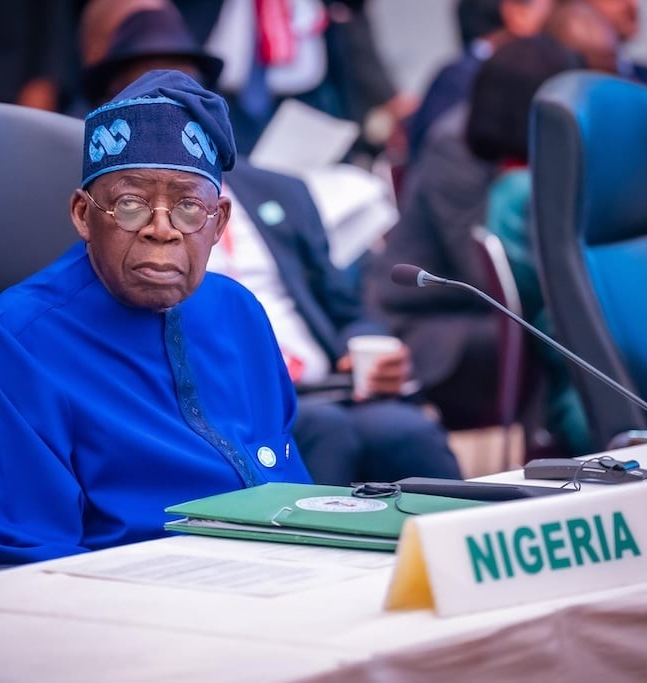
Lawmakers, religious leaders, officials from the United States Department of State and invited witnesses disagreed sharply on Thursday as the United States House Foreign Affairs Subcommittee on Africa held a public hearing on President Donald Trump’s decision to redesignate Nigeria as a Country of Particular Concern over alleged genocide against Christians.
Trump had earlier warned that the United States military could intervene in Nigeria “guns blazing” to eliminate what he described as Islamic terrorists responsible for widespread atrocities.
The hearing, chaired by Congressman Chris Smith, examined the scale of religious persecution in Nigeria as well as possible responses such as targeted sanctions, humanitarian support and deeper cooperation with Nigerian authorities to stem the rising violence.
Those who first appeared before the lawmakers included Jonathan Pratt, Senior Bureau Official for African Affairs, and Jacob McGee, Deputy Assistant Secretary in the Bureau of Democracy, Human Rights and Labour. The second panel included Nina Shea from the Centre for Religious Freedom, Bishop Wilfred Anagbe of the Makurdi Catholic Diocese and Oge Onubogu of the Centre for Strategic and International Studies.
Chairman Smith opened the hearing by stating that Nigeria accounts for an overwhelming majority of Christian martyrdom worldwide, claiming that 89 percent of all Christians killed globally were murdered in Nigeria and that more than 52,000 Christians had been slaughtered since 2009. He accused militant Fulani herdsmen of engaging in rape, kidnapping and murder with complete impunity and insisted that the attacks were clearly driven by religious motives. He criticised the previous United States administration for removing Nigeria from the Country of Particular Concern list despite recommendations urging otherwise and vowed that the United States would continue to push for justice.
Jonathan Pratt told lawmakers that the United States was increasingly concerned about the expanding activities of extremist groups including Boko Haram, ISIS West Africa, ISIS Sahel, the Al Qaeda linked group Ansaru and Lakurawa. He noted that violence was spreading beyond the North East into Nigeria’s Middle Belt and that many of the attacks deliberately targeted Christian communities. He said the pattern of violence reflected what he described as a failure of prioritisation by the Nigerian government. While acknowledging the heavy losses suffered by Nigerian security forces in the North East, Pratt stressed that far more needed to be done to protect vulnerable communities and bring offenders to justice.
He added that the United States expected Nigeria to place the protection of Christians at the top of its security priorities, particularly in the Middle Belt. He revealed that the Trump administration was developing a strategy involving the State Department, the Treasury and possibly the Department of War to pressure Nigeria into improving security and strengthening religious freedom protections.
Some lawmakers supported the CPC designation strongly. Representative John James described Nigeria as facing one of the most severe religious freedom crises in the world and pointed to the killing of nearly 17000 Christians since 2019. He linked the violence to political repression and weakening institutions, citing the prolonged detention of Nnamdi Kanu despite court rulings ordering his release. James questioned Nigeria’s commitment to enforcing the rule of law and said that Christians were living under constant fear while extremist groups operated without meaningful government intervention.
Responding to questions, Jonathan Pratt rejected claims that jihadists had infiltrated the Nigerian government but confirmed that Nigeria had taken the designation seriously. He said a senior Nigerian delegation was already in Washington to hold high level meetings and that initial signs of cooperation were positive.
Representative Bill Huizenga criticised the administration of President Bola Tinubu for what he described as continued attacks by radicalised Islamists against Christians. He accused both Congress and the media of downplaying the scale of religiously linked violence in Nigeria and argued that Christians, moderate Muslims and other victims of extremist attacks were not receiving adequate protection. He also raised concerns about the level of United States humanitarian assistance to displaced persons in Benue and Taraba, noting that Benue alone had an estimated 1.4 million displaced people.
Representative Johnny Olszewski expressed deep concern over what he described as Nigeria’s inability to defend communities from violent extremist groups. He stated that although the Nigerian government lacked the means to stop indiscriminate killings, it remained fully responsible for protecting its citizens. He added that both Muslims and Christians had suffered for far too long under the threat posed by Boko Haram and ISIS West Africa.
The hearing concluded with lawmakers sharply divided. While some insisted that Nigeria was experiencing a form of religious genocide that required urgent and forceful United States intervention, others called for a more measured approach focused on collaboration, fact finding and constructive engagement.