 Keji Mustapha
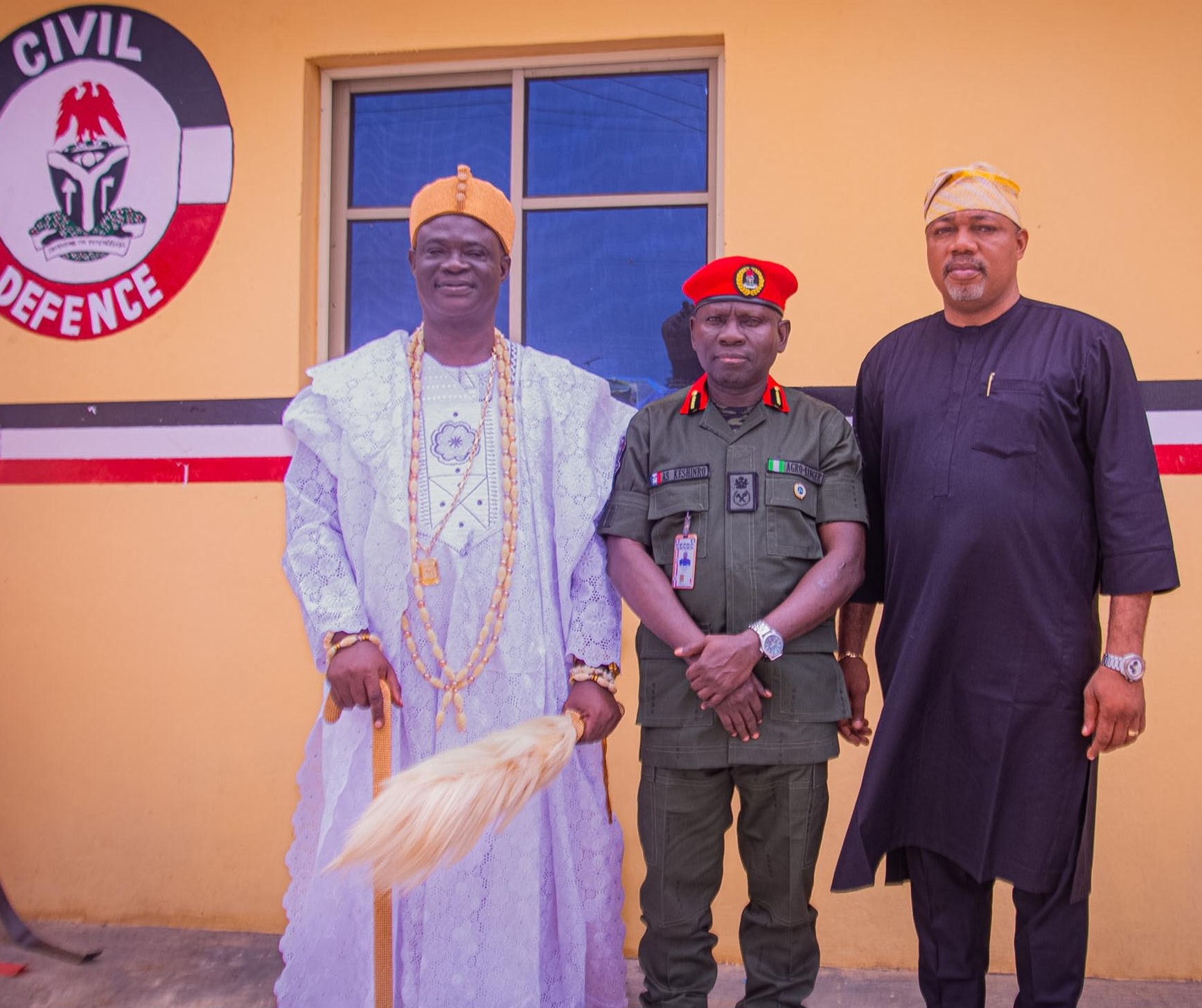
Pix: Commandant Bala Bawa Bodinga
By Isiaka Mustapha, Editor-In-Chief, People’s Security Monitor
The appointment of Commandant Bala Bawa Bodinga to head the Kano State Command of the Nigeria Security and Civil Defence Corps stands out as one of the most strategic and well-considered decisions under the reformist leadership of the Commandant General, Professor Ahmed Abubakar Audi. Kano is far from an ordinary state; it is Nigeria’s largest commercial hub, home to sprawling industries, mega markets, a metropolitan population of over 4.6 million, and a political vibrancy that has long influenced the national landscape. Leading such a complex environment requires a commandant who is not only operationally competent but also experienced, disciplined, people-focused, and firmly aligned with national reforms. In Bala Bodinga, the NSCDC has found exactly that kind of leader.
Tracing Bodinga’s career reveals the profile of a consummate professional who has risen through the ranks by proving himself at every turn. He is not a stranger to complex environments, nor is he untested in the field. His tenure in Jigawa State, where he assumed command in May 2025, remains a reference point for how leadership can transform a command in a short time. Within his first 100 days, Bodinga launched decisive anti-vandalism campaigns, strengthened inter-agency cooperation, restructured intelligence gathering mechanisms, and above all placed a strong premium on personnel welfare. His decision to provide ₦900,000 to the family of a slain officer underscored his belief that the men and women who serve must be supported, valued, and motivated. That singular act, coupled with other welfare initiatives, boosted morale and restored confidence among officers, earning him widespread respect within and outside the Corps.
Beyond welfare, Bodinga demonstrated in Jigawa an ability to balance firmness with community engagement. He understood that security in Nigeria’s northern states cannot be sustained without community buy-in, so he engaged traditional institutions, market leaders, and civic groups, ensuring that local intelligence networks were not only activated but trusted. The results spoke for themselves: improved operational effectiveness, reduced incidents of illegal mining and vandalism, and strengthened cooperation with other security agencies. These achievements did not come by chance; they reflected his qualities of discipline, accountability, and his rare ability to blend strategic planning with ground-level execution.
The complexities of Kano magnify the importance of these qualities. Kano is home to some of Africa’s largest markets, including Sabon Gari and Dawanau, which drive commerce across the Sahel region. Its industrial estates, power facilities, and transport corridors are high-value targets for vandalism and sabotage. Its dense urban population, vibrant political culture, and diverse ethno-religious makeup create a security landscape that is as delicate as it is challenging. A misstep can have ripple effects far beyond the state. This is why Professor Audi’s choice of Bala Bodinga is more than a routine deployment; it is a strategic match between the demands of Kano and the professional profile of a commandant who has proven he can deliver under pressure.
What stands Bodinga out is not just his record of results, but the professional qualities he embodies. He is quick to mobilize, decisive in response, and deliberate in planning. His leadership style is inclusive, but he maintains discipline and accountability at all times. He is welfare-conscious without compromising on standards. He is a strategist who values intelligence-led operations, and he has shown a keen understanding of how to navigate Nigeria’s political and cultural complexities without allowing politics to weaken operational effectiveness. These are the exact qualities Kano requires: a commandant who can balance firmness with diplomacy, operational toughness with community trust, and immediate responses with long-term reforms.
Professor Audi’s reforms at the national level emphasize modernization, intelligence-driven operations, and a strong welfare base for personnel. Deploying Bodinga to Kano reflects this alignment of talent and strategy. The Commandant General has chosen a commandant who not only understands the reform agenda but has already been implementing it successfully at the state level. It is therefore no surprise that upon assuming duty in Kano, Bodinga wasted no time in ordering 24-hour patrols and asset protection measures, sending a clear signal that deterrence, visibility, and proactive engagement will define his tenure.
The appointment of Bala Bawa Bodinga as Kano Commandant of the NSCDC is thus best understood as a strategic intervention, not a routine posting. It reflects an awareness of Kano’s pivotal role in Nigeria’s economy, politics, and social life, and a recognition that only a tested, welfare-driven, and community-savvy commandant can succeed there. Bodinga has proven in Jigawa that he can achieve visible reforms in record time. He has shown the courage to confront criminality head-on, the empathy to care for his personnel, and the wisdom to engage communities. Kano needs such leadership now more than ever, and in him the NSCDC has deployed its best hand for the job.