 Keji Mustapha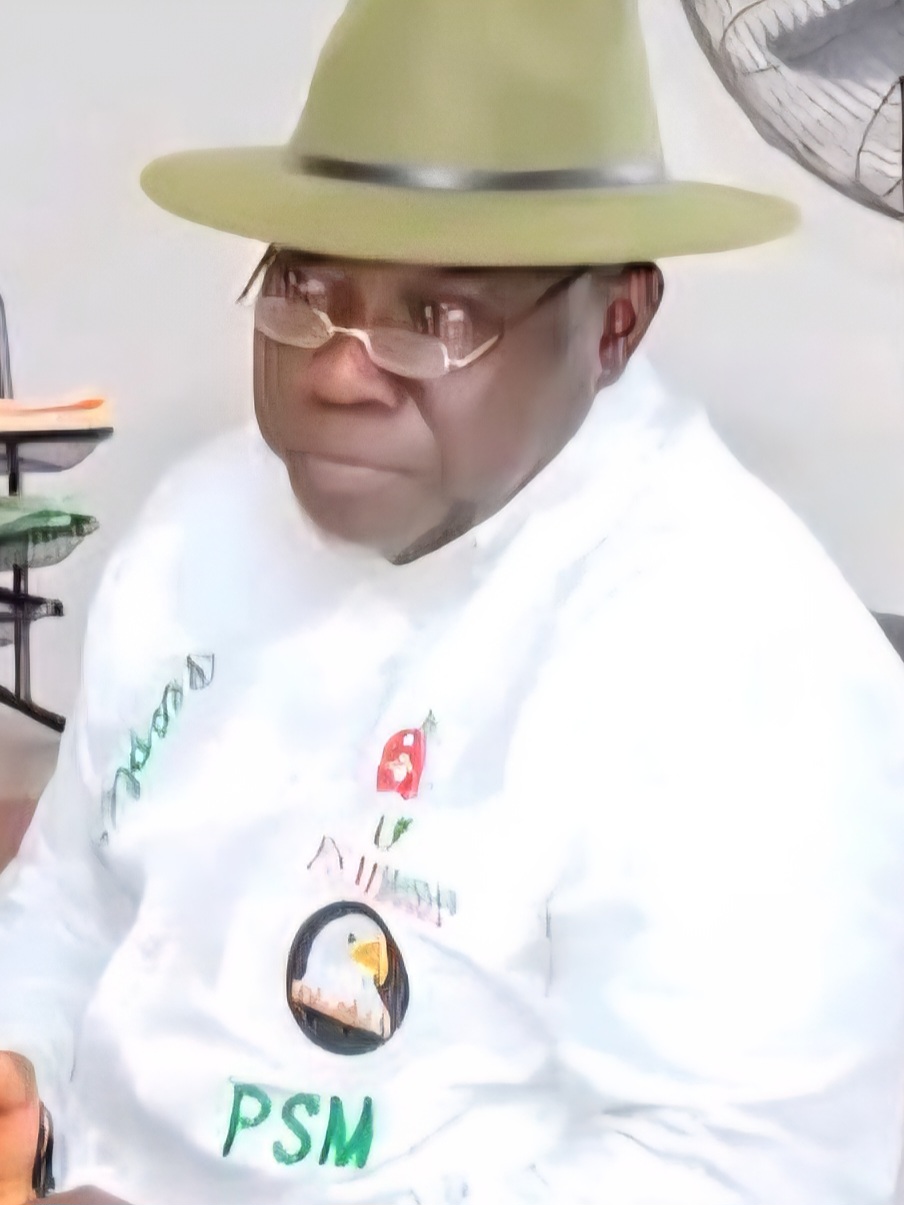
LET NIGERIANS RECORD: THE CAMERA IS THE CITIZEN’S WITNESS
By lsiaka Mustapha, Editor-in-Chief, People’s Security Monitor
The controversy over Nigerians recording police officers in public should not be allowed to obscure the most important issue at stake: the ordinary Nigerian has a legitimate right to document the conduct of public officials performing public duties. In a country where many citizens may find themselves in difficult encounters with law enforcement, a mobile phone camera can provide something extremely valuable: an independent record of what actually happened.
The clarification credited to Inspector General of Police, Olatunji Disu, that the Nigeria Police Force has not banned citizens from recording officers performing their duties in public is therefore welcome. The IGP’s concern, as publicly reported, is directed at indiscriminate filming, harassment, provocation and the use of police encounters as entertainment or social media skits. That is a legitimate concern. But it must never be allowed to create uncertainty about the lawful right of Nigerians to document police activities carried out openly in public places.
For the ordinary Nigerian, this distinction matters enormously. The average citizen does not possess the institutional power of the police. A police officer has a uniform, official identification, access to weapons and the authority of the state behind him. The ordinary citizen has little more than his voice, his legal rights and, increasingly, the camera on his mobile phone. When there is a dispute between a powerful public institution and an individual citizen, evidence can make the difference between justice and injustice.
This is why the Federal High Court judgment in Maxwell Nosakhare Uwaifo v. Inspector General of Police & Others, Suit No. FHC/WR/CS/87/2025, is significant. The judgment delivered on March 17, 2026, affirmed the right of citizens to record police officers carrying out law enforcement duties in public. The decision sends an important message: the fact that a citizen is recording a police operation does not, by itself, make that citizen a criminal, an enemy of the police or a threat to national security.
For decades, Nigerians have often faced situations in which the word of a citizen is set against that of a uniformed officer. Sometimes the officer may be right; sometimes the citizen may be right. Without evidence, determining the truth can become extremely difficult. A properly preserved video can change that equation. It can reveal what was said, what was done, who acted first, whether force was used and whether the conduct of either party was reasonable. In this sense, a mobile phone camera can become a poor man’s courtroom witness.
That reality should not frighten a professional police force. In fact, it should strengthen one. An officer who knows that his conduct may be recorded is encouraged to conduct himself professionally. Equally, an officer wrongly accused of misconduct can use the same recording to establish his innocence. The camera is therefore not inherently anti police. It is anti falsehood. It can expose a bad officer and defend a good one.
There is, however, an important boundary that citizens themselves must respect. The right to record should not be confused with the right to obstruct. A Nigerian who stands at a reasonable distance and records a police operation should not be treated in the same manner as someone who physically interferes with an arrest, obstructs an investigation, enters a restricted security area or deliberately puts lives at risk. The right to record protects observation; it does not provide immunity for obstruction or other unlawful conduct.
The same principle applies to police officers. Being recorded is not the same as being harassed. A citizen who calmly records an encounter is exercising a fundamentally different form of conduct from someone who follows an officer around, insults him, pushes a camera into his face or deliberately provokes him in the hope of producing a viral confrontation. Such behaviour may be irresponsible, but it should not be used as a justification for restricting the legitimate right of millions of ordinary Nigerians to document public policing.
Nigeria should be particularly careful because of its history of public distrust in some aspects of law enforcement. Where citizens already feel vulnerable during encounters with security personnel, any suggestion that recording police officers is prohibited could produce fear and confusion. A citizen who believes that reaching for a mobile phone camera could result in arrest may simply remain silent even when witnessing conduct that deserves investigation. That would be a dangerous consequence for accountability.
The international experience reinforces the importance of citizen generated evidence. In the United States, the 1991 recording of the beating of Rodney King by Los Angeles police officers became a landmark example of how a civilian’s camera could bring alleged police misconduct into the public domain. In 2020, mobile phone footage of George Floyd’s death in Minneapolis again demonstrated the enormous evidential and social power of citizen recordings. Whatever one’s position on those cases, one fact is undeniable: without the cameras, the public understanding of those incidents would have been radically different.
The United Kingdom has also recognised the importance of allowing members of the public to record police officers in public. British policing guidance makes clear that people can record police activity, including stop and search encounters, provided they do not interfere with police duties or create a safety risk. This provides a useful model for Nigeria: protect the citizen’s right to observe while protecting officers from genuine obstruction and operational interference.
Nigeria should go further by making the rules unmistakably clear. The Nigeria Police Force should issue simple, nationwide guidance stating that lawful recording of police officers performing public duties is permitted, while clearly explaining the circumstances in which a person may be required to move away, stop interfering or comply with legitimate operational restrictions. Clarity will protect both sides. It will prevent citizens from being intimidated and prevent individual officers from having to interpret the law according to personal discretion.
The police should also consider expanding the use of body worn cameras and other reliable recording systems. If the Force is confident in the professionalism of its officers, it should not be afraid of evidence. Properly regulated police cameras can document encounters from the officers’ perspective, just as citizens’ phones can document them from the public’s perspective. Where the two records exist, investigators and courts can have a much clearer picture of disputed events.
But Nigerians must also exercise responsibility. A video should not automatically become a conviction simply because it has attracted millions of views. Short clips can remove context, while captions can distort events. Citizens who record police operations should preserve the original footage and avoid deliberately editing it to create a false impression. Social media users should also resist the dangerous habit of becoming judge and jury immediately after watching a few seconds of video. Accountability requires evidence, but justice also requires context.
The deeper issue is the relationship between the Nigerian state and its citizens. In a democracy, the police are not above the people. They are an institution established to protect the people. Their authority comes from law, and that authority must therefore be exercised within the law. When an ordinary citizen records an officer performing a public function, the citizen is not necessarily challenging the authority of the state. In many circumstances, he is helping to ensure that the authority of the state is exercised properly.
The IGP’s clarification should therefore be welcomed, but it should also be followed by decisive public education. Nigerians should know their rights. Police officers should know the limits of their powers. Both sides should understand that recording is not obstruction and that accountability is not disrespect. A citizen holding a phone is not automatically a threat to an officer; sometimes that phone may be the only independent evidence available when something goes wrong.
Ultimately, Nigeria should choose transparency over fear. The ordinary citizen should not have to put away his camera simply because the person in front of him is wearing a police uniform. If an officer is doing his job professionally and lawfully, responsible recording should pose no threat. If something goes wrong, the recording may help establish the truth. That is precisely why the right matters.
The Nigerian citizen must therefore be allowed to watch, record and, where necessary, present evidence of what happens in the public space. The camera should not be treated as an enemy of the police or as a licence for citizens to harass officers. It should be recognised for what it can be at its best: the ordinary citizen’s witness, the police officer’s protection and society’s additional safeguard against falsehood.
In a democracy, public power must be visible to the public. The police deserve respect for the risks they take and the responsibilities they carry, but respect cannot mean immunity from scrutiny. Nigerians have rights, and those rights do not disappear when a police officer arrives at the scene. Protect the citizen’s camera, protect the police officer’s dignity, enforce the law fairly and let evidence speak for itself. That is the balance Nigeria should pursue.
lsiaka Mustapha, Editor-in-Chief, People’s Security Monitor, writes from Abuja.
pressgallery2013@
08055001816