 Keji Mustapha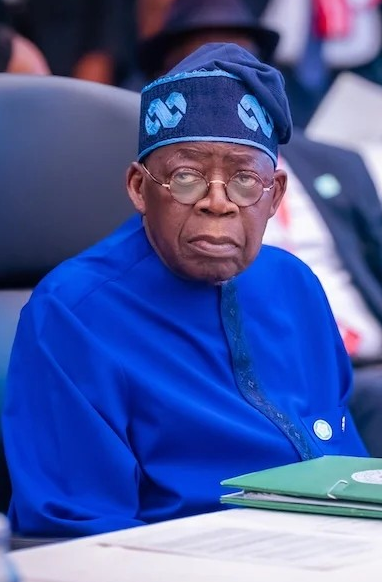
President Bola Tinubu on Wednesday reaffirmed his directive ordering the withdrawal of police escorts from VIPs and redeploying them to core policing duties. He restated this stance shortly before presiding over the Federal Executive Council meeting at the State House, Abuja, expressing frustration over what he described as sluggish compliance.
“I stand by what I said. It must be implemented. If your assignment creates a genuine need for police protection, contact the Inspector-General of Police and obtain my clearance,” the President said, sounding displeased with the slow execution of his directive.
Tinubu’s comments came a day after Nobel laureate Prof. Wole Soyinka openly criticised the size of the security convoy that accompanied the President’s son, Seyi Tinubu. Speaking in Lagos on Tuesday, Soyinka recounted seeing the younger Tinubu moving with what he described as “an excessively large security battalion sufficient to take over a small country.”
Soyinka said the scene left him stunned. “I couldn’t believe it. I later did some digging and found that this is apparently how this young man moves around with heavily armed soldiers,” he said. He added that children of public officeholders must understand their place, stressing that “they are not elected leaders and must not inherit the architecture of state power simply by proximity.”
Soyinka, widely seen as an influential supporter of President Tinubu, had not publicly criticised the administration until his remarks on Tuesday.
At Wednesday’s FEC meeting, Tinubu directed the National Security Adviser, Nuhu Ribadu, and the Department of State Services to issue further guidance and ensure strict enforcement of the VIP escort withdrawal. “The NSA and DSS will review the structure and provide additional information,” he stated.
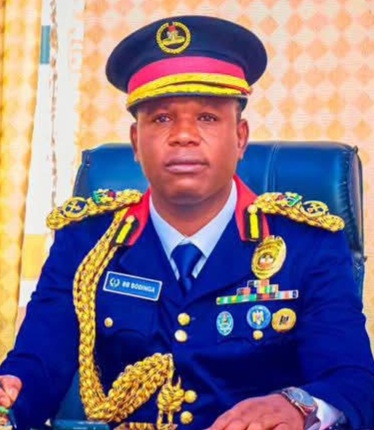
Tinubu also instructed the Minister of Interior, Dr. Olubunmi Tunji-Ojo, to collaborate with the Inspector-General of Police, Kayode Egbetokun, and the Nigeria Security and Civil Defence Corps to immediately replace withdrawn police escorts with civil defence personnel where necessary. “We must not leave people exposed,” he insisted.
Justifying the move, Tinubu said the spike in kidnappings required maximum deployment of available police personnel. “We are facing serious kidnapping challenges. We need all our forces fully utilised,” he said.
The President further disclosed that he had directed the NSA to arm forest guards and treat the matter as urgent. He added that civil defence personnel would assume more responsibilities in VIP protection, particularly in cases where officials remain vulnerable.
Tinubu also tasked Vice-President Kashim Shettima with using the National Economic Council to identify and rehabilitate grazing reserves into ranches, aimed at resolving farmer–herder conflicts and transforming livestock management into a modern economic venture. “We must stop the conflict areas and turn them into opportunities for prosperity,” he said.
The renewed directive comes nearly three weeks after Tinubu first ordered the withdrawal of police details from VIPs on November 23, following security meetings at the State House. That order came after a series of mass kidnappings in Kebbi, Kwara, and Niger States, where at least 300 people—mostly schoolchildren—were abducted.
According to the President’s Special Adviser on Information and Strategy, Bayo Onanuga, VIPs who require protection are now expected to request personnel from the NSCDC rather than the Nigeria Police Force.
However, the policy has drawn reactions from lawmakers. On Wednesday, Senator Abdul Ningi of Bauchi Central protested the withdrawal of his only police orderly. Speaking during plenary, he argued that the measure must be applied uniformly across all privileged individuals.
Ningi noted that although his security aide had been withdrawn in line with the new directive, many high-profile figures—including top politicians, business moguls and entertainers—still moved around with full police escorts. “It should be across the board—from the President to the Vice President, ministers, governors and even the children of political officeholders. I have seen entertainers and foreign business owners with police escorts, yet a senator has his only orderly withdrawn. It is unfair,” he said.
He urged the Senate to direct its Committee on Police Affairs to investigate what he termed “selective enforcement,” stressing that lawmakers should not be singled out.
Responding, Deputy Senate President Barau Jibrin said the leadership had already discussed the matter and had begun engaging relevant authorities. He assured his colleagues that the directive was intended to strengthen internal security, not expose lawmakers to danger.
“The issue you raised is serious. The leadership has agreed that necessary action should be taken to restore your police orderly because it aligns with international practice,” he said. “We also believe the President will listen, as the directive was not designed to deprive lawmakers unfairly.”
Barau reaffirmed the Senate’s support for security reforms but emphasized that uniform enforcement was essential to sustaining public confidence.