
 Keji Mustapha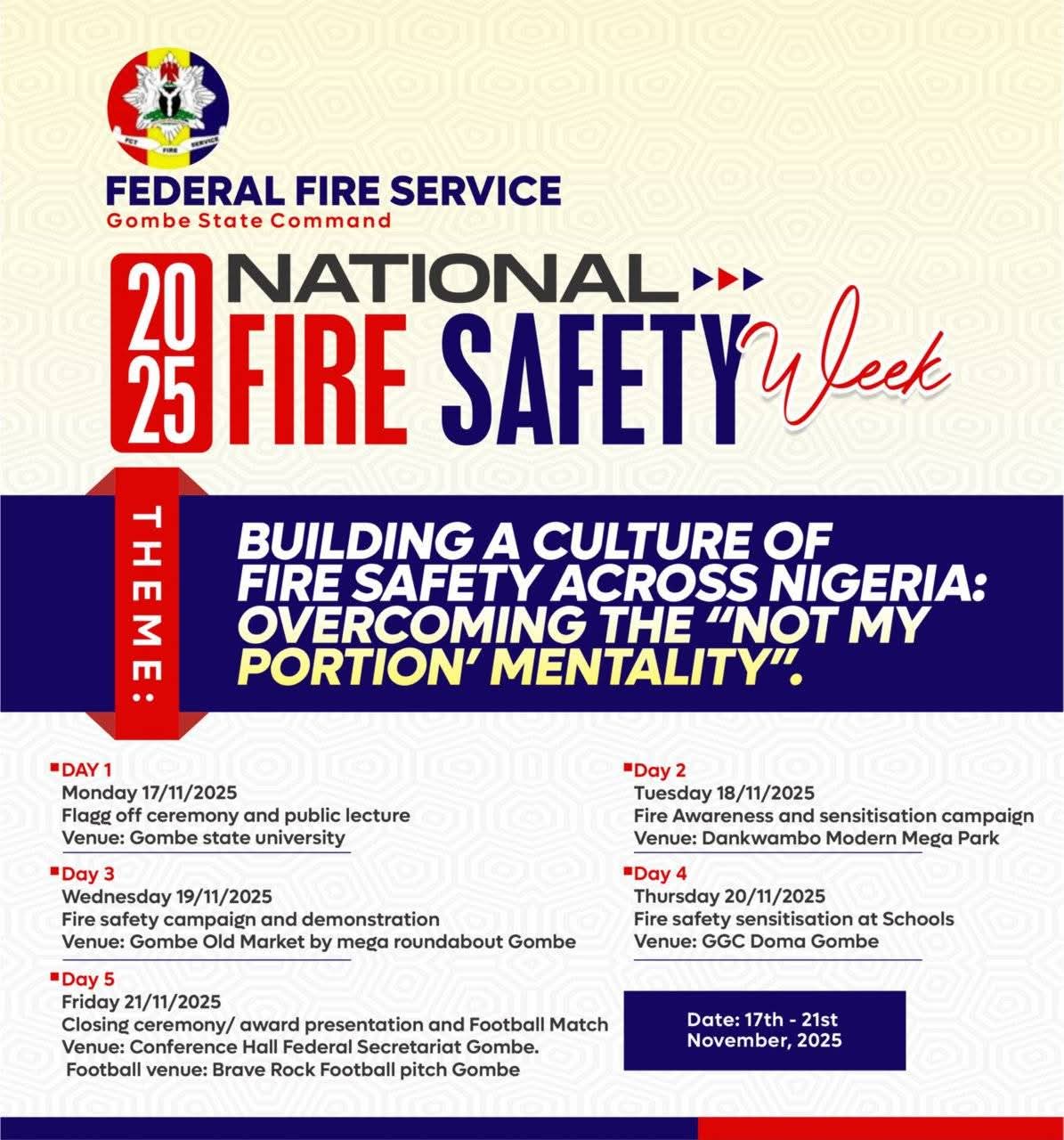
A major national fire-safety awareness programme titled “building a culture of fire safety across nigeria: overcoming the ‘not my portion’ mentality” is set to commence on monday, 17 november 2025, at the federal secretariat complex, gombe state. The event aims to address the widespread complacency and fatalistic attitudes that continue to undermine safety compliance in homes, markets, workplaces and public institutions across the country.
The workshop, expected to attract fire-safety experts, government agencies, first responders, community leaders and civil society groups, will focus on practical strategies for reducing the alarming rate of preventable fire incidents nationwide. Recent statistics from various fire services indicate that nigeria records over 2,800 fire outbreaks annually, with property losses running into billions of naira, much of which could be avoided through proper safety practices.
During the event, participants will receive training on early warning signs, fire-risk assessments, installation and use of fire extinguishers, emergency evacuation procedures and community-based reporting systems. Organisers say the programme is designed not only to raise awareness but also to empower individuals and institutions with the tools needed to prevent, detect and respond effectively to fire hazards.
Speakers are expected to highlight major causes of fire incidents in nigeria, including electrical faults, improper storage of flammable materials, roadside cooking, abandoned heat sources and poor compliance with building and safety regulations. The workshop will also feature data-driven presentations on how behavioural change can reduce national fire emergencies by as much as 40 percent if properly implemented.
The gombe edition marks a significant step in the nationwide campaign to replace the commonly held belief of “it cannot happen to me” with proactive safety consciousness. Organisers express optimism that the week-long programme will inspire households, institutions and communities to adopt responsible practices that safeguard lives, protect property and strengthen nigeria’s overall emergency-response culture.