 Keji Mustapha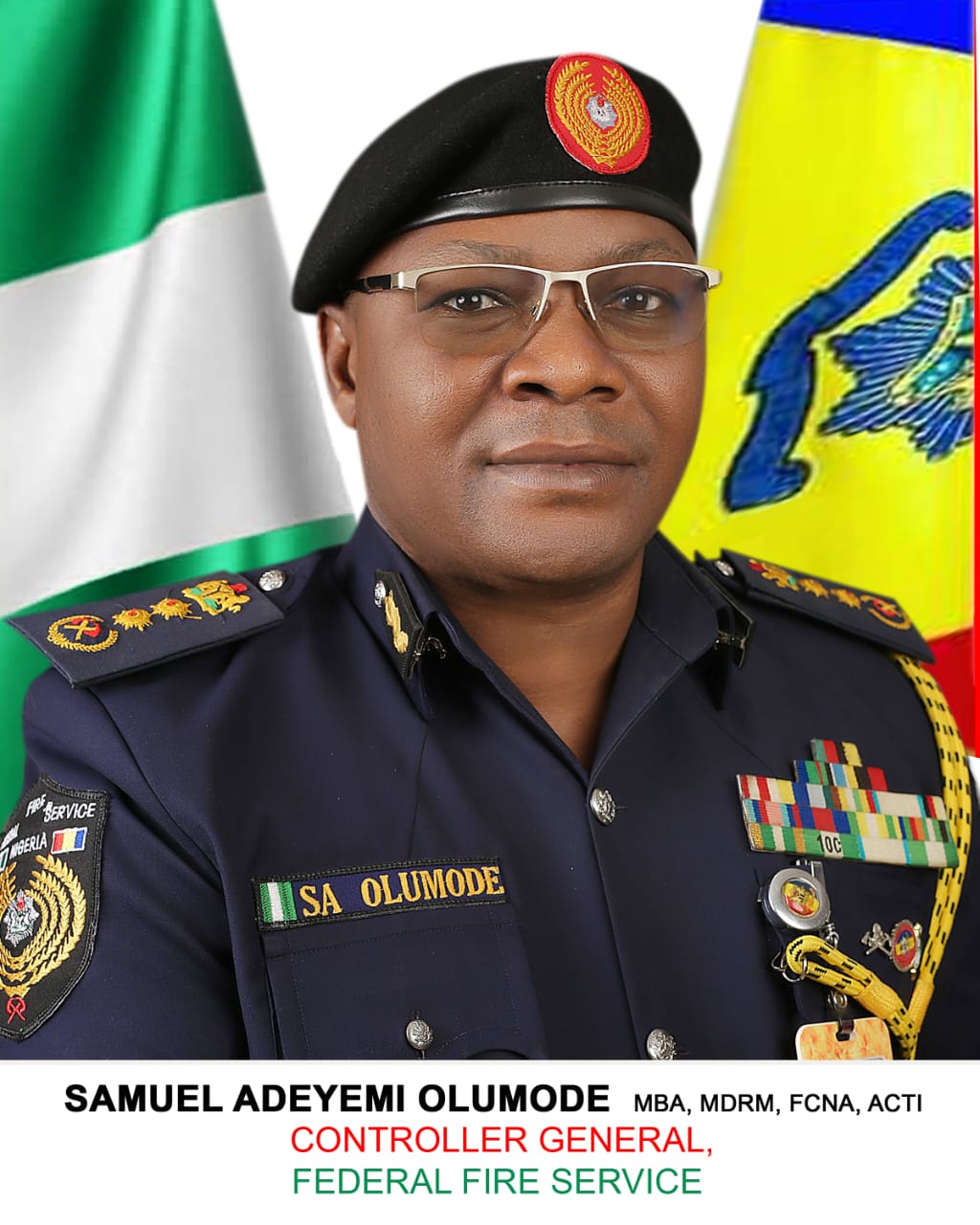
By Isiaka Mustapha, Editor-In-Chief, People’s Security Monitor
Yesterday fire outbreak at the United Bank for Africa (UBA) plaza on Lagos Island has again spotlighted a deeply troubling, long-standing issue in Nigeria, our chronic disregard for functional, in-house fire safety systems. This incident, while distressing in itself, has also emerged as the first real test for Samuel Adeyemi Olumode, the newly appointed Controller General of the Federal Fire Service.
The UBA building, a multi-storey facility housing banking operations, offices, shops, and storage units was engulfed in flames, reportedly originating from the inverter room. While initial panic and chaos gave way to eventual firefighting intervention, the core question remains: why was the fire allowed to spread in the first place? What happened or failed to happen during the critical first few minutes of the outbreak?
It is not uncommon in Nigeria for buildings to be superficially equipped with fire safety tools extinguishers, alarms, and signage that are either non-functional, expired, improperly installed, or completely neglected. Often, these systems are installed just to pass regulatory checks or satisfy insurance conditions. They are not maintained, tested, or integrated into a living fire prevention culture within organisations.
Even in many high-profile corporate buildings, security personnel or facility staff are unable to operate fire extinguishers or activate emergency protocols when disaster strikes. There are rarely routine drills. Emergency exits are often locked, blocked, or poorly marked. In many instances, backup power systems like inverter and generator rooms become ticking time bombs, poorly ventilated and lacking basic containment or suppression mechanisms. UBA’s inverter room fire is just the latest chapter in a national story of preventable destruction and loss, made worse by an institutional habit of installing safety systems without maintaining or operationalising them.
Controller General Samuel Adeyemi Olumode now finds himself at a crossroads. Will he follow in the footsteps of predecessors who allowed regulatory laxity and fire safety violations to persist unchecked? Or will he use this moment to send an unambiguous message that under his leadership, negligence will be met with accountability?
This is his first acid test, and Nigerians are watching.
It is no longer enough for the Federal Fire Service to simply react to fires. The country needs a proactive force one that enforces regulations, audits safety compliance, and imposes real consequences for breaches. Sanctions must move from being theoretical to tangible. This includes fines and legal action against organisations without functional fire safety mechanisms, suspension or revocation of occupancy permits for buildings that repeatedly fail inspections, public blacklisting of corporations or institutions with a record of fire safety violations, and mandatory closure until safety standards are met.
If Controller General Olumode hopes to be taken seriously, he must go out in full force, without compromise or delay. There can be no sacred cows. Whether it is a multinational bank, a government agency, or a private institution, fire safety is not negotiable. A fire does not discriminate nor should enforcement.
Fire outbreaks in Nigeria are neither rare nor unpredictable. In 2024 alone, over 100 lives were lost in fire-related incidents, with property damage exceeding ₦67.1 billion. Lagos alone recorded over 1,000 fire incidents in just the first half of 2025, resulting in 62 deaths and over ₦10.7 billion in losses. Behind these numbers are families displaced, businesses ruined, livelihoods lost, and lives tragically cut short.
And yet, despite the growing frequency and devastation of these fires, many organisations still treat fire safety as an afterthought. This persistent negligence is not just a policy failure; it is a moral one. It also reflects the ineffectiveness of regulatory enforcement. The Nigeria Fire Service Act of 1963 is hopelessly outdated and lacks the teeth to compel modern compliance. A proposed Fire Service Bill, which would empower the agency to enforce contemporary standards, continues to face delays in the legislative pipeline.
Until this legal gap is addressed, the Federal Fire Service must rely on the strength of its leadership. That leadership now sits on the shoulders of Samuel Adeyemi Olumode.
The role of the Controller General is not merely to manage emergencies; it is to prevent them through strong regulation, unflinching enforcement, and a culture of safety. Functional, in-house firefighting systems including trained personnel, early detection technology, routine inspections, and rapid response infrastructure must be mandatory in all public and commercial buildings.
This goes beyond the installation of fire extinguishers and smoke detectors. It means ensuring they work, and that people know how to use them. It means enforcing regular fire drills, establishing response teams, and conducting surprise audits. It means punishing organisations that put lives and property at risk through negligence or cost-cutting. It also means educating the public on fire safety practices and encouraging state governments to adopt stricter building codes and inspection regimes. No building, regardless of prestige or ownership, should be exempt from compliance.
The UBA fire is more than just another news headline. It is a wake-up call. It presents Controller General Olumode with the opportunity to define his tenure from day one, not with words, but with action. If his office fails to sanction UBA or any other institution found wanting in this incident, it will send the wrong signal: that enforcement remains weak, and that business as usual can continue.
But if he acts decisively, if he conducts a transparent investigation, enforces sanctions, and mandates audits of similar high-risk buildings he will instantly shift the narrative. Nigerians will begin to believe that the Fire Service is no longer a passive responder but an active guardian of public safety.
The flames that engulfed the UBA building should ignite something more powerful: a commitment to never allow such preventable disasters to happen again. And that commitment must start with the Federal Fire Service, under the leadership of Samuel Adeyemi Olumode.
Now is not the time for politics, bureaucracy, or excuses. Now is the time for enforcement. Nigeria cannot afford to wait for the next fire to act.