 Isiaka Mustapha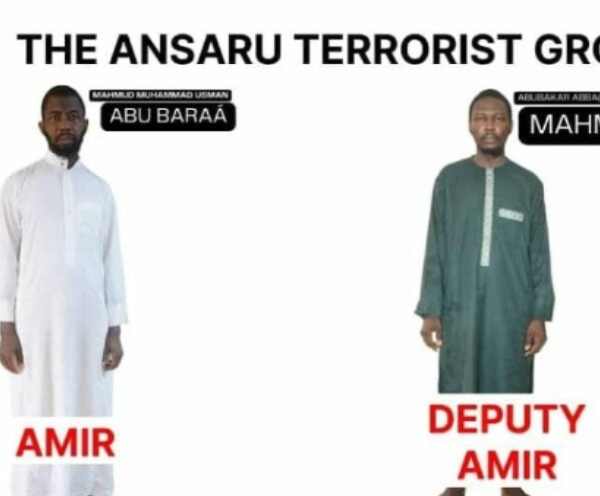
By Kabiru Abina, Abuja
Security operatives have arrested two senior commanders of Jama’atu Ansarul Muslimina fi-Biladis Sudan (Ansaru), an Al-Qaeda affiliate operating in Nigeria.
The suspects were identified as Mahmud Muhammad Usman, also known as Abu Bara’a, Abbas, or Mukhtar, the self-proclaimed Emir of Ansaru, and his deputy, Mahmud al-Nigeri, popularly called Mallam Mamuda.
Announcing the arrests at a press briefing in Abuja on Saturday, the National Security Adviser (NSA), Nuhu Ribadu, said the operation was the outcome of months of coordinated intelligence work carried out between May and July 2025 in collaboration with multiple security and intelligence agencies.
According to Ribadu, Abu Bara’a was in charge of terrorist sleeper cells across Nigeria and orchestrated several high-profile kidnappings and armed robberies that funded terrorist activities. His deputy, Mamuda, led the “Mahmudawa” cell, which operated in and around Kainji National Park. Ribadu disclosed that Mamuda had trained in Libya between 2013 and 2015 under foreign jihadist instructors from Egypt, Tunisia, and Algeria, with expertise in weapons handling and improvised explosive devices (IEDs).
“These targeted operations led to the capture of two notorious Ansaru leaders who have directed several attacks against Nigeria over the years,” Ribadu said.
The NSA explained that both men had been on Nigeria’s most-wanted list and were also wanted internationally. They were implicated in major terrorist operations, including the 2022 Kuje prison break, the 2013 abduction of French engineer Francis Collomp, the 2019 kidnapping of Alhaji Musa Umar Uba, Magajin Garin Daura, and the abduction of the Emir of Wawa. They were also linked to an attack on Niger’s uranium facility and maintained active connections with extremist networks across Mali, Niger, and Burkina Faso.
Ribadu noted that their capture effectively dismantled Ansaru’s central command structure, describing it as a significant breakthrough in Nigeria’s counter-terrorism efforts. He urged citizens to remain vigilant and continue to provide security agencies with actionable intelligence.




 Keji Mustapha