 Keji Mustapha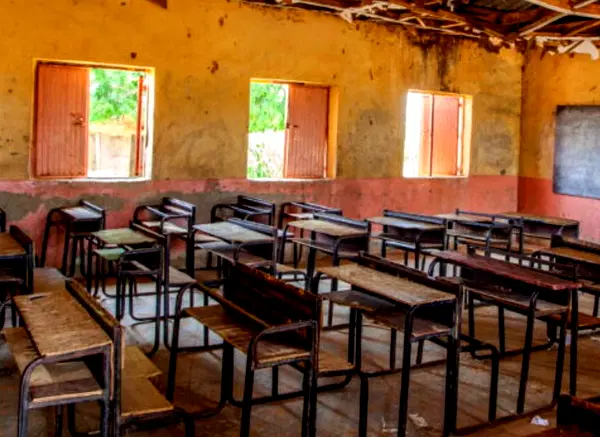
By Olusegun Babawale, OSOBGO
At least 65 primary and secondary schools across northern Nigeria have been shut down or rendered non-functional due to persistent insecurity, leaving thousands of children without access to formal education. The closures, which affect schools in states including Sokoto, Benue, Borno, Plateau, Kaduna and Kebbi, have been linked to terrorist attacks, banditry, abductions, community displacement and fears of further violence.
Among the worst-hit states is Sokoto, where schools in 20 of the state’s 23 local government areas have been closed indefinitely on security grounds. Authorities say the decision followed rising threats to pupils, teachers and school facilities, while several boarding schools had earlier been relocated to safer locations within the state.
Benue has also recorded widespread disruption, with dozens of primary schools in Kwande, Gwer West, Guma and Logo local government areas affected by repeated attacks and mass displacement. In Borno State, renewed attacks and kidnappings in Askira-Uba Local Government Area forced the closure of schools, reviving concerns over the long-running assault on education in the North-East.
In Plateau State, insecurity has disrupted academic activities in Riyom and Barkin Ladi local government areas, while some communities in Kaduna, Kebbi and Katsina continue to experience intermittent school closures and relocations. Education authorities in several states have resorted to merging schools or moving students to safer communities to sustain learning.
Security experts warn that attacks on schools are increasingly becoming a strategy for criminal groups seeking to spread fear, weaken public confidence and destabilise vulnerable communities. They argue that inadequate protection of rural settlements and weak intelligence coordination have made schools attractive targets for terrorists and bandits.
Education stakeholders say the prolonged closures are worsening Nigeria’s out-of-school crisis, currently estimated at more than 18 million children. They caution that continued disruption of learning could expose affected children to child labour, early marriage, illiteracy, criminal recruitment and other social risks, while also inflicting lasting psychological trauma on pupils.
Despite billions of naira committed to the Safe Schools Initiative and related interventions over the past decade, attacks on educational institutions persist. The Federal Government says it has restructured the programme and established a dedicated Safe Schools Department to coordinate implementation, but experts insist that urgent and more effective measures are needed to secure schools and prevent a generation of children from being denied access to education.