 Keji Mustapha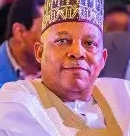
By Ibrahim Elegbede, Abuja
Vice President Kashim Shettima on Thursday reiterated Nigeria’s steadfast commitment to protecting human rights, emphasizing that the Federal Government has fully integrated humanitarian principles into its security operations while intensifying measures to tackle insecurity nationwide.
Speaking at the opening of the 2026 High-Level International Humanitarian Law Dialogue in Abuja, Shettima highlighted that the administration of President Bola Ahmed Tinubu remains dedicated to constitutional guarantees of human rights and the universal application of International Humanitarian Law (IHL) in all conflict situations.
“I wish to emphasize Nigeria’s unwavering determination to promote and protect human rights, while ensuring the effective implementation of International Humanitarian Law treaties,” the Vice President said.
Shettima noted that the government employs a comprehensive strategy combining both kinetic and non-kinetic approaches to address insecurity, which he described as the greatest threat to peace and development.
According to a statement by Stanley Nkwocha, Senior Special Assistant to the President on Media and Communications, Shettima explained, “Our government prioritizes a holistic response that integrates both kinetic and non-kinetic measures in addressing conflict.”
He further disclosed that the administration is strengthening Nigeria’s legal frameworks to respond to evolving security challenges, citing President Tinubu’s recent assent to the domestication of the African Union Kampala Convention, aimed at creating “a robust and context-specific legal framework for the protection and assistance of Internally Displaced Persons in Nigeria.”
The Vice President observed that the dialogue is timely, as global adherence to humanitarian laws faces increasing strain, while Nigeria continues to contend with insurgency, terrorism, and other violent conflicts.
“Beyond the immediate toll of these hostilities, we are also managing the deeper, long-term strain they impose on our communities and institutions. It is precisely because of these experiences that Nigeria stands resolute in championing this global movement,” he said.
Shettima stressed that the essence of International Humanitarian Law is to protect human life during conflicts, outlining Nigeria’s approach on three key pillars: protection of civilians, humane treatment of affected persons, and preservation of human dignity.
Highlighting specific initiatives, he said Nigeria has adopted a proactive approach to implementing IHL through sustained military training, strengthened child protection systems, integration of humanitarian law into academic curricula, accountability mechanisms for sexual violence, enhanced arms control, and comprehensive displacement frameworks.
“These efforts reflect a simple but powerful truth: humanitarian law must be lived, not merely legislated,” he added.
The Vice President also emphasized the importance of collaboration, noting that progress depends on strong partnerships among government institutions, civil society, and international stakeholders. He commended development partners such as the United Nations, the International Committee of the Red Cross, and the Office of the Prosecutor of the International Criminal Court for their continued technical support.
Earlier, the Attorney-General of the Federation and Minister of Justice, Chief Lateef Fagbemi (SAN), said the Federal Government is intensifying efforts to domesticate humanitarian treaties and reform the justice system to align with global standards.
Fagbemi highlighted that new laws and investments in correctional facilities focus on humane treatment of inmates and strengthening rehabilitation processes, while embedding IHL principles into security agency training and operations. He also noted that humanitarian laws are being translated into local languages to improve accessibility, especially in conflict-affected communities.
In her welcome address, the Solicitor General of the Federation and Permanent Secretary, Mrs Beatrice Jeddy-Agba, described the dialogue as a vital platform for reinforcing the rule of law within Nigeria’s security framework. She reaffirmed Nigeria’s commitment to the Geneva Convention, stressing that evolving conflict dynamics require strong political will to ensure compliance with humanitarian standards.
“The importance of International Humanitarian Law has never been more critical, as we witness heightened disregard for civilian protection in contemporary global warfare,” she said.
The high-level dialogue brought together participants from major international organisations, including the United Nations and the International Committee of the Red Cross, as well as representatives from Nigeria’s security, legal, and judicial institutions.