 Keji Mustapha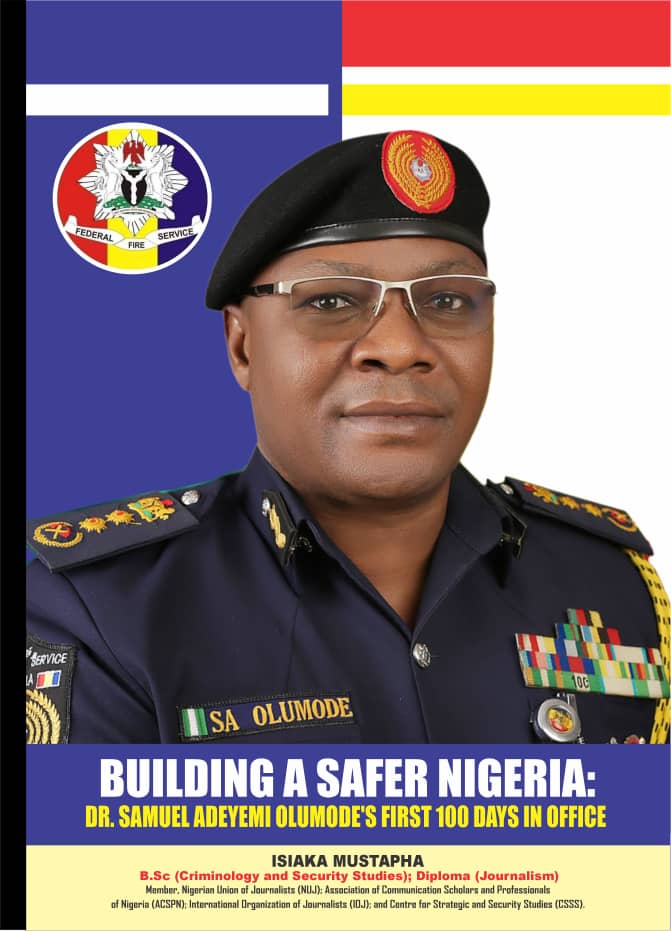
Barely 100 days into his tenure, the Controller General of the Federal Fire Service, CGF Samuel Adeyemi Olumode, has ignited a wave of transformation that is steadily redefining fire safety, emergency response, and institutional professionalism across Nigeria. His emergence as helmnsman of the nation’s fire service has been greeted with optimism, as Nigerians witness bold reforms that signal a clear break from the past and a confident march toward global best practices.
From his first day in office, Olumode set a decisive tone anchored on discipline, accountability, and service delivery. Rather than settle into routine bureaucracy, he rolled out an action driven agenda that prioritised rapid response, personnel welfare, and modernisation of operations. This proactive leadership style has not only energised officers and men of the Service but has also rekindled public confidence in the Federal Fire Service as a critical pillar of national safety.
One of the most striking achievements of Olumode’s first 100 days is the renewed focus on operational readiness. Across commands nationwide, there has been visible improvement in emergency response coordination, equipment deployment, and station preparedness. Strategic assessment of fire stations, coupled with targeted interventions, has strengthened the Service’s capacity to respond swiftly to fire outbreaks and rescue emergencies, saving lives and property in the process.
Equally noteworthy is his commitment to manpower development and professionalism. Olumode has emphasised continuous training, skills upgrading, and ethical conduct as non negotiable standards. Training programmes have been recalibrated to reflect modern firefighting techniques, disaster management, and inter agency cooperation, ensuring that personnel are better equipped to confront evolving fire and safety challenges in urban and rural communities alike.
Infrastructure renewal has also featured prominently in the Olumode reform blueprint. Within his first 100 days, attention has been drawn to the rehabilitation of fire stations, improved logistics, and the gradual upgrade of firefighting appliances. These efforts, though ongoing, have sent a strong signal that the era of neglect is giving way to deliberate investment in the tools and environment needed for effective service delivery.
Public engagement and prevention have formed another cornerstone of his leadership. Olumode has championed fire prevention awareness, community sensitisation, and stakeholder collaboration, recognising that effective fire safety begins long before an alarm is raised. Through outreach initiatives and partnerships, the Service is increasingly visible, proactive, and people centred, reinforcing its role as a protector rather than merely a responder.
The impact of these reforms is captured in a newly released 120 page book authored by Isiaka Mustapha, Chief Operating Officer and Editor in Chief of People’s Security Monitor. The book chronicles Olumode’s first 100 days in office, offering a detailed and compelling account of his leadership philosophy, policy choices, and early milestones. Mustapha, who has closely monitored Olumode’s performance since he assumed duty a year ago, presents a nuanced narrative of consistency, vision, and results.
Written in lucid and engaging prose, the book stands not just as a record of achievements, but as an inspirational text for Nigerians and Nigerian leadership at all levels. It highlights how purposeful leadership, when driven by clarity of vision and commitment to public good, can rapidly reposition an institution and restore public trust.
For many Nigerians, Olumode’s leadership has come as a breath of fresh air. With visible reforms across operations, training, infrastructure, and public engagement, citizens can now heave a sigh of relief, reassured that the nation’s fire service is in capable hands. His calm but firm stewardship has reinforced the belief that safety institutions can indeed work efficiently for the people.
As the Federal Fire Service continues on this reform trajectory, Olumode’s first 100 days offer a powerful lesson in transformational leadership. They underscore the possibilities that emerge when competence meets courage and vision meets action. If the opening chapter is anything to go by, Nigeria’s fire sector is poised for a future defined by professionalism, preparedness, and renewed national pride.