 Keji Mustapha
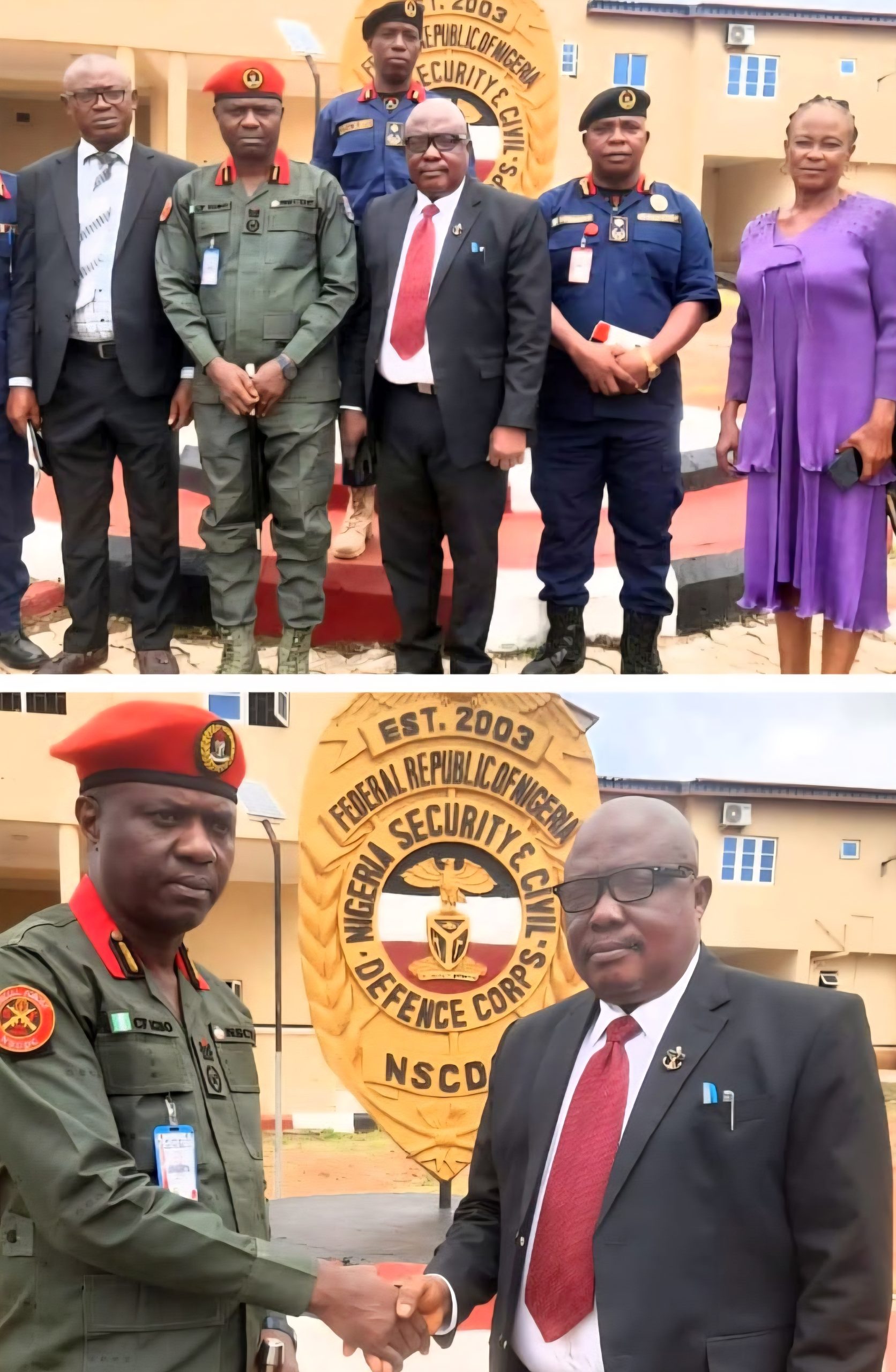
Pix: Commandant Brah Samson Umoru
By Isiaka Mustapha, Chief Operating Officer/Editor-In-Chief, People’s Security Monitor
When Commandant Brah Samson Umoru assumed leadership of the Nasarawa State Command of the Nigeria Security and Civil Defence Corps (NSCDC) on 18 September 2025, he inherited a complex security environment. Within a short time, he began implementing sweeping reforms, both cultural and operational, aimed at transforming how the command fights crime, protects infrastructure, and serves the community.
At the heart of his overhaul is a commitment to eradicating unethical conduct among officers and men. Though corruption and misconduct have long been challenges in many security outfits, Brah’s strategy is to build a more professional and accountable command. His public messaging emphasizes discipline, integrity, and the rule of law as core non-negotiables in his tenure.
One of his most visible reforms is the inauguration of two specialized units, a 300-strong Agro Rangers force and his own rapid-response Crack Squad. The Agro Rangers are tasked with protecting farms, farmland infrastructure, and rural agricultural investments, including government-owned large farms, from crime, vandalism, and criminal networks.
This reactivated Agro Rangers unit is not just symbolic. It supports food security by safeguarding the agricultural value chain and protecting farmers, herders, and agro-allied investments that are crucial for Nasarawa State’s economy. Brah has directed them to operate with discipline and professionalism, pushing them to be proactive rather than reactive.
Parallel to that, his Crack Squad represents a lean, intelligence-driven tactical response force. It is his tool to fight swift-moving crime, such as kidnapping or organized banditry, especially in hot-spot areas. In just a few weeks, the squad demonstrated its effectiveness.
A major proof point came in October 2025, when the Crack Squad, working with the Commandant General’s Special Intelligence Squad, foiled a kidnapping attempt in Lafia and surrounding communities. The operation resulted in two suspected kidnappers being neutralized, two others arrested, and weapons recovered, including an AK-47 rifle, ammunition, knives, and mobile phones.
For Umoru, this was not just a headline-grabbing raid. It was vindication of his intelligence-led security approach. He explicitly framed it as evidence that his strategic shift from traditional static guarding to dynamic, intelligence-led deployments was paying off.
Another significant dimension of his leadership is community collaboration. He has repeatedly called on ordinary citizens to partner with the NSCDC, urging them to “see something, say something.” He recognizes that sustainable security depends on mutual trust, not just paramilitary presence.
Brah has also reactivated the deployment of personnel to schools across Nasarawa State, intensifying security in view of the recent onslaughts on educational institutions by criminal elements. Officers have been instructed to take charge of schools, ensuring the safety of students, staff, and infrastructure. This proactive approach is designed to prevent kidnappings, vandalism, and other threats that have destabilized schools in the region.
Brah also made a high-profile institutional visit in his reform drive. He paid an unscheduled visit to NSUBEB, meeting its Executive Chairman, Hon. Kasim Muhammed Kasim, to shore up collaboration on school security. He tied this to the NSCDC’s broader Safe Schools commitment, making clear that school infrastructure and children’s safety rank high among his priorities.
On the personnel front, there are signs that Umoru is working to clean house and build capacity. While publicly available data on internal dismissals is limited, he is pushing more rigor, supervision, and performance expectations. The inauguration of his Crack Squad and the Agro Rangers is itself a message that talent and discipline will be rewarded.
In parallel to behavioral reform, Brah’s command is also tackling firearms trafficking and illegal gunrunning. Earlier in 2025, the Nasarawa NSCDC arrested five suspects in Ukoso Komva, Wamba LGA, for illegal firearms possession, including automatic rifles and locally made guns. This demonstrates a willingness to root out serious crime networks, not just petty criminality.
Moreover, his command recently made another breakthrough by capturing a notorious kidnapping kingpin and five of his gang members in Lafia. In addition to arrests, the NSCDC recovered N2.35 million in cash believed to be ransom proceeds and motorcycles used in criminal operations. This underscores his zero-tolerance policy for organized crime that threatens public safety.
Beyond reactive operations, Brah Umoru is redefining how the NSCDC supports critical public infrastructure. He understands that vital state assets, from schools to state farms, need more than occasional guard deployment. They demand consistent intelligence, surveillance, and preventive security measures. This is especially vital for Nasarawa State’s large government-owned farm holdings, which are economic lifelines for food production and employment in the region.
At a policy level, Brah is pushing for tighter institutional integration. His renewed engagement with educational institutions and government bodies suggests he wants NSCDC to be seen not just as a security force, but as a partner in development. His command in Nasarawa is framing itself as a defender not only of people, but of the state’s public investments.
One of the most ambitious aspects of his mission is cultural change within the command. By demanding utmost professionalism, discipline, and respect for human rights from his Agro Rangers and Crack Squad, he signals that his reforms are not just tactical but ethical. This ethical dimension is crucial in restoring public trust and reducing incidents of abuse or negligence.
Equally notable is his drive to institutionalize intelligence-based policing. Rather than relying purely on manpower, Brah’s strategy emphasizes gathering credible intelligence, partnering with the public, and leveraging his Crack Squad’s agility. This shift aligns with broader global trends in security where agility and data-driven operations trump brute force.
While his agenda is ambitious, it is anchored in measurable milestones: the inauguration of 300 Agro Rangers, the foiling of a major kidnap plot, the arrest of a crime kingpin, the recovery of illegal weapons, and the strengthened school security program. These operations are already bearing fruit. There are challenges ahead, as sustaining this reform requires continued funding, training, and political support. For Umoru’s vision to endure, he must embed his reforms institutionally.
In sum, Commandant Brah Samson Umoru’s tenure in Nasarawa is fast becoming a case study in transformational security leadership. His dual commitment to ethical reform and tactical effectiveness marks a new era for the NSCDC command in the state. If his early gains, from kidnappers neutralized to protection of farms and schools, are sustained, Nasarawa’s security renewal under him may prove to be one of his most enduring legacies.