 Keji Mustapha
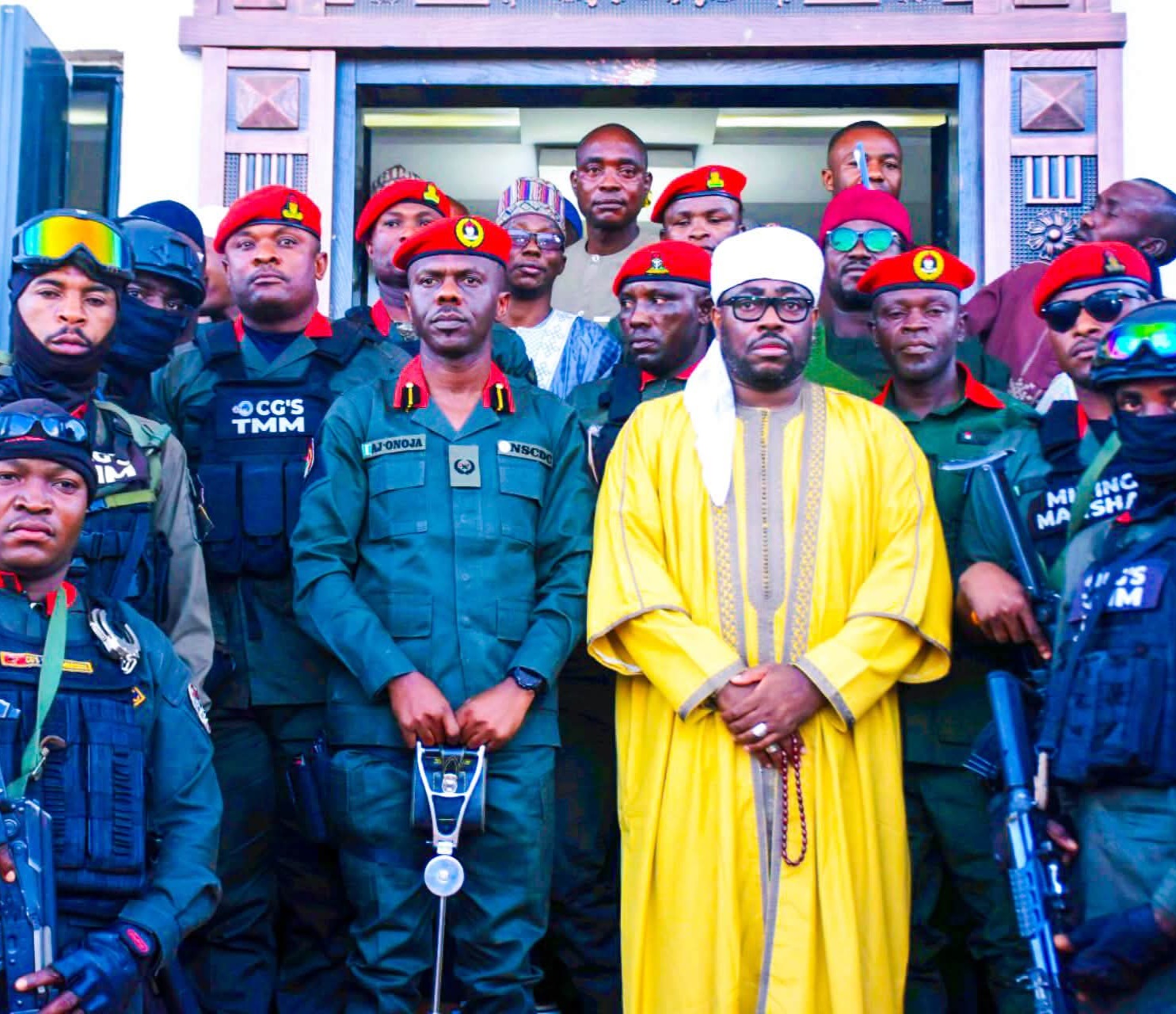
John Onoja Attah is the Commander of Mining Marshals, a unit of the Nigeria Security and Civil Defence Corps (NSCDC) set up by the Federal Government to combat illicit mining and protect the nation’s vast solid mineral resources. In this exclusive interview with ERNEST NZOR, Attah speaks on their operations, challenges and achievements so far.
__________________________________________
One year after the establishment of Mining Marshals, what has been your experience so far, especially with challenges posed by illegal mining at the time you were appointed Commander?
I appreciate this honour and the opportunity to have this interaction. To begin, the Nigeria Security and Civil Defence Corps (NSCDC) has the statutory responsibility of protecting critical national assets and infrastructure, preventing industrial escalation and economic sabotage, as well as regulating private security operations in Nigeria. We also handle disaster management and training of private security guards, including licensing and monitoring their activities. So, you can see that the protection of critical national assets and infrastructure is central to our mandate. Mining, being an issue that affects our national resources, falls under this critical asset protection responsibility.
Looking at the Corps’ functions and our involvement in the mining sector, you will agree with me that this new assignment required both administrative and policy adjustments within NSCDC and the Federal Government. Nigeria is richly endowed with solid minerals, and the key question has always been, how do we harness these resources for the common good of Nigeria and Nigerians?
To address this, the NSCDC aligned itself with the demand of the hour; to secure our solid minerals. Under the leadership of the Commandant-General, Professor Ahmed Abubakar Audi, and the Honourable Minister of Interior, Dr. Olubunmi Tunji-Ojo, it was decided that there was a need to intensify the Corps’ efforts in combating illegal mining. This gave birth to the collaboration between the NSCDC and the Ministry of Solid Minerals Development.
Consequently, the Mining Marshals Operation was inaugurated on March 1, 2024, at the NSCDC Headquarters by the Honourable Minister of Interior, in conjunction with the Commandant-General. The official launch took place on March 21, 2024, at the Ministry of Solid Minerals Development, by the Honourable Minister, Dr. Dele Alake. That event marked the beginning of this special operation.
Talk us through the process of starting this special operation, how did you manage it?
Before the inauguration, we had already been discussing and setting up committees to look into the illegal mining menace. The NSCDC’s Directorate of Intelligence and Investigation, under which I previously served, was handling sensitive mining-related cases across several states. Those early efforts brought national attention to our anti-illegal-mining work. The Commandant-General then directed that a dedicated, well-trained, and professional force be established, and that was the foundation of the Mining Marshals.
We underwent intensive training for three months, starting in January 2024. The training was rigorous, covering field tactics, intelligence gathering, combat operations, the use of technology, weapon handling, and psychological resilience. It also included lessons on mining history, sectorial challenges and environmental hazards.
After the inauguration, we began operations guided by a Standard Operating Procedure (SOP), which was jointly signed by the Honourable Minister of Solid Minerals Development and the NSCDC Commandant-General. This SOP, alongside the NSCDC Act of 2007 and the Mining Regulations of 2011, serves as our legal and operational framework. The establishment of Mining Marshals also aligns with President Bola Ahmed Tinubu’s Renewed Hope Agenda, and the seven-point agenda of the Ministry of Solid Minerals Development, one of which is mining policing.
When we talk about mining policing, it goes beyond traditional law enforcement. It involves ensuring that mining activities are conducted legally, safely, and sustainably, minimising environmental hazards, preventing mine collapses, blocking revenue leakages, and protecting legitimate investors. We also instill discipline and ethics among our personnel. Every officer in the Mining Marshals must adopt and abide by a 14-point code of conduct, and violations are met with strict disciplinary measures.
As the Commander, how has it been leading the team in the last one year?
It has not been easy, I must admit; this is a new terrain with no prior template. We had to start from scratch, designing structures, building operational strategies, and coordinating with relevant agencies. We also began by paying courtesy visits to key stakeholders, both government and private sector, to establish collaboration and mutual understanding.
Every new operation comes with challenges, but we have learned to adapt and improve continuously. Despite our logistical limitations, vehicles, equipment, and manpower, we have made remarkable progress. Thankfully, the Ministry of Solid Minerals Development successfully secured the inclusion of the Mining Marshals’ logistics needs in the 2025 budget. Once these resources are made available, I assure Nigerians that our operational efficiency will improve greatly.
We have always emphasized accountability and integrity. Every piece of logistics provided to us will be used strictly for operations, not for personal gain. From the inauguration till now, despite limited resources, we have refused to make excuses. Instead, we focus on how to get the job done.
Nigeria is currently on a path of solid minerals reform, led by Dr Dele Alake, who recently represented the entire African continent at a mining summit in China. Policy frameworks are being strengthened to ensure transparency, accountability, and sustainability in the sector. We urge Nigerians to be patient and supportive. No system is perfect, but with collective effort, government, security agencies, the media and citizens, we will achieve results. I must commend the media, particularly The Guardian, for its consistent and positive coverage of our activities. Our collaboration with the press has helped amplify our work and build public confidence.
Now, regarding our operations, the mining terrain is vast and challenging. The new policy direction from the Ministry is already helping to regularise mining activities and bring stakeholders to the table.
In terms of combating illegal mining in Nigeria, how far have you gone, especially in places like Zamfara and Nasarawa?
The mining industry is a very tough terrain, quite complex and challenging. Over time, we’ve had to undergo several policy redirections. For instance, in Zamfara, the Minister of Solid Minerals Development set up a committee to review all mining activities in the state; I was fortunate to be part of that committee. After thorough work, the report was submitted. Stakeholders in the sector were also brought to the table to ensure inclusiveness and effective implementation.
One good thing about the current administration is its adoption of both kinetic and non-kinetic approaches to address challenges. Depending on the situation, dialogue and strategic engagement are sometimes used alongside enforcement. Since we cannot be physically present in every part of the country at the same time, the idea of adopting strategic policies to curb illegal mining became necessary.
As a result, many industry players began to key into the new system. The Minister introduced a new operational template that required all miners, especially in places like Zamfara, to regularize their activities before continuing operations. It was a kind of fresh start, a new beginning for the sector.
Furthermore, there is now an arrangement to properly monitor activities through a central control room, with provisions for satellite surveillance and other technological tools. This helps track the volume of minerals coming from each mining site, not just on paper, but also through real-time visual monitoring. Under the Minister’s directive, the control room enables us, even as field commanders, to monitor our personnel deployed across strategic locations. The Minister himself also has access to this system, ensuring transparency and effective checks and balances within the value chain.
Also, in states such as Nasarawa, Kogi, Kwara, and Niger, we have recorded significant successes, shutting down illegal mining sites, arresting offenders, and supporting licensed miners to operate without interference.
Are there plans to expand the number of personnel or improve their training and welfare packages?
We have been in operation for about one year and eight months now, and most of our challenges boil down to logistics. For instance, as we speak, I just received a complaint from Cross River State that requires our immediate attention. We are currently working out how to stretch our limited resources to handle that assignment.
For logistics, sometimes for us to carry out the assignment in the city area, we need to collapse assignment to activity in the city area to go to an area of pressing need to attend to it. Once logistics, particularly vehicles and communication tools, are fully provided, we will extend our presence to every state. So, we operate in no particular order or visit in particular order and you cannot know when we will visit a state. These are strategies we use in covering the gaps. So, there’s the fear of not knowing when we will get to your state.
Our goal is clear; to ensure that legitimate mining operators can work in a safe, regulated, and sustainable environment, while illegal miners are decisively dealt with. The journey has been challenging, but rewarding. With improved logistics and continued collaboration, Nigerians will soon witness even greater achievements from the Mining Marshals.
You have often emphasised the need for a non-kinetic approach alongside kinetic operations. Can you explain how this approach works in practice and what results it has produced so far?
We strongly believe that solving illegal mining issues requires not only a kinetic approach, that is the use of force, but also a non-kinetic approach, which focuses on community engagement, dialogue and partnership.
Illegal mining situations are not exactly the same; each community has its own dynamics, history and stakeholders. So, we tailor our strategy to fit the realities on the ground. For instance, in many cases, like those in Nasarawa State, we have adopted community engagement as our first line of action.
If you visit Mining Marshals official Facebook page, you will see several photos showing our meetings with community leaders, traditional rulers, and local stakeholders. These interactions are part of our non-kinetic operations. We visit palaces, hold town hall meetings, and make it clear that this is not just a government initiative; it’s a collective national responsibility.
We remind communities that the resources beneath their land belong to all Nigerians, and before the government can use those resources for development, the host communities must help protect them. Once they understand this, they willingly provide valuable information. Many times, what could have required the use of force is achieved peacefully because the people themselves take ownership.
There have been occasions where community leaders call us to say they’ve held meetings and agreed to stop illegal mining or to report any suspicious activities. In such cases, our role becomes supervisory rather than confrontational. Even with limited resources, we strive to create friendship and trust, showing them that we are partners in progress.
We have had situations where we sat down with entire communities and they voluntarily resolved to end illegal mining. In one particular instance, in a community of over 2,000 people, all illegal mining activities stopped after our engagement. The community’s traditional ruler, a retired director from the ministry, played a key role in coordinating the village heads. This is what I mean by the power of non-kinetic strategy. Force alone can give temporary results, but once you withdraw troops, the problem returns. Dialogue and trust, however, produce lasting peace.
And challenges?
Of course, there are challenges; poor terrain, limited logistics, and security risks. Sometimes, when you arrest suspects in remote areas, the journey back is a life-threatening experience. We have trekked for hours through forests where vehicles can’t reach. Both officers and suspects are exposed to danger. So, we always weigh the risk before deciding how to proceed. But in summary, we operate using both kinetic and non-kinetic approaches, depending on the situation. Our goal is to balance enforcement with relationship building.
What would you say are the major achievements of the Mining Marshals so far?
The results have been impressive. For the first time in Nigeria’s history, we have a specialized force focused exclusively on combating illegal mining. So far, we have made over 800 arrests nationwide. After investigations, about 500 cases were properly documented, and around 250 suspects are currently facing trial. If you visit the Federal High Court in Abuja, you will hear my name often mentioned because of the number of cases we have in court. But beyond arrests, our greatest achievement is deterrence. Many illegal miners have abandoned their activities and rushed to the Mining Cadastral Office to regularise their operations, because they fear for being arrested by the Mining Marshals.
This means our presence alone is restoring order and compliance in the sector. The Ministry of Solid Minerals Development can confirm this; their offices are now busier than ever, with miners coming in daily to seek proper licenses.
Again, the last press release from State House concerning the mining revenue has risen significantly from less than ₦6 billion as revenue to over ₦38 billion in the first year of the Mining Marshals’ activities. That’s a clear sign of impact.
We have also succeeded in sealing several illegal mining sites; dislodging bandits from some locations and helping legitimate operators resume work safely. For example, in Kogi State, a company that had been unable to access its mining site for over ten years was finally able to resume operations after our intervention. We conducted multiple operations in that area, trekking for nearly an hour beyond where our vehicles could reach. We secured the site and maintained surveillance for two months until the company could bring in other security agencies to take over. We have also improved investor confidence in the sector. Companies now know that the government is serious about protecting their investments.
For instance in Gwagwalada, where the Minister ordered the sealing of a large illegal mining site, our men have maintained 24-hour surveillance since that directive. Within a week, the illegal activities in that area collapsed, and the site has remained under government control since then. So, our achievements span enforcement, deterrence, community relations and economic impact.
How would you describe your working relationship with other security agencies?
We maintain an open-door policy and are respectful and diplomatic in our dealings with sister agencies. Of course, like in any operational environment, there are occasional frictions, but what matters most is how those issues are managed. Conflict is a natural part of human society. What is important is to ensure that it doesn’t destabilise the mission. We emphasize the three CDs, cooperation, coordination, and collaboration.
Illegal mining is a complex crime, often involving powerful syndicates and networks. Some of the people we confront are influential and well connected, so we face resistance and even threats to our lives. Personally, I have survived ambushes more than once. My vehicle was attacked and riddled with bullets. I sustained injuries, but by God’s grace, I survived. I had to relocate my family for safety reasons. I own a house but currently live in rented accommodation due to security concerns. These are the personal sacrifices that come with this duty.
There have been days I spent more than 12 hours in the bush without food or water. Despite these challenges, we remain committed, because we believe this work is for the greater good of Nigeria. Unfortunately, sometimes the very people who should support us turn against us due to vested interests, but we remain undeterred.
What message do you have for stakeholders in the sector and Nigerians in general?
My message is simple; put Nigeria first and support the operations of the Mining Marshals for the collective good of our nation. When the mining sector is sanitized, everyone benefits; investors, host communities and the government. It’s not a matter of ‘survival of the fittest’ anymore, but about building a sustainable future for all.
As Commander, I also want to make this clear; I do not and will not tolerate compromise. If anyone discovers any form of misconduct or infraction involving the Mining Marshals, they should contact me directly. I have no secrets and can be reached anytime.To the miners and investors, I say this; cooperate with us to build a mining security framework that protects your business and our national wealth. I have never taken a dime from any illegal miner or operator since assuming this position. We are here to serve, not to profit. You cannot correct corruption by being part of it. Integrity is the foundation of our work.
We are not perfect, but our conscience is clear. We are determined to see that Nigeria’s solid minerals sector becomes a model of transparency and discipline.