 Keji Mustapha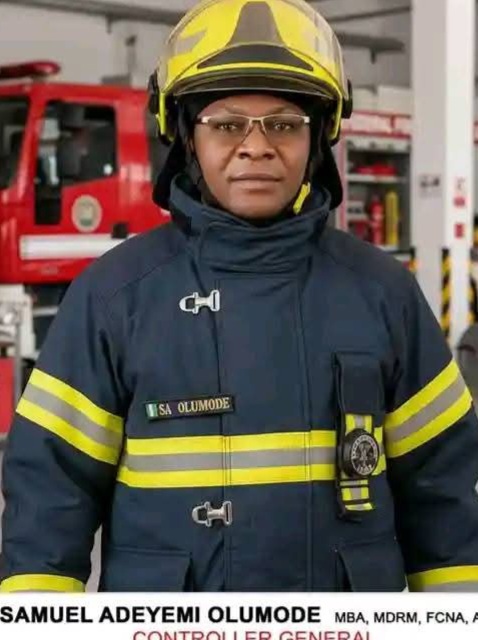
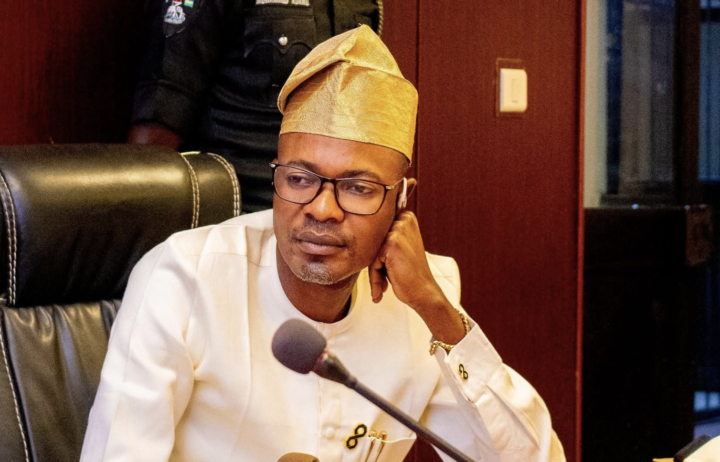
In an era when Nigeria faces growing urban risks and infrastructural challenges, the Federal Fire Service stands at a critical turning point. At the heart of this transformation is the agency’s new helmsman, Controller General Samuel Adeyemi Olumode, whose bold vision seeks to redefine firefighting and emergency management in the country. With a focus on prevention rather than reaction, Olumode envisions a modern, transparent, and technology driven Fire Service that protects lives and property while restoring public trust in national institutions. His reform agenda is anchored on professionalism, accountability, and innovation, a blueprint designed to rebuild both the Service and the confidence of Nigerians in its mission.
In this exclusive interview with Isiaka Mustapha, Chief Operating Officer/Editor-In-Chief, People’s Security Monitor, the Fire Chief outlines his roadmap for institutional renewal, from strengthening financial transparency and modernizing equipment to improving staff welfare and expanding fire prevention awareness nationwide. He speaks candidly about the challenges of rebuilding a system long plagued by neglect and inefficiency and presents a clear timeline for measurable results. His message is simple but powerful: the era of reactive firefighting is over; a new dawn of proactive safety management has begun.
What is your overarching leadership vision for the Federal Fire Service?
My vision is to reposition the Federal Fire Service as a modern,
proactive, and fully professional emergency management institution. We
want to move from being a reactive agency to a preventive one, an
organization that not only responds to emergencies but works
tirelessly to avert them. My leadership will emphasize transparency,
accountability, efficiency, and collaboration to ensure that Nigerians
everywhere feel protected and confident in our capacity.
Institutional decay has been a recurring concern. How do you intend to
address it within the Service?
Institutional decay often shows through weak systems, low morale, and
irregular processes. My first step is to conduct a full audit of
operations, assets, and performance structures to expose and fix the
gaps. We will strengthen internal controls, ensure proper
recordkeeping, streamline procurement, and reinforce discipline. Our
officers must see themselves as part of a professional and responsive
national agency, not just a bureaucracy. Rebuilding institutional
culture around integrity and service delivery is central to my
mission.
The Fire Service’s budgeting and funding process has faced scrutiny.
How do you plan to rectify this?
We are determined to rebuild credibility in our financial operations.
Budget proposals will be data driven and directly linked to
operational realities. Every expenditure will be tracked and reported
transparently. I intend to work closely with the National Assembly and
the Budget Office to ensure accountability. At the same time, we will
explore alternative funding models, including partnerships with the
private sector and international donors, to supplement government
allocations. Efficient use of funds will be our watchword.
Modern equipment is the lifeblood of emergency response. What are your
plans for acquisition and modernization?
Our plan begins with a national audit of all firefighting assets, from
trucks to breathing apparatus. Based on the findings, we will
prioritize the procurement of new, standardized, and durable fire
engines and rescue equipment. Modern technology such as drones, GIS
enabled dispatch systems, and digital command platforms will be
introduced to improve response speed. Maintenance will also be
institutionalized, not treated as an afterthought, so that our fleet
and tools remain functional across all zones.
Staff welfare often defines institutional success. How will you ensure
proper attention to it?
No organization thrives without motivated people. My administration
will prioritize regular payment of entitlements, improved
accommodation and rest facilities, medical and psychological support,
and recognition of outstanding performance. We are also reviewing
promotion and deployment processes to ensure fairness and
transparency. When officers feel valued, they perform with dedication.
My aim is to make every firefighter proud to wear the FFS uniform
again.
Training and professional development are essential in a modern Fire
Service. What is your strategy in this area?
Training will move from being occasional to continuous. Every officer,
regardless of rank, will undergo regular refresher and specialized
courses, including hazardous materials handling, urban search and
rescue, drone operations, and incident command systems. We will
partner with both local and international fire academies for knowledge
exchange and certification. Each officer’s training progress will be
tracked to ensure that deployment decisions reflect actual competence
and growth.
Emergency response remains the core duty of the Fire Service. How do
you plan to improve performance in that area?
Our focus is on readiness, speed, coordination, and feedback. Fire
stations will be adequately staffed and equipped, and our
communication systems will be fully digitalized. We are deploying GPS
technology to shorten response times and improve dispatch accuracy.
Coordination with the police, ambulance services, and the National
Emergency Management Agency will be strengthened for seamless joint
response. Every major incident will be reviewed for lessons learned to
ensure continuous improvement.
Fire prevention and public awareness are equally important. How will
you enhance these?
Prevention is the smartest investment in safety. We will roll out a
nationwide fire safety campaign through schools, markets, and
communities. Media outreach on radio, television, and social platforms
will educate citizens about simple preventive measures. Fire safety
inspections will also be intensified in public buildings, markets, and
industrial zones. In 2024 alone, fire incidents cost Nigeria over ₦67
billion in losses. Prevention can drastically reduce that. We will
also create digital platforms where citizens can report fire risks
early.
Public trust in government institutions is often low. How do you plan
to rebuild the image and credibility of the Fire Service?
Trust is earned through results. We will communicate openly with the
public, release periodic performance reports, and maintain
professional standards at all times. Officers will be trained in
public relations and community engagement. Misconduct will attract
firm disciplinary action, while good service will be publicly
rewarded. The Fire Service will engage with civil society, schools,
and businesses to show that we are partners in protection, not just
responders in crisis. Our goal is to transform the perception of the
Service from reactive to reliable, from silent to visible, and from
neglected to respected.
What timeline have you set for this transformation, and how will you
measure success?
We are implementing a phased reform plan. Within the first year,
audits, training reforms, and awareness programs will commence. By the
second year, new equipment and technology integration will be
completed. Within five years, Nigerians should see measurable
improvements reduced fire incidents, faster response times, better
welfare for officers, and higher public confidence. Success will be
judged not by words but by outcomes: fewer losses, more lives saved,
and a safer Nigeria.