 Keji Mustapha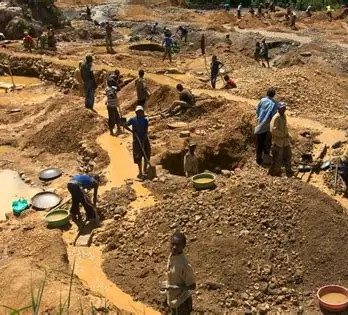
By Dr. Iluyomade Aderenle, Mining Geologist, writes in from Lagos
Nigeria’s worsening insecurity and economic sabotage have become deeply intertwined with the illicit exploitation of its natural resources. Across the north and central regions of the country, illegal mining has evolved from a local criminal activity into a multibillion naira enterprise that fuels armed groups, finances terrorism, and drains national revenue. What is often overlooked, however, is the complex network of foreign interests, particularly Chinese financiers, who have been accused of bankrolling or benefiting from these illegal operations.
Recent findings by the Nigeria Extractive Industries Transparency Initiative (NEITI) and security agencies show that the country loses an estimated nine billion dollars every year to illegal mining and smuggling. This is not just an abstract figure; it represents the financial lifeline of armed groups that have turned many mineral rich areas into zones of conflict and lawlessness. In these regions, the government’s authority is weak, and whoever can pay the most, whether a local cartel or a foreign buyer, controls access to gold, lithium, and other valuable minerals.
Investigative reports, including those published by The Times of London, suggest that some Chinese nationals and companies have made arrangements with insurgents in Nigeria’s northwest and north central regions to gain access to mining sites. These so called “security arrangements” amount to indirect financing of armed groups who tax and protect illegal operations in exchange for steady payments. While such claims may not directly implicate the Chinese state, they reveal a disturbing trend of private foreign actors embedding themselves in Nigeria’s underground mineral economy.
The evidence, though scattered, is difficult to dismiss. In 2020, Nigerian authorities arrested twenty seven illegal miners in Osun State, including seventeen Chinese nationals, for unlawful extraction of gold. Around the same time, another Chinese national was sentenced to five years in prison for smuggling more than twenty five tonnes of lithium bearing minerals. These incidents highlight the global value of Nigeria’s resources and how foreign profiteers exploit local instability to secure access to them.
Security agencies have repeatedly confirmed that proceeds from illegal mining are a major source of funding for terrorist networks. The Minister of Solid Minerals Development recently stated that these illegal activities sustain banditry and violent extremism. In states such as Zamfara, Kaduna, Niger, and Nasarawa, illegal mining areas have become safe havens for armed groups. The profits from these operations are laundered through informal networks, often used to purchase weapons and supplies that perpetuate violence.
The economic logic behind this criminal enterprise is simple. In areas where government oversight is minimal, foreign buyers pay protection fees or community levies to local warlords, ensuring uninterrupted access to mineral deposits. These payments, often made in cash or through middlemen, sustain the same groups responsible for kidnappings and attacks on rural communities. Each ounce of gold or bag of lithium extracted outside official channels represents not just lost revenue but also the continued funding of Nigeria’s insecurity.
Local elites and businessmen have also been implicated in this web of corruption. Investigations suggest that some influential Nigerians act as intermediaries between foreign financiers and criminal networks, helping to forge fake mining licenses or shield illegal operations from law enforcement. This collusion provides a protective umbrella that allows foreign operators to function with little fear of punishment.
China’s role in this growing crisis remains controversial. The Chinese government has consistently denied any official involvement, insisting that individual actors, not the state, are responsible for illegal activities. However, the frequency of arrests involving Chinese nationals, the concentration of Chinese linked mining outfits in conflict zones, and the repeated interception of smuggled minerals headed for Asian markets raise questions about oversight and accountability.
It would be unjust to generalize all Chinese investments as exploitative. Many Chinese companies operate legally and contribute to Nigeria’s industrial and economic growth. Yet the lack of transparency in mineral trade data between both countries makes it difficult to separate legitimate commerce from illicit flows. When export figures from Nigeria do not match import data from China, it suggests that a large portion of minerals are being moved unofficially and unrecorded.
The human cost of these illegal activities is staggering. In mining communities such as those in Nasarawa and Niger States, children and young people toil in hazardous pits without safety equipment, earning meagre sums while foreign buyers and local brokers reap enormous profits. The environmental damage is equally devastating, with deforestation, water pollution, and loss of farmland threatening livelihoods.
The Nigerian government has launched several initiatives to tackle this crisis, including the establishment of the Mining Marshals under the Nigeria Security and Civil Defence Corps. However, enforcement alone cannot solve the problem. Without proper data collection, border monitoring, and strong collaboration with foreign governments, particularly China, illegal mining will continue to thrive in secrecy.
Transparency and accountability must be central to reform efforts. Nigeria should introduce a comprehensive mineral traceability system to ensure that every shipment can be tracked from mine to market. Diplomatic channels must also be used to urge the Chinese authorities to regulate and monitor the activities of their nationals engaged in mining across Africa.
Civil society groups, investigative journalists, and the media have an important role to play in sustaining public awareness and exposing the networks that profit from Nigeria’s insecurity. The more informed citizens become, the greater the pressure on government to act decisively.
At its heart, this issue raises a moral question. Should Nigeria allow its natural wealth to be turned into a weapon against its own people? The answer must be an emphatic no. The state cannot afford to remain silent while its resources are traded for chaos and destruction.
The connection between Chinese financiers, terror groups, and illegal mining in Nigeria is not a far fetched theory. It is a dangerous intersection of greed, weak governance, and global demand for critical minerals. Breaking this cycle will require courage, coordination, and international cooperation.
If Nigeria fails to act swiftly and decisively, it risks losing not only its mineral wealth but also its sovereignty. The longer this illicit network operates unchecked, the more deeply it will entrench itself in the fabric of the nation’s insecurity.