 Keji Mustapha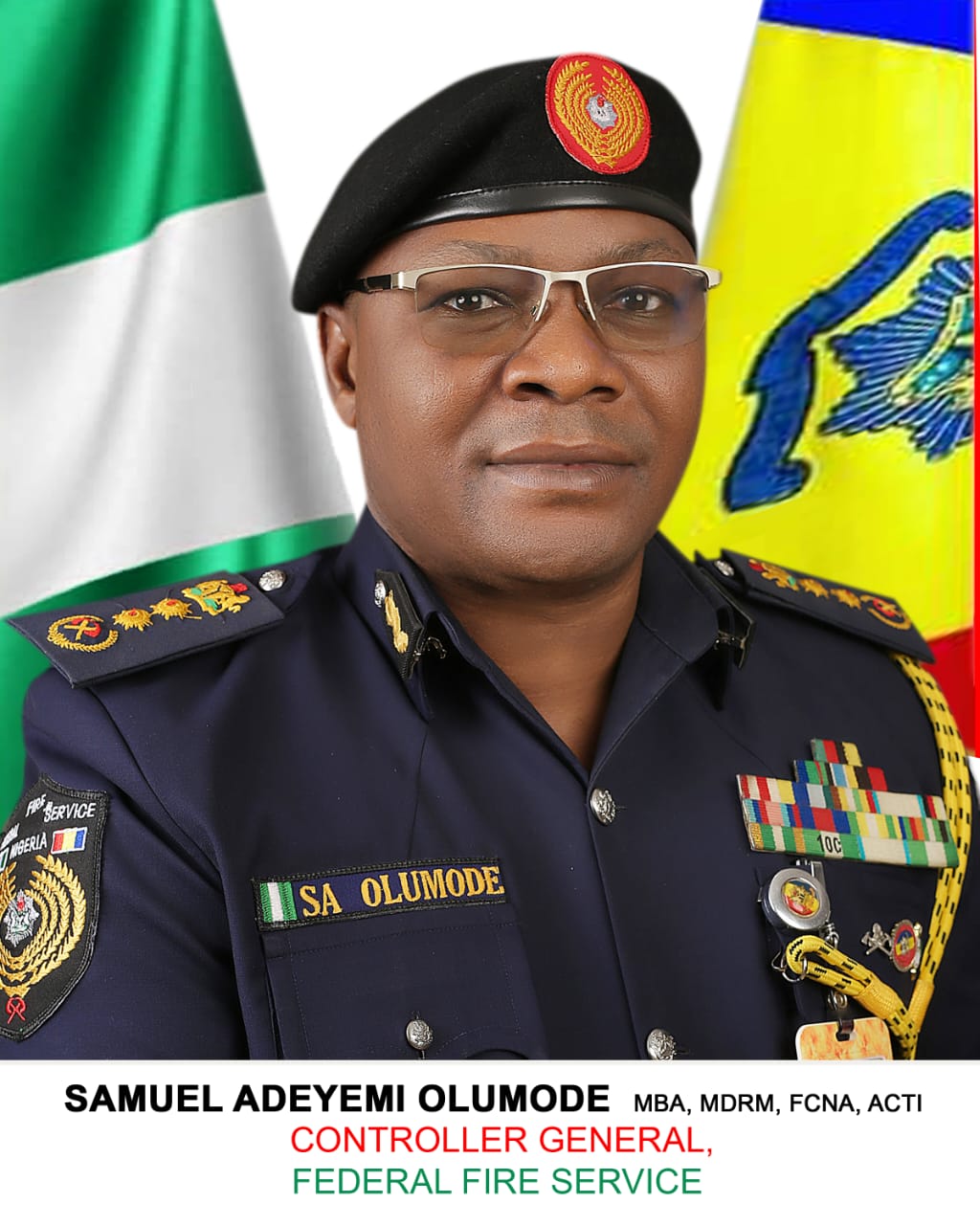
Dr. Emmanuel Obaje writes in from Asaba, Delta State
For too long, Nigeria’s Federal Fire Service has existed as a paradox, an agency built to save lives but often in need of rescue itself. Beneath its crimson insignia lay years of neglect: underfunded operations, corroded engines, moribund outstations, and officers demoralized by the slow decay of institutional purpose. It was, in essence, an old ship adrift manned by dedicated sailors but captained without direction.
Under the immediate past administration of Controller General Abdulganiyu Jaji Olola, the rot became impossible to ignore. The reality within the Service told a story of stagnation, bureaucracy, and internal disarray. Reports of job racketeering, fraudulent enlistments, and ghost names on the payroll surfaced, exposing a system gasping for credibility. Fire trucks rusted idle in their bays, many without water or spare parts, while stations in several states turned skeletal, their operations surviving largely on improvisation.
Training was sporadic, equipment obsolete, and morale dangerously low. The Service had become a metaphor for systemic failure, an institution whose flame was slowly dying out, kept alive only by the courage of men and women who refused to abandon duty. For years, the Fire Service’s narrative was one of unfulfilled potential, a story told in smoke and missed opportunities.
Then came a decisive intervention from President Bola Ahmed Tinubu. In what many analysts now describe as a masterstroke of merit-based leadership, he appointed Dr. Olumode Samuel Adeyemi as Controller General. Adeyemi, a career officer with the rare blend of intellect, administrative skill, and operational experience. Tinubu’s choice was not political patronage; it was a signal of intent that the days of mediocrity in critical national institutions must end.
Adeyemi’s résumé is, by every measure, enviable. A certified accountant, public administrator, and treasury manager, he embodies the modern technocrat, data-driven, disciplined, and strategically minded. He is known within service circles as “the quiet reformer.” Those who have worked with him describe a leader obsessed with systems, accountability, and measurable outcomes.
Barely weeks into his tenure, the effects of his leadership are already rippling across the Service. Adeyemi has launched what insiders call “a renewal agenda” which conceptualises a comprehensive initiative targeting welfare, operations, training, and transparency. He began with people: revising cooperative loan ceilings upward, merging fragmented allowances into structured pay, and signaling that staff welfare would no longer be an afterthought but a cornerstone of productivity.
His second front was finance. Adeyemi has pressed for an upward review of the Service’s federal allocation and a shift toward first-line charge status, a move that would give the Fire Service direct access to operational funding without bureaucratic delays. In a system long suffocated by red tape, this push for fiscal autonomy could be transformational.
But his reform blueprint goes beyond numbers. Adeyemi is rebuilding a culture firmly grounded in discipline and professional pride. He has declared an uncompromising war on job racketeering and internal corruption, warning that anyone caught in fraudulent enlistments will face full prosecution. It is a tone Nigerians have longed to hear: stern, reformist, and unflinching.
He is also bringing modernity to the field. The reactivation of dormant outstations many of which had been silent for years is now underway. New operational trucks and protective gear are being procured. Adeyemi has ordered the inspection of every fire station in the federation, insisting that no command should respond to emergencies without functional water supply, communication tools, and personnel readiness.
Training, too, is being redefined. Adeyemi has introduced a system of continuous professional development, blending international best practices with local realities. A plan for a national fire academy is on the drawing board; one that will produce officers trained not only to extinguish flames, but to manage disasters, enforce safety regulations, and educate communities.
In this new era, the Fire Service is no longer merely a responder; it is being repositioned as a preventive institution that anticipates crises rather than reacts to them. Adeyemi’s doctrine is simple: preparedness is cheaper than response.
For a country where urban expansion and industrial hazards are on the rise, this philosophy could not be timelier. From Lagos to Kano, and from Abuja to Port Harcourt, Nigerians have grown weary of hearing excuses after every fire outbreak. Adeyemi’s mission, by contrast, is to ensure that the Service is always ready, always visible, and always credible.
The early signs inspire optimism. Officers speak of renewed motivation. Commands once neglected are receiving attention. For the first time in years, there is a sense of purpose and coordination across the Service’s hierarchy. Nigerians are beginning to believe that perhaps, at last, the long-suffering Fire Service has found its compass.
President Tinubu deserves credit for the foresight to entrust the Service to a man whose record reflects quiet competence rather than loud promises. In Adeyemi, Nigerians have found not just a new captain, but a reformer who understands both the currents and the storms.
The Federal Fire Service may still be an old ship, but under Adeyemi, it is finally under command of a captain who knows how to navigate. If he stays the course, this institution could yet become one of the great success stories of Nigeria’s ongoing governance renewal.