 Keji Mustapha
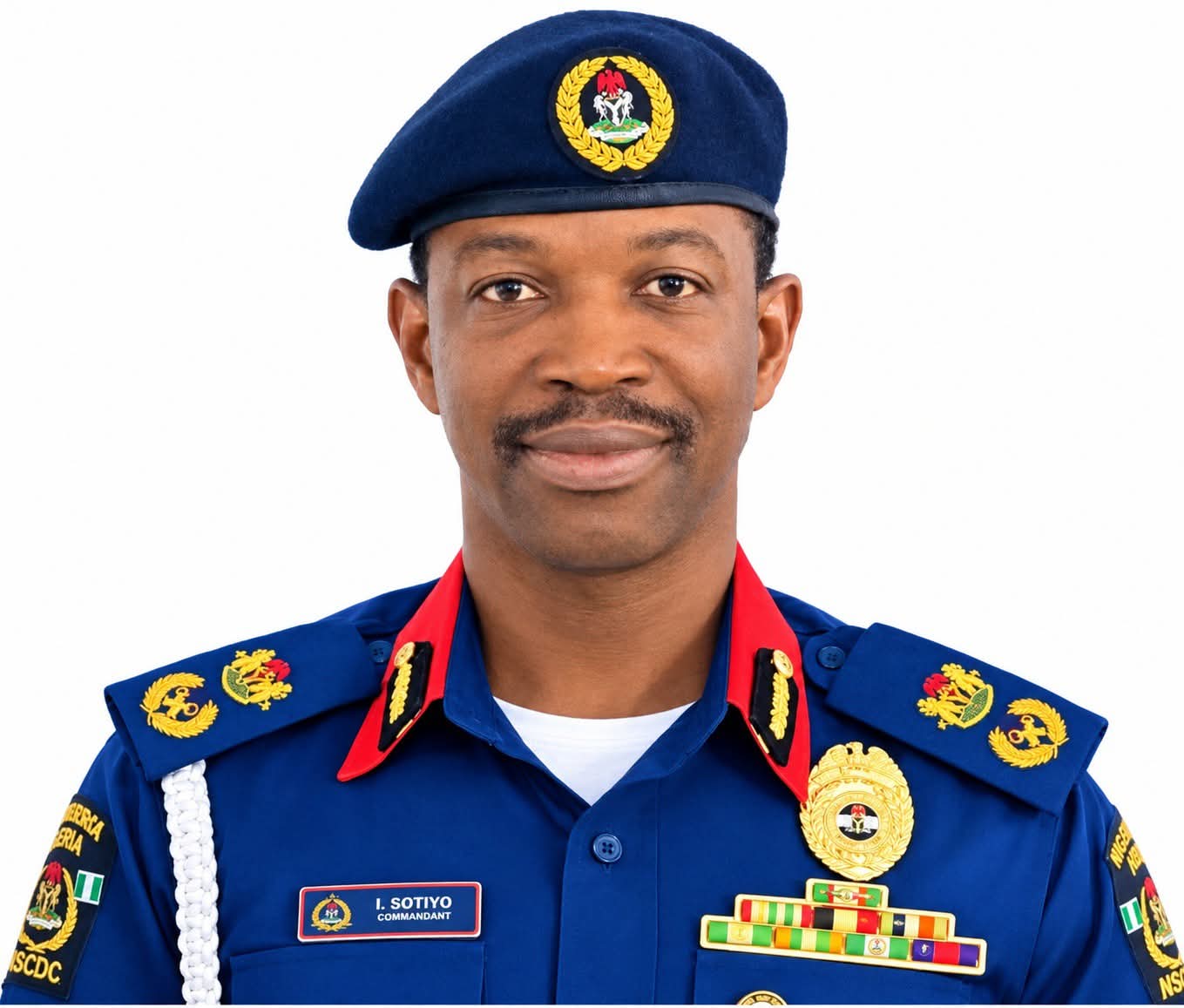
Pix: Federal Fire Service Controller General, Samuel Adeyemi
Bamanga Abdulkadir, a security enthusiast, writes in from Kaduna
The Federal Fire Service in Nigeria deserves significantly better funding and stronger budgetary allocation, not only because of the scale of risks it manages but also due to the staggering human and economic losses recorded each year. Fire outbreaks remain a major national threat, with the Service reporting in 2024 alone that property worth ₦67.1 billion was destroyed across the country while more than 100 lives were lost. Yet, in the same period, firemen saved property valued at about ₦1.94 trillion and rescued over 30,000 people from certain death. These figures show both the magnitude of losses and the immense potential of the Service when adequately empowered.
The reality in Lagos State alone demonstrates the national urgency. In 2024, the state recorded property losses of ₦19.52 billion to fire incidents and over 90 lives were lost within just one year. In the first half of that year, more than 1,000 fire incidents were reported in Lagos, many of them in crowded markets, tanker routes, and residential areas. Such economic and human devastation is not limited to Lagos; it is repeated in other urban centers across the federation. The current federal funding for the Fire Service is far from adequate when weighed against these risks. In the 2025 executive budget proposal, only ₦45.1 billion was allocated to the Service, which translates to roughly ₦194 per Nigerian when divided against the population of about 232.7 million. This amount is meager compared to the level of resources needed to maintain a truly modern fire and emergency response system. In fact, the losses recorded in Lagos alone in a single year amount to nearly half of the entire national budget of the Federal Fire Service, illustrating a severe mismatch between risk exposure and resource provision.
The Service has in recent years embarked on expansion, opening new metropolitan stations and planning to establish at least one fire station in each of the 109 senatorial districts of the federation. However, to achieve such coverage and to sustain it requires steady funding for infrastructure, staffing, maintenance, and training. Population growth and rapid urbanisation are worsening the fire risk profile of Nigeria. With the population expanding at about 2.1 percent annually, new housing estates, informal settlements, industries, and fuel depots are springing up faster than the Fire Service can cover them. Fire hazards are increasing, while coverage remains patchy. Without urgent and substantial financial support, the Service will continue to lag behind the country’s growth, leaving millions of Nigerians vulnerable.
Beyond coverage gaps, the economic and social spillovers of inadequate fire protection are severe. Each market fire not only destroys shops and goods but also wipes out jobs, pushes families into poverty, and reduces government tax revenue. In this way, fires undermine local economies and disrupt national economic growth. Prevention and rapid intervention are far cheaper than rebuilding burnt markets, warehouses, industries, and residential estates. A well-funded Fire Service can reduce these losses dramatically through swift response, proper inspection, and community education.
The Service also needs a stronger financial base to professionalise its operations. Firefighters require modern protective gear, self-contained breathing apparatus, ladder trucks for high-rise buildings, water tankers, and specialised equipment for hazardous materials. These cannot be provided with underfunded, irregular budgets. Training and retraining through the National Fire Academy and specialised courses for hazardous material handling, technical rescue, and emergency medical response are crucial to keep Nigerian firemen at par with international standards. Additionally, sustained budgetary provision is necessary for preventive roles such as fire inspections of markets, filling stations, industrial plants, and high-rise buildings, alongside large-scale public enlightenment campaigns. Evidence from other countries shows that fire prevention education drastically reduces incident rates, but such campaigns require consistent investment.
Communication and emergency dispatch infrastructure also depend on adequate funding. Modern emergency response relies on integrated computer-aided dispatch systems, 24/7 control rooms, GPS-enabled fleets, and nationwide radio networks. Without these, response is slowed, coordination breaks down, and lives are lost. Specialised firefighting resources such as foam and other chemical agents for tackling fuel tanker and depot fires also require earmarked funding. In a country where tanker explosions and fuel depot fires are common, underfunding these supplies exposes whole communities to avoidable disasters.
The economic logic of funding the Fire Service more adequately is straightforward. At present, Nigeria spends just ₦194 per citizen on national fire protection, yet a single urban fire in Lagos or Onitsha can wipe out billions in assets overnight. With more robust allocations, Nigeria would not only prevent massive property losses but also save lives, protect jobs, safeguard investments, and reduce the economic strain on government itself when disaster relief and rebuilding become unavoidable. In terms of return on investment, fire protection yields some of the highest dividends of any public safety expenditure.
In sum, Nigeria’s fire service faces a national mandate far greater than the resources it is given. With the realities of urban growth, industrial expansion, fuel logistics, and climate-induced risks, the Service must be transformed into a robust, professional, and well-equipped emergency response institution. This cannot happen on a budget that barely scratches the surface of need. Better funding is not just desirable; it is an urgent national necessity to save lives, protect livelihoods, and secure the nation’s economic assets from destruction.