 Keji Mustapha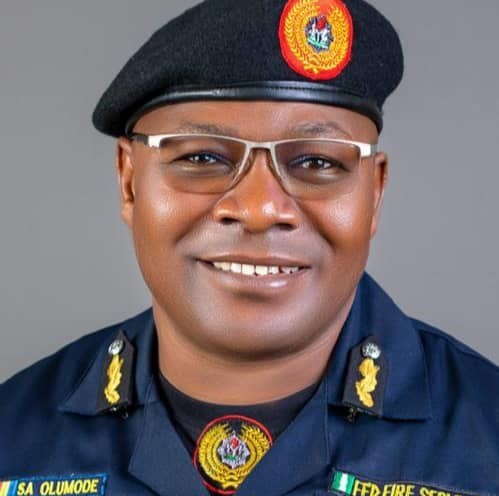
Pix; Olumode Samuel Adeyemi
Dr. Emmanuel Okechukwu, an Emegency and Accident Management Consultant writes in from London
The appointment of Olumode Samuel Adeyemi as Nigeria’s Chief Fire Officer has naturally raised great expectations across the country. For Nigerians, this appointment is more than just a routine change of leadership; it is seen as a chance to restore credibility and confidence in a critical national institution that has for too long been weakened by inefficiency, low morale, and public distrust.
Expectations are particularly high because Adeyemi comes into office with an unblemished and enviable professional background. His career record is distinguished by integrity, competence, and unwavering commitment to service delivery. Unlike many others in similar positions, he carries no stains of controversy, no shadows of compromise, and no doubts about his professional capacity. His career trajectory has been defined by hard work, discipline, and professionalism, qualities that Nigerians have long yearned to see reflected in the Federal Fire Service. This explains why his appointment has rekindled hope among citizens who had all but given up on the possibility of the service living up to its mandate.
Over the years, Nigerians have grown deeply frustrated with the Fire Service’s inability to manage emergencies effectively. In moments of tragedy be it the countless fire outbreaks in crowded markets, the destruction of homes and offices, or disasters that demanded swift rescue efforts the institution has often been found wanting. Instead of being proactive, it has largely been reactive, arriving late to emergencies or ill-equipped to respond decisively. Its image has been marred by underfunding, poor preparedness, and in some cases, a near absence when citizens most desperately needed it. The result has been a widespread erosion of confidence in the service, with many Nigerians resigned to their fate whenever fire disasters strike.
This is why the new Chief Fire Officer carries a historic burden of responsibility. Adeyemi must recognize that his appointment is not simply a promotion within the service, but a call to national duty at a time when Nigerians demand a radical departure from the past. He is duty-bound not to disappoint, because failure would not only erode his personal legacy but would also further deepen public disillusionment with a service already hanging by a thread of credibility. Nigerians expect him to deliver a paradigm shift, one that will position the Federal Fire Service as a proactive, professional, and trusted agency capable of handling emergencies with precision and speed.
To meet these expectations, he must embark on deep reforms that will modernize the service, equip it with the tools of efficiency, and prepare it to act swiftly in times of crisis. He will need to prioritize staff training and welfare, because only a motivated and well-prepared workforce can meet the demands of a modern fire and emergency service. He must also rebuild public trust by demonstrating accountability, visibility, and transparency in leadership. Most importantly, his leadership must embrace collaboration with other emergency and security agencies to ensure a coordinated response during disasters.
Olumode Samuel Adeyemi has the chance to rewrite the story of the Federal Fire Service and to etch his name in history as the man who turned a struggling institution into a dependable national asset. Nigerians have placed their confidence in him, not merely because of the office he now occupies, but because of the untainted reputation he brings to it. He must therefore rise to the occasion with courage and determination.
The advice to him is clear: lead boldly, embrace reform, and drive a paradigm shift that will finally give Nigerians a Federal Fire Service they can be proud of. This is not just an opportunity for personal achievement; it is a rare chance to restore faith in a vital institution and to write a new chapter of history that must not be missed.