 Isiaka Mustapha
By Isiaka Mustapha, CEO/Editor-In-Chief, People’s Security Monitor
When President Bola Ahmed Tinubu approved the appointment of Olumode Samuel Adeyemi as the new Controller-General of the Federal Fire Service, he was not simply filling a vacancy. He was handing over a broken system, a paramilitary agency that, instead of being synonymous with safety and rescue, had too often made headlines for the wrong reasons: missing billions, recruitment scandals, procurement fraud, and credibility gaps exposed at the very highest levels of legislative oversight. The job before Adeyemi is monumental because the institution he now leads is emerging from one of its most controversial eras under his predecessor, Jaji Abdulganiyu. His tenure left a trail of unresolved audit queries, public distrust, and parliamentary rebukes that Nigeria cannot afford to ignore. For an agency whose motto is “Discipline, Dedication and Service to Humanity,” the contradictions could not be more glaring.
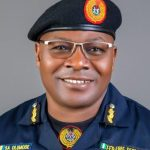
Perhaps the most visible shadow trailing the immediate past leadership is financial mismanagement. In early 2024, the House of Representatives Committee on Public Accounts directed the Federal Fire Service to refund ₦1.48 billion. This was money released under COVID-19 intervention funds, resources earmarked to strengthen national emergency capacity at a time when lives depended on resilience and readiness. But when probed, the Service failed to provide satisfactory evidence of how that money was used. Lawmakers were unconvinced by explanations given, and the agency was given just seven days to refund the funds or face sanctions. To put it plainly: ₦1.48 billion, a figure that could have bought dozens of modern fire trucks, rehabilitated over 200 fire stations across the federation, or funded intensive training for hundreds of fire officers, vanished under a cloud of unanswered questions.
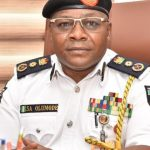
This was not an isolated concern. Subsequent committee hearings exposed glaring inconsistencies in the Service’s procurement and revenue practices. Trucks and firefighting equipment were allegedly procured at inflated costs, receipts were inconsistent, and the Service often relied on handwritten and manual documentation that lawmakers dismissed as “inadequate and unverifiable.” In an era of e-receipts and digitized accounting, such opacity fuelled suspicions of deliberate obfuscation.
As damaging as financial irregularities were, recruitment scandals perhaps struck the hardest blow against the Service’s credibility. In 2023, hundreds of desperate applicants stormed FFS headquarters and documentation centres across the country clutching fake appointment letters. Investigations later revealed that criminal syndicates were issuing counterfeit employment letters charging unsuspecting job seekers sums ranging between ₦1 million and ₦3 million per slot. In one audit, officials acknowledged that at least five ghost officers were illegally enrolled into the federal payroll (IPPIS), siphoning government salaries meant for real workers. The problem was so rampant that the Service had to set up committees to weed out fake staff. The human toll of this racket was severe, scores of families had to to forgo their life savings, sold property, or borrowed heavily in pursuit of what turned out to be fraudulent enlistments. For many young Nigerians, the FFS became a cautionary tale of dashed dreams and corruption. Instead of being seen as a beacon of national service, it became associated with job racketeering and exploitation.
The National Assembly’s Joint Committee on Interior in 2023 specifically faulted the Fire Service on two fronts: procurement and internally generated revenue. For procurement, lawmakers cited inconsistent pricing of fire trucks, contract inflation, and non-transparent tendering processes. For revenue, they noted that the Service could not tender credible bank statements to prove that remittances from its operations including building plan approvals, fire safety certification, and inspections were actually deposited into government coffers. Instead, officials presented manual receipts and handwritten acknowledgments. Lawmakers rejected these outright and demanded audited bank evidence, warning that the Service’s books showed serious weaknesses that bordered on deliberate manipulation. In effect, a public safety agency was operating as though accountability and transparency were optional.
The fallout from these practices has been stark on the ground. Fire outbreaks across the country continue to expose the Service’s inadequacies: late response times, outdated equipment, and insufficient personnel. By mid-2024, Nigeria recorded over 2,000 fire incidents, resulting in billions of naira in property losses and hundreds of lives cut short. Yet billions were being siphoned off through opaque procurements and unaccounted funds. In Jigawa State alone, the Service reported over ₦1 billion in property losses from fire outbreaks in just one year. Nationwide, the absence of modern trucks, protective gear, and functioning hydrants highlighted the gap between allocated funds and visible capacity.
Against this backdrop, Olumode Samuel Adeyemi steps in at a pivotal moment. His task is not just to command firemen and women but to rescue the Service itself from institutional decay. He must close audit queries and embrace transparency by cooperating fully with the Auditor-General, publishing audited accounts, and ensuring every naira is traceable. The era of inflated contracts must end, with procurement processes opened to competitive bidding and published for public scrutiny. Recruitment reforms are also urgent: a centralized digital portal is needed to end job racketeering, allowing applicants to track their status and ensuring syndicates exploiting desperation are prosecuted. Public accountability must become routine, with quarterly reports to the National Assembly and the public, transforming scrutiny from adversarial confrontation to proactive disclosure. Most importantly, operational readiness has to be rebuilt. Funds must be redirected toward actual capacity building: modern trucks, hydrants, fire stations, and training. Nigerians need to see tangible improvements in response times and firefighting efficiency.
Transparency is not just a moral obligation; it is a strategic necessity. Without it, the Service cannot secure adequate funding from government or donor agencies. Without it, morale among honest officers collapses. Without it, the public will continue to see the Service as a money pit rather than a lifesaving institution. Adeyemi’s legacy will therefore depend on how boldly he confronts the ghosts of his predecessor’s tenure. His challenge is not only to fight fires in the literal sense but to extinguish the flames of corruption, opacity, and inefficiency that have engulfed the Service.
The Federal Fire Service has been here before: starved of resources, ridiculed for inefficiency, and plagued by corruption. But leadership matters. Adeyemi’s appointment offers a chance to redeem the Service’s battered image, restore its credibility, and make it a true guardian of lives and property. What he makes of this moment will determine whether Nigerians remember him as the Controller-General who turned the Service around or just another name in a long line of officials who allowed an essential institution to burn from within.




 Keji Mustapha