 Keji Mustapha
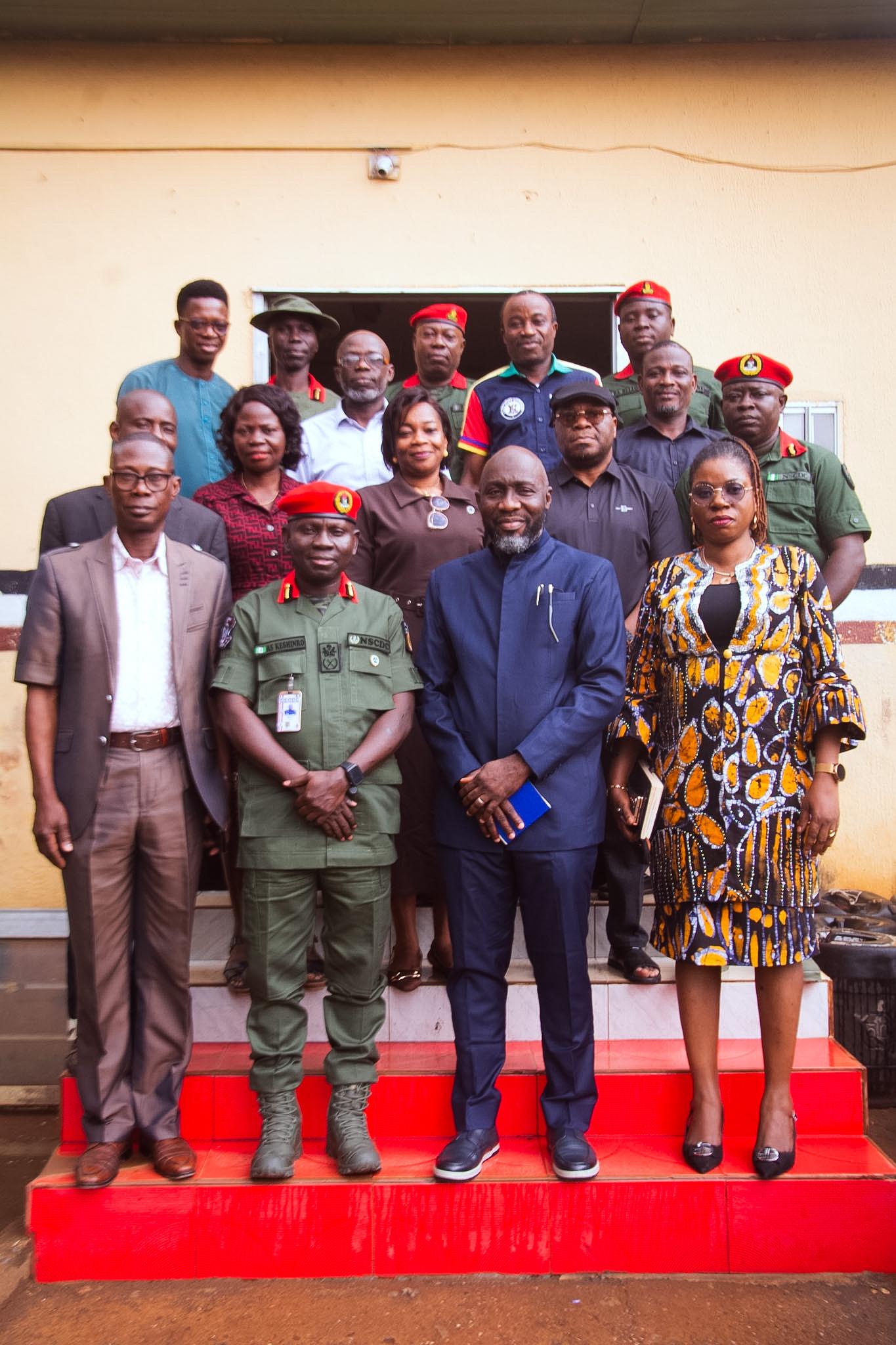
Pix: Commander Attah John Onoja, Head, NSCDC Special Mining Marshals
Chukwuemeka Ibe, writes in from Suleja, Niger State
The recent shutdown of an illegal quarry in Abuja’s Kuje Area Council by the Nigeria Security and Civil Defence Corps (NSCDC) Mining Marshals is a textbook example of decisive law enforcement. It is also a showcase of the exceptional leadership of Assistant Commandant of Corps (ACC) Attah John Onoja, a man who has become synonymous with integrity, resilience, and results in the fight against illegal mining. Thirteen suspects, accused of unlawfully exploiting a quarry lease belonging to a licensed operator for over seven months, now face prosecution. While the headlines capture the arrests, the bigger story lies in the man behind the operation, and in the trust and confidence the NSCDC’s top leadership places in him.
Illegal mining is one of the silent killers of Nigeria’s economy. Beyond the loss of billions in potential revenue, it erodes environmental integrity, fuels local conflicts, and undermines legitimate enterprise. For decades, illegal operators have thrived under the cloak of weak enforcement, opaque licensing systems, and the silent blessing of hidden power brokers. Breaking that cycle requires not just institutional mandates but commanders with the personal will to see the fight through. This is where Onoja’s uncompromising nature comes into play. Colleagues and subordinates alike attest to his refusal to be swayed by intimidation or inducement. He approaches each operation with a blend of tactical precision, strategic foresight, and moral clarity that leaves no doubt about his intentions. He ensures the santity of the law will be upheld, no matter whose interests are threatened.
It is no coincidence that Prof. Ahmed Abubakar Audi, the Commandant General of the NSCDC, entrusted Onoja with the leadership of the Special Mining Marshals. Prof. Audi’s tenure has been defined by a clear and consistent policy of protecting critical national assets, and he has often stressed that the Corps must be led in the field by officers who embody ethical discipline and operational excellence. In Onoja, the Commandant General found not only a competent field officer but also a trusted lieutenant whose record speaks volumes. Audi’s confidence in Onoja is both public and deliberate, a signal that within the NSCDC, performance, integrity, and loyalty to the national interest are recognized and rewarded.
This confidence is not given lightly. Under Onoja’s leadership, the Mining Marshals have built a reputation for effective, intelligence-driven enforcement operations across different states, confronting well-entrenched networks of illegal miners. He is not a commander who hides behind bureaucracy. On the contrary, he is often physically present at the frontlines, coordinating raids, engaging communities, and ensuring that evidence is meticulously gathered to make prosecutions airtight. His operational philosophy aligns seamlessly with Prof. Audi’s vision: law enforcement must not only be effective but also visibly just, thereby inspiring public trust.
The Kuje quarry case is a prime example of that philosophy in action. The site was not only illegal but operated without safety protocols or environmental safeguards, endangering both workers and the community. Many would have turned a blind eye, considering the location and the interests possibly at stake. But Onoja, empowered by the unflinching backing of the Commandant General, moved decisively. His actions reaffirm the NSCDC’s message that the era of impunity in the mining sector is over. Prof. Audi’s strategic faith in Onoja has been vindicated yet again, proving that with the right commanders in place, enforcement agencies can uphold the law without compromise and without fear.
Nigeria’s mining sector has the potential to be a pillar of economic diversification, but only if its foundations are rebuilt on legality, accountability, and fairness. The combined resolve of Prof. Ahmed Audi and ACC Attah Onoja offers a glimpse of what that future could look like. The shutdown in Kuje is not just a singular victory; it is part of a broader pattern of strategic enforcement, ethical leadership, and unwavering service delivery. If sustained, this partnership between vision at the top and execution in the field could rewrite the story of mining in Nigeria.