 Keji Mustapha
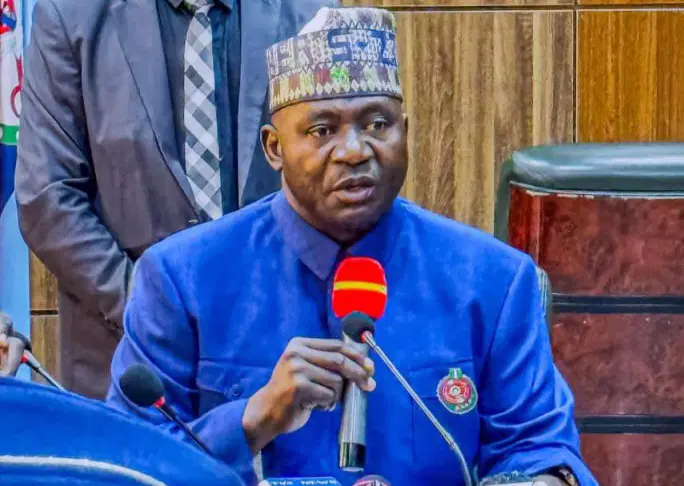
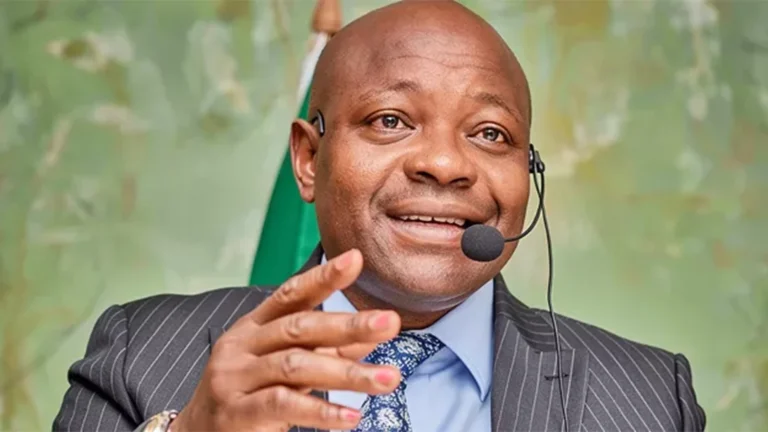
Governor Caleb Mutfwang
By Isiaka Mustapha, CEO/Editor-In-Chief, People’s Security Monitor
In the beautiful but bruised hills of Plateau State, where rolling farmlands meet vibrant cultures, peace has long remained elusive. For over two decades, the state once known as the “Home of Peace and Tourism” has struggled under the weight of violent conflict: from ethno-religious tensions to deadly farmer-herder clashes, and more recently, banditry and terrorist threats. These aren’t just statistics; they are the realities of communities shattered and displaced, families torn apart, and dreams halted in their tracks.
Between 2001 and 2022, an estimated 10,000 lives were lost to violence in Plateau State. More than 300,000 people were displaced, according to figures from the Internal Displacement Monitoring Centre (IDMC). And in 2023 alone, over 300 lives were lost in a series of attacks across Mangu and neighboring local government areas, leaving thousands fleeing their homes. The scars run deep.
Stepping into office on May 29, 2023, Governor Caleb Mutfwang knew he wasn’t inheriting a blank slate; he was inheriting a crisis. But rather than making security a distant promise or political slogan, he treated it as the bedrock of governance. His approach has been practical, focused, and people-centered.
Under Mutfwang’s watch, security coordination in the state has undergone a quiet transformation. Weekly security council meetings now bring together senior leadership from the Nigerian Army’s 3rd Armoured Division, the Department of State Services (DSS), the Nigeria Police, Nigeria Security and Civil Defence Corps (NSCDC), and Operation Safe Haven. These gatherings are no longer ceremonial; they’re operational, with intelligence shared in real-time, hotspots identified, and action plans implemented.
One notable step was taken by the Operation Safe Haven task force, which in July 2022 trained 165 members of the Civilian Joint Task Force on intelligence gathering in Riyom LGA. The training, which included modules on intelligence gathering and conflict de-escalation, marked a shift toward integrating local actors into a more formal and coordinated security structure. These grassroots enforcers now complement formal security agencies in protecting remote communities that were previously left vulnerable.
The impact of these interventions has been tangible. According to a 2025 report by SBM Intelligence, violent incidents across Plateau dropped significantly between late 2023 and mid-2025. Mangu, once a flashpoint of killings and displacement, has seen displaced people return to six previously abandoned villages. In some of these communities, farming has resumed, and children are gradually returning to reopened schools.
The government has also moved to address the physical fallout of insecurity. Several primary healthcare centers damaged in past attacks have been rebuilt. Schools previously shut due to violence have reopened, and new security outposts have been established in historically volatile areas.
But Governor Mutfwang’s effort has not focused solely on uniformed patrols and surveillance. In a state where most of the population depends on agriculture for their livelihood, he recognized early that food security and physical security are deeply connected. His administration partnered with the NSCDC to sponsor a number of Plateau indigenes into the elite Agro Rangers Unit. These trained operatives now help protect farmlands and rural communities, restoring confidence among farmers who had been too afraid to return to their lands.
Peacebuilding has also been institutionalized through the revitalization of the Plateau Peace Building Agency (PPBA). The agency has facilitated youth reintegration programs, inter-ethnic dialogue sessions, and community-level mediations. A landmark breakthrough came in April 2025 when Berom and Fulani leaders in Riyom signed a peace accord facilitated by the PPBA, a moment many observers describe as a historic shift after years of mutual suspicion and hostility.
Voices from the grassroots echo these changes. In Barkin Ladi, Chief Emmanuel Dung praised the governor for consultation-based deployments. “We are now being listened to before any security decisions are made. That respect is healing us,” he said. Esther James, a widow displaced by violence in Mangu, recalled how she returned to her farmland in late 2024. “I buried loved ones. I never thought I’d come back. But something changed last year. I feel safer now.”
Despite these achievements, the challenge remains daunting. Violent incidents, though reduced, have not disappeared. Armed groups continue to exploit Plateau’s porous borders with Bauchi, Taraba, and Nasarawa States. Sophisticated weapons occasionally appear in the hands of non-state actors. There is also the constant threat of political figures inflaming ethnic divisions—especially with local government elections on the horizon.
The financial strain of sustaining security efforts is another challenge. With limited internally generated revenue and heavy dependence on federal allocations, the state government faces difficult trade-offs between maintaining security and meeting other pressing needs in health, education, and infrastructure.
Yet, amid these constraints, Mutfwang’s resolve has not wavered. He continues to approach security not as a single policy but as a lens through which every aspect of governance is viewed—from budgeting to public engagement, from agricultural development to community reconciliation.
Plateau is not yet whole. Peace remains a work in progress. But for the first time in years, there is a sense that someone is not only listening but acting—carefully, steadily, and with the weight of history in full view. Governor Caleb Mutfwang may not claim victory yet, but he has changed the tone, the tempo, and perhaps, the trajectory of the state’s long quest for peace.
And that alone is a battle worth fighting.