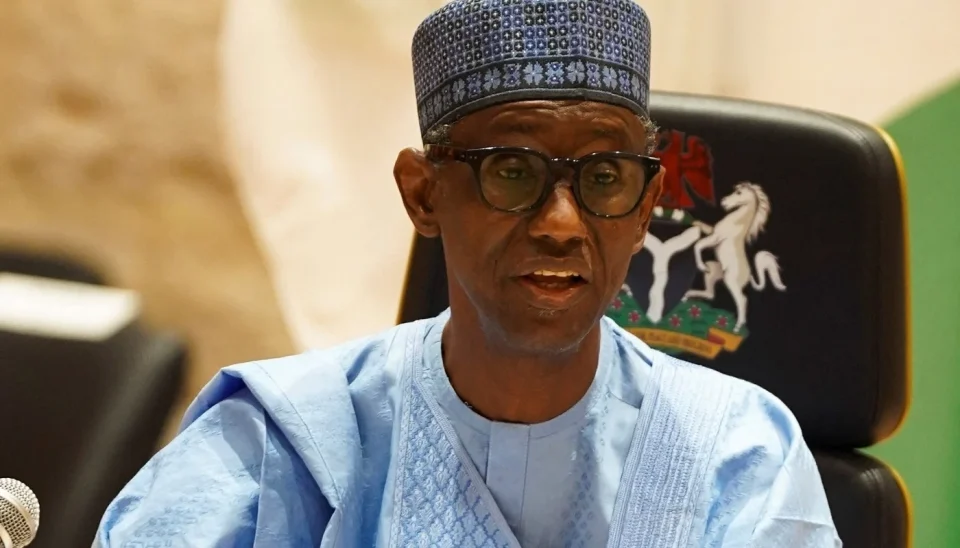
 Isiaka Mustapha
Isiaka Mustapha, CEOEditor-In-Chief, People’s Security Monitor
As insecurity continues to escalate across Nigeria, discussions within policy-making circles are once more veering towards restructuring the security architecture this time through institutional mergers. Prominent among the proposals is the contentious plan to integrate the Nigeria Security and Civil Defence Corps (NSCDC) into another paramilitary institution, most notably the Nigeria Police Force. Proponents argue that such a move would streamline operations, cut costs, and eliminate overlapping functions. However, this line of reasoning grossly underestimates the distinct role the NSCDC plays, the strategic value it contributes to the country’s internal security structure, and the void it continues to fill in areas where other agencies either lack presence or have lost public trust.
Right from its inception, the NSCDC was never established to rival the police or the armed forces. Instead, it was conceived as a complementary institution designed to serve as a bridge between citizens and the formal security apparatus. Trained to handle civil unrest, safeguard critical infrastructure, respond swiftly to emergencies, and work closely with local populations through nonviolent, community-driven approaches, the Corps has steadily transformed over the years. What began as a modest civil protection agency has now matured into a trusted national force. In moments of crisis, be it communal violence, natural disasters, or economic sabotage, the NSCDC has repeatedly stepped in to carry out responsibilities that other security agencies often avoid or are unable to perform effectively.
The NSCDC’s operational relevance didn’t happen by accident. It took visionary leadership, especially during its formative years under Dr. Ade Abolurin, the founding Commandant-General. He planted the seeds of institutional structure, nationwide presence, and inter-agency cooperation. Abolurin didn’t just build an organization; he established a security culture within the NSCDC; one that is rooted in professionalism, discipline, and a sense of public duty. His efforts laid a solid foundation that has allowed the Corps to withstand political instability, budget constraints, and even attempts to undermine its existence.
This legacy has not only survived but expanded under the current Commandant-General, Professor Ahmed Abubakar Audi. Under his leadership, the Corps has grown more structured, more responsive, and far more equipped to tackle 21st-century security challenges. Professor Audi has reformed the agency’s internal management, strengthened training programs, and deepened its capacity for intelligence gathering and surveillance. He has introduced new technologies, modernized the command-and-control structure, and ensured that the Corps remains focused on service delivery and integrity.
Under Professor Audi’s command, the NSCDC has also made its presence felt in Nigeria’s oil-producing zones, where the agency has led several major operations against pipeline vandals and oil thieves. Working hand in hand with the Nigeria National Petroleum Company Limited (NNPCL) and other security forces, the NSCDC has uncovered illegal bunkering operations, shut down illicit refineries, and arrested numerous individuals engaged in economic sabotage. These are not minor victories; they represent billions of naira in recovered losses and the protection of assets critical to the nation’s economy.
Equally impressive is the Agro-Rangers unit, launched to safeguard farmers and agricultural investments across the country. At a time when conflicts between farmers and herders are undermining food security, the NSCDC has been dispatched to restore order, mediate disputes, and protect farmland. This is a unit with clear purpose and local support. In many communities, the presence of NSCDC officers is the only thing standing between peace and bloodshed. They are known not only for their security presence but for their engagement with the people listening, negotiating, and resolving tensions before they escalate.
But despite these efforts and achievements, the Corps remains under legislative threat. It operates solely by an Act of the National Assembly, and that legal status has become its greatest vulnerability. Without constitutional protection, the NSCDC remains subject to political pressures and uncertain policymaking. That a functional, results-driven agency could be on the chopping block due to institutional insecurity is an indictment of how poorly Nigeria protects what works.
Constitutional recognition is the only logical step forward. It would guarantee the Corps’ independence, give it a clear mandate under the law, and provide the necessary tools to carry out its duties without unnecessary interference. It would also boost the morale of its officers, improve recruitment, and secure consistent funding. Most importantly, it would lock in the NSCDC’s role in Nigeria’s evolving security framework, ensuring it can continue operating in areas and situations where conventional forces fall short.
Some argue that merging the NSCDC would simplify security management and reduce overhead costs. But this is a simplistic view that overlooks the cost of insecurity. Reducing the number of agencies without fixing the core problems lack of coordination, underfunding, and poor accountability will definitely solve nothing. What Nigeria needs is not fewer agencies but stronger, more focused ones. The NSCDC has carved out a distinct and irreplaceable identity in that ecosystem. Merging it would be like demolishing a house to fix a leaking roof.
The NSCDC has earned its place in the national security architecture. It has performed consistently in a difficult environment, often under-resourced but never absent. Its credibility with the public, its readiness to act in crisis, and its ability to operate in sensitive environments are all reasons it should be empowered; and not shut down or absorbed. As insecurity deepens and new threats emerge, dismantling one of the few agencies that is working would be an act of national self-sabotage.
Now is the time to make a decisive move. Let Nigeria act boldly by placing the NSCDC in the Constitution, not just to protect it from future erasure, but to position it for greater service. Let the federal government show, for once, that performance counts. Let us protect what works. The NSCDC is not a burden; it is a vital asset. And in these uncertain times, assets like that must be safeguarded, strengthened, and supported; not merged away.




 Keji Mustapha