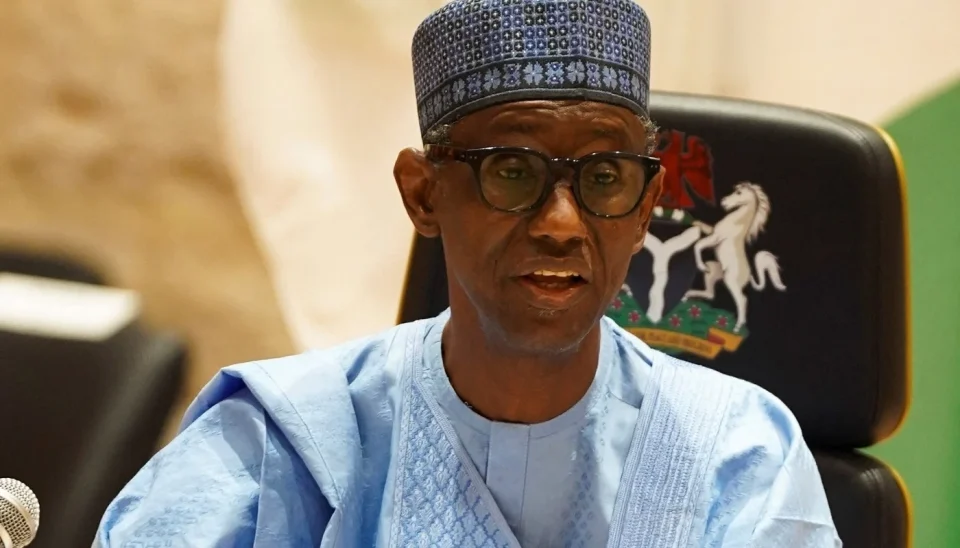
 Isiaka Mustapha
Isiaka Mustapha, CEO/Editor-In-Chief, People’s Security Monitor
On the night of July 14, 2025, Nigeria witnessed yet another harrowing episode in its long and bloody history of mass killings and governmental failure. In Barkin Ladi Local Government Area of Plateau State, 27 defenseless Nigerians, men, women, children, and the elderly were brutally murdered by unidentified gunmen who invaded their homes under the cover of darkness. These were not criminals exchanging fire with security agents. They were executioners, targeting innocent villagers in their sleep. Their only ‘crime’? Living in a nation whose federal government has persistently failed to reform a collapsed policing system, leaving millions at the mercy of unrestrained violence.
What followed was depressingly familiar: delayed security response, hurried mass burials, hollow condemnations from Abuja, and then silence. No arrests. No justice. No meaningful change. It’s a damning and recurring pattern, perpetuated by a federal government that continues to resist the decentralization of policing, an omission that has become one of the gravest threats to Nigeria’s unity and survival.
The Plateau massacre is not an isolated case. It is part of a worsening pattern directly linked to Abuja’s refusal to do the obvious: allow states to establish and control their own police forces. The scale of insecurity today is staggering. Between January 2022 and June 2025, over 25,000 Nigerians were killed in violent attacks ranging from terrorism and banditry to ethnic and communal clashes. These aren’t just statistics; they are sons and daughters, parents and siblings, butchered while the Nigerian state remains immobilized by constitutional gridlock and the federal government’s obsession with control.
Plateau State has become a recurring theatre of mass slaughter. In April 2023, more than 100 people were killed in coordinated attacks across Mangu and Bokkos LGAs. In December that same year, terrorists carried out a Christmas Eve massacre in Bokkos, leaving 160 dead and hundreds injured. Survivors described a three-day rampage without any federal response. Governor Caleb Mutfwang pleaded for local enforcement powers. Abuja did nothing.
In Benue State, the devastation has been even more severe. In 2023 alone, over 700 people were killed in herder-farmer clashes, displacing more than 1.2 million residents, according to the state emergency management agency. Entire local governments of Guma, Logo, Agatu, and Ukum have been reduced to ghost towns. Residents now live in IDP camps, not because of war, but due to the inability of the federally controlled police to protect them. Governor Hyacinth Alia, like his predecessors, has consistently requested the authority to establish a Benue State Police Force. The federal government’s answer has remained unchanged: No. No, due to “constitutional constraints.” No, because of “political fears.” No, because Abuja values control more than human life.
Kaduna, once a vibrant commercial and cultural hub of the North, now reels under the weight of unchecked violence. Between 2020 and 2024, over 3,500 people were killed and nearly 4,000 kidnapped in Southern Kaduna alone. In July 2023, terrorists abducted 56 people from Kajuru. The attackers operated unchallenged for over three hours. There was no police presence, no response. By the end of 2022, the Kaduna State Government confirmed that over 200 communities across eight LGAs had been sacked. Still, Abuja refused to allow any form of security restructuring.
In Zamfara, Katsina, Sokoto, and parts of Kebbi, armed bandits control entire forests and highways. They collect taxes, enforce curfews, and launch attacks with military-grade weapons. In Zurmi, Shinkafi, and Anka LGAs, residents live under constant siege. On June 17, 2024, over 50 people were slaughtered in a single day in Zamfara. In Niger State, terrorists have seized towns in Shiroro and Rafi LGAs, bombing electrical infrastructure and kidnapping schoolchildren. In February 2023, 29 schoolgirls were abducted from Galadima without resistance. The federal government vowed to act. Nothing changed.
This failure is not accidental—it is structural, systemic, and political. At the core of this enduring crisis is an archaic and ineffective centralized policing system, utterly unsuited for a diverse, sprawling federation like Nigeria. The Nigeria Police Force, entirely under federal control, comprises just over 370,000 officers policing more than 220 million citizens. This falls drastically below the UN-recommended ratio of 222 officers per 100,000 people. Worse still, over 100,000 of these officers are assigned to VIPs—politicians, judges, and business elites leaving rural and vulnerable areas critically unprotected.
State governors, who are constitutionally designated as “Chief Security Officers” of their states, lack the power to recruit, equip, discipline, or deploy police officers. They are held accountable for security failures they are powerless to prevent. This is the dangerous absurdity Nigeria has institutionalized, a security structure rigged to fail.
The federal government’s refusal to embrace state policing is not grounded in evidence or national interest. It is rooted in fear, fear that state police might be misused for political ends. But what is more dangerous than a government that allows its citizens to be slaughtered rather than surrender control? What abuse of power is worse than calculated inaction in the face of national tragedy?
Other federations, some even more fragile than Nigeria have long embraced decentralized policing. The United States has over 18,000 law enforcement agencies at the federal, state, and local levels, working independently yet cooperatively. India operates state-level police forces in all 28 states. Brazil’s states run their own military police. South Africa, Canada, and Germany also employ decentralized security models. Only Nigeria insists that a single, overstretched, federally controlled police force can address every security challenge across its vast, complex terrain.
The warnings have been repeated. The 2014 National Conference called for state policing. So did the 2018 El-Rufai-led APC Committee on Restructuring. Legal scholars, human rights groups, security experts, and bereaved families have echoed the same demand. Still, Abuja has refused to act. It has stalled legislative efforts, blocked state initiatives, and turned a blind eye to the bloodshed.
Enough is enough.
If the federal government cannot protect Nigerians, it must give power to those who can. Every state should have the constitutional right to establish its own police force—trained, funded, and accountable to its people. These state forces should complement federal agencies, not compete with them. State police may not be a cure-all, but it is the only realistic path forward.
The people of Barkin Ladi, Guma, Kajuru, Zurmi, Maradun, and Rafi are not demanding privilege. They are begging for protection. The blood that stains Nigeria’s soil demands justice. The time for federal complacency has expired. The time for local, community-based policing is now.
Every day this reform is delayed, more lives will be lost. More communities will burn. More families will grieve.
The choice is clear.
The bloodshed must end. The excuses must stop.
State police is not a suggestion. It is a national imperative. And it is already long overdue.




 Keji Mustapha