 Keji Mustapha

By Tunji Braimoh, Senior Staff Writer, People’s Security Monitor
For more than three decades, Isiaka Mustapha has remained actively engaged in the demanding world of Nigerian journalism, building a career that has taken him through some of the country’s notable newspapers and magazines, from the traditional newsroom to editorial management and, ultimately, media entrepreneurship. His professional journey is one characterised by persistence, continuous learning, versatility and an enduring commitment to the use of journalism as an instrument of public enlightenment and national development.
Today, Mustapha is the Chief Executive Officer and Editor-in-Chief of People’s Security Monitor (PSM), a specialised media organisation devoted to national security, public safety, law enforcement, defence, intelligence, civil protection and the activities of institutions responsible for safeguarding Nigeria’s territorial integrity and protecting its citizens.
His decision to concentrate on security journalism represents a significant development in a career that began in 1991. Having experienced different dimensions of journalism, including political reporting, society reporting, news gathering, editorial administration and publishing, he has brought his accumulated professional experience to bear on the task of reporting Nigeria’s security sector.
Mustapha began his journalism career as a cub reporter with the Daily Times in 1991. At the time, the newspaper was among the country’s most influential media institutions, providing a platform for professional training and exposure to the realities of newspaper journalism. His early years in the newsroom helped establish the foundation for his subsequent career, exposing him to the discipline, responsibilities and challenges associated with gathering and presenting information to the public.
He later worked with The Punch, where he further strengthened his experience in mainstream journalism. His subsequent movement into magazine journalism opened additional professional opportunities, allowing him to explore society reporting, political developments and other aspects of public life.
At Fame Weekly, he worked as a Society Reporter, covering personalities, social developments and events that attracted public attention. He subsequently became Senior Political Correspondent at Today’s Choice, a responsibility that expanded his exposure to Nigeria’s political environment, governance issues and the activities of public office holders.
His professional journey also took him to City People, where he served as Northern Bureau Chief. The assignment provided opportunities to report developments across Northern Nigeria, a region whose political, economic, cultural and security circumstances have significant implications for the country’s overall stability.
He later worked as Society Editor at Global Excellence before joining Leadership Newspaper, where he occupied the position of Deputy Editor. These appointments provided valuable experience in editorial supervision, newsroom coordination, story development and the management of professional journalists.
His eventual transition into media entrepreneurship culminated in the establishment and publishing responsibilities associated with Press Gallery, before he assumed his present leadership role at People’s Security Monitor.
Beyond his professional experience, Mustapha has demonstrated a commitment to academic advancement. He obtained a Diploma in Journalism from the Nigerian Institute of Journalism in 2007 and subsequently pursued a Bachelor of Science degree in Criminology and Security Studies at the National Open University of Nigeria, which he completed in 2024.
His academic interest in criminology and security studies reflects his desire to understand the causes of criminality, the dynamics of insecurity, the operations of law enforcement institutions and the broader relationship between public safety and national development. He has also pursued postgraduate studies in the same discipline, with a master’s programme previously reported as being in progress.
The combination of journalism training and criminological education has become an important feature of his professional direction. Rather than restricting his work to the routine reporting of security incidents, he has increasingly focused on examining the institutions, policies, personnel and operational strategies that shape Nigeria’s security environment.
At People’s Security Monitor, Mustapha has sought to establish a specialised platform capable of providing sustained coverage of Nigeria’s security architecture. The publication’s editorial interests extend across the Nigerian Armed Forces, Nigeria Police Force, Department of State Services, Nigeria Security and Civil Defence Corps, Nigeria Customs Service, Nigeria Immigration Service, Federal Fire Service and other institutions involved in national security and public protection.
The publication also covers emerging security concerns, including terrorism, banditry, kidnapping, illegal mining, oil theft, cybercrime, pipeline vandalism, attacks on critical infrastructure and community-based security initiatives.
Its guiding philosophy, expressed through the slogan, Nigeria’s Security Is Our Collective Responsibility, underscores Mustapha’s belief that the responsibility for securing the country cannot be left exclusively to government and conventional security agencies. Citizens, communities, traditional institutions, civil society organisations and the media all have important roles to play.
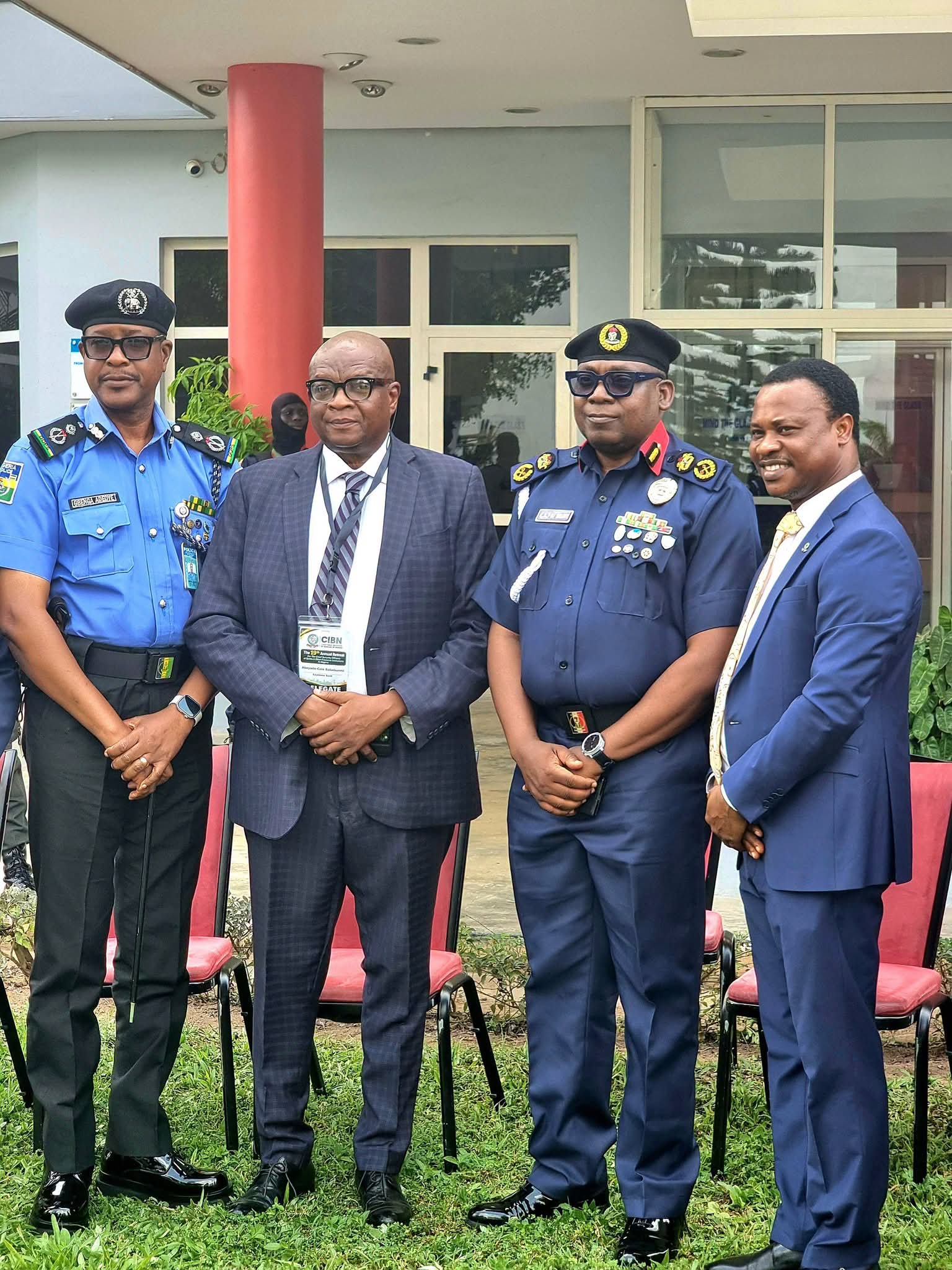
His approach to security journalism places considerable emphasis on constructive engagement with security institutions. Through PSM, he has undertaken interviews, courtesy visits, institutional engagements and public enlightenment activities involving serving and retired security officers and other stakeholders.
His professional engagements have included interactions with military authorities, NSCDC leadership, state commandants, the Vigilante Group of Nigeria and other organisations whose responsibilities are connected with public safety.
He has particularly maintained an interest in the Nigeria Security and Civil Defence Corps, an institution whose responsibilities include the protection of critical national assets and infrastructure, disaster response, civil protection, intelligence gathering and the regulation of private guard companies.
His coverage of the Corps has examined the leadership and institutional reforms of its Commandant General, Professor Ahmed Abubakar Audi, as well as the activities of state commands, Agro Rangers, the Safe Schools initiative and the Mining Marshals.
He has also paid attention to the challenges confronting the Corps, including personnel welfare, operational capacity, discipline, professional development and the need to strengthen public confidence in the institution.
His interest in the Mining Marshals reflects a broader understanding of the relationship between national security and economic development. Illegal mining, in his assessment, is not simply an environmental or regulatory offence; it has implications for national revenue, community stability, the protection of natural resources and the country’s economic sovereignty.
Similarly, his coverage of the Vigilante Group of Nigeria has focused on the importance of community participation in security management and the need for effective coordination between recognised community security structures and conventional law enforcement agencies.
Mustapha’s philosophy is that security journalism should go beyond the publication of official press releases and reports of arrests. It should examine the underlying issues, assess institutional responses, highlight operational achievements and shortcomings, and encourage policies capable of improving public safety.
He believes that security institutions deserve fair and informed reporting, but that constructive engagement must not compromise editorial independence or the media’s responsibility to hold public institutions accountable.
This understanding informs his interest in investigative reporting, institutional assessments, personnel welfare and the protection of citizens’ fundamental rights. For him, a credible security system must be measured not only by its operational achievements but also by its professionalism, transparency, discipline and relationship with the communities it serves.
Beyond journalism, Mustapha has developed an interest in documenting the contributions of security institutions and individuals through publishing projects. One of his major works is The Defender of the Nation: President Bola Ahmed Tinubu’s Three-Year Onslaught Against Insecurity, His Tough Decisions, Sacrifices and Gains, bearing ISBN 978-978-68-1148-2.
The book examines Nigeria’s security experience since May 2023, with attention to terrorism, banditry, kidnapping, oil theft, cybercrime, separatist violence and other threats confronting the country. It seeks to document government policies, security operations, difficult decisions, sacrifices and reported achievements within the broader context of national security.
The project also reflects his interest in preserving contemporary security history through documentary journalism, while examining the implications of security policies for the country’s future.
His other publishing interests include documenting the achievements of public institutions and their leadership, including the production and presentation of a compendium on the Nigeria Security and Civil Defence Corps under Professor Ahmed Abubakar Audi.
Mustapha is also associated with professional bodies, including the Nigerian Union of Journalists, the International Organisation of Journalists, Czechoslovakia, and the Association of Communication Scholars and Professionals of Nigeria.
Throughout his career, his professional outlook has been shaped by the conviction that journalism should contribute meaningfully to society. He believes that the media must not merely report events but should help citizens understand the issues behind them, interrogate public policies and encourage responsible leadership.
His commitment to security reporting is particularly informed by the understanding that insecurity undermines virtually every aspect of national development. When farmers cannot access their farms, children cannot attend school safely, businesses operate under threats and communities live in fear, the consequences extend beyond the immediate victims to the country’s economy and social stability.
This is why his work through People’s Security Monitor places national security at the centre of public discourse. The publication seeks to encourage greater cooperation between security institutions and the communities they protect, while promoting informed conversations about the country’s security challenges.
From his beginnings as a cub reporter at Daily Times in 1991 to his present position as Editor-in-Chief of a specialised security publication, Isiaka Mustapha has experienced the changing character of Nigerian journalism. He has witnessed the transition from traditional print journalism to the digital media environment and the growing importance of specialised reporting in a country confronted by complex security challenges.
His professional journey demonstrates an enduring commitment to journalism, continuous academic development and the use of media platforms to promote public awareness.
For Mustapha, the ultimate purpose of security journalism is not simply to report the activities of security agencies or celebrate institutional achievements. It is to contribute to a society in which citizens can live without fear, institutions are accountable, public resources are protected and security personnel discharge their responsibilities with professionalism and respect for the law.
Through People’s Security Monitor, he continues to pursue that objective, convinced that a safer Nigeria requires collective responsibility, informed citizens, effective institutions and a media that understands its enormous responsibility to the nation.