 Keji Mustapha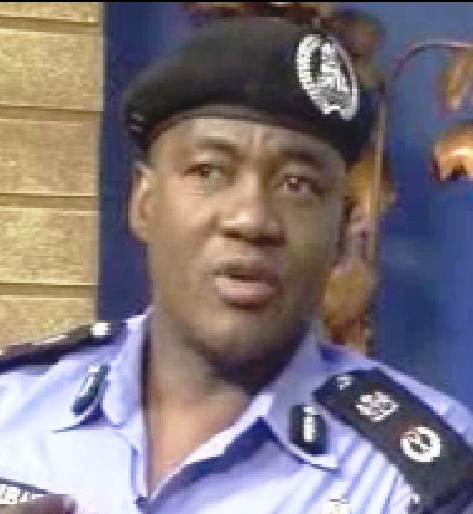
By Isiaka Mustapha, Editor-in-Chief, People’s Security Monitor
Former Commissioner of Police in Lagos State, Mohammed Abubakar, has recounted how he was stopped, challenged and taken to a police station by officers who allegedly failed to recognise him during an unannounced inspection of their conduct on duty.
Abubakar said the incident occurred on a Saturday when he woke up as early as 6 a.m., despite his official duties usually beginning at 10 a.m., to conduct an unscheduled inspection of police officers on the roads.
According to him, he set out in his Jeep for the office but decided to make a surprise visit to some police checkpoints to assess how officers were performing their duties.
At a checkpoint along Herbert Macaulay Road, a young constable stopped his vehicle and asked him where he was going with his father’s car.
The officer demanded his vehicle documents and driving licence. Abubakar, who said he identified himself simply as Mohammed, was subsequently asked to produce his identity card. He reportedly challenged the constable to show his own identification first, only to discover that the officer had none.
The constable then called his sergeant, who also demanded Abubakar’s identity card. The former police commissioner said he again insisted that the sergeant should first identify himself properly.According to his account, the officers, apparently dissatisfied with his response, decided to take him to Yaba Police Station, popularly known as Panti, to establish his identity.On arriving at the station,
Abubakar said he parked his vehicle in a space reserved for the Divisional Police Officer (DPO), prompting another objection from the constable, who reminded him that the space was meant for the station’s head.
He, however, remained silent.The situation reportedly took another turn when the officers brought him before an Assistant Superintendent of Police (ASP), whom he said was dressed in shorts while attending to official duties.Abubakar said he refused to enter the officer’s office, arguing that an officer handling official matters should be properly dressed.
The ASP allegedly became angry and attempted to pull him inside, leading to a confrontation between the two men.It was at that point, he recalled, that the ASP looked closely at his face and appeared to realise that something was amiss.In a humorous twist to the incident, Abubakar narrated that an elderly man at the station reportedly peeped into the DPO’s office to check the photographs of police commanders displayed on the wall. After recognising the visitor as the serving Commissioner of Police, the man allegedly jumped through a window and fled.
The sergeant who had brought Abubakar to the station was still said to be unaware of his identity until another officer reportedly whispered into his ear that the man they had brought in was the Commissioner of Police.
The revelation allegedly triggered panic among the officers. Abubakar recounted that the ASP, who had earlier confronted him, also reportedly escaped through a window.
The former commissioner said the Area Commander later contacted him to establish what had happened. By then, he was informed that the DPO, the ASP and other officers involved had been detained pending further instructions.Reflecting on the experience, Abubakar said his greatest concern was not that he had been stopped or taken to the station, but the alleged indiscipline, inadequate training and lack of professionalism demonstrated by the officers.
He questioned how officers could stop and detain members of the public without carrying proper identification, stressing that law enforcement personnel must be able to identify themselves while carrying out their responsibilities.He also criticised the alleged failure to observe appropriate standards of official dressing, noting that professionalism should be reflected in both conduct and appearance.
The story, as recounted by Abubakar, underscores the importance of supervision, discipline and accountability in policing. It also highlights the value of unannounced inspections in enabling police leadership to observe officers’ conduct firsthand rather than relying solely on official reports.
For Abubakar, the experience reinforced his belief that effective leadership requires more than occupying an office or issuing directives. It demands direct engagement with personnel, close monitoring of operational standards and a commitment to ensuring that officers uphold the principles of professionalism, fairness and justice in their dealings with the public.