 Keji Mustapha
By Tunji Braimoh, Abuja
The Presidency has dismissed former Vice-President Atiku Abubakar’s promise to reopen Nigeria’s land borders if elected president in 2027, insisting that the country’s borders are already open and operating under established security regulations.
In a statement issued on Friday, the Special Adviser to President Bola Ahmed Tinubu on Media and Public Communication, Sunday Dare, said the Federal Government had reopened most of Nigeria’s land borders on March 14, 2024, and had maintained the policy since then.
Dare’s response followed Atiku’s recent pledge that he would reopen the nation’s borders to boost legitimate cross-border trade and support businesses if elected on the platform of the African Democratic Congress (ADC) in the 2027 presidential election. The former vice-president also promised to develop ports in southern Nigeria to create a more balanced import and transportation system.
Reacting to the proposal, Dare questioned which specific borders Atiku intended to reopen, noting that the Tinubu administration had continued to expand access at strategic border points. He cited the reopening of the Kamba Border in Kebbi State on February 14, 2026, as evidence of the government’s commitment to enhancing trade and strengthening diplomatic ties with neighbouring countries.
The presidential aide stressed that an open border policy should not be mistaken for the absence of security measures. According to him, modern border management requires a balance between facilitating legitimate trade and movement while preventing criminal activities and security threats.
Dare argued that if Atiku’s proposal involved relaxing existing border controls, Nigerians deserved a clear explanation of which restrictions would be removed and how such a policy would address threats such as terrorism, arms smuggling, human trafficking and other forms of transnational organised crime.
He maintained that effective border administration depends on strong immigration controls, customs operations, intelligence-sharing mechanisms, surveillance systems, technology-driven monitoring and coordinated security operations among relevant agencies.
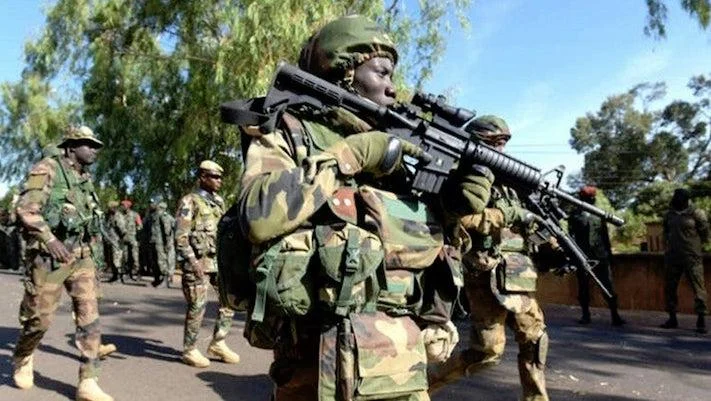
The Presidency further linked border security to the country’s broader security challenges, particularly in the Sahel region and the Lake Chad Basin. Dare noted that Nigeria shares extensive borders with Niger Republic, Chad and Cameroon, making robust monitoring essential to preventing infiltration by criminal and terrorist networks.
Citing data from the Global Terrorism Index 2026, he said approximately 41 per cent of terrorist attacks occur within 50 kilometres of an international border, while about 64 per cent take place within 100 kilometres of a border, underscoring the strategic importance of effective border management.
According to him, the evolving nature of insurgency and terrorism in West Africa has made border security an indispensable component of Nigeria’s national security architecture.
Dare also reminded Atiku of his experience as a former vice-president, saying he should understand the difference between promoting legitimate commerce and weakening border security frameworks.
He challenged the ADC presidential candidate to present a detailed alternative policy outlining how he would strengthen border surveillance, improve intelligence-sharing, modernise customs and immigration operations, deploy technology and deepen regional security cooperation.
The presidential spokesman concluded that Nigerians deserve policy debates rooted in facts, institutional understanding and practical solutions rather than campaign rhetoric. He reiterated that the Tinubu administration remains committed to keeping Nigeria’s borders open for lawful trade and economic activities while ensuring they remain secure against terrorists, smugglers and other criminal elements.