 Keji Mustapha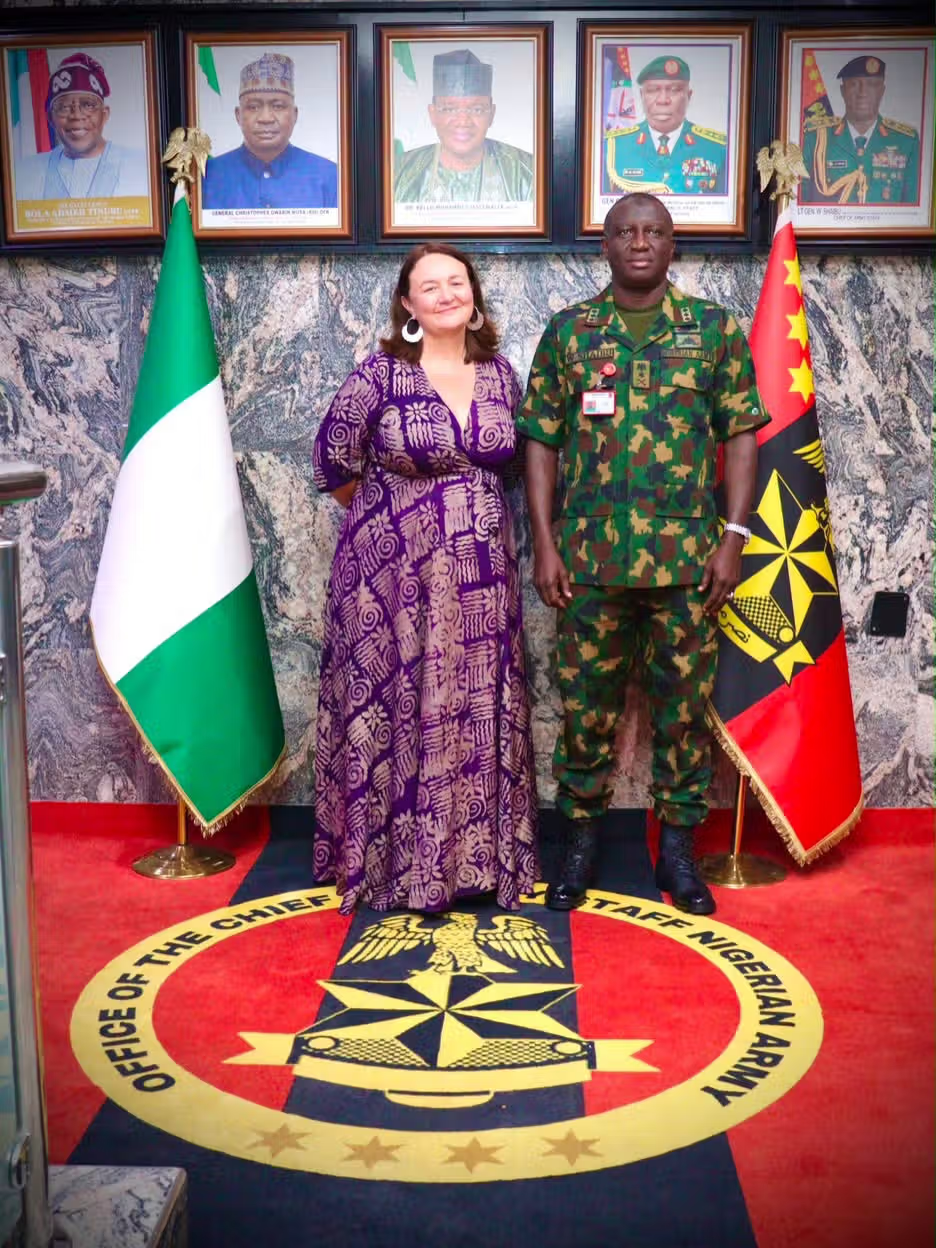
By Tunji Braimoh, Abuja
The Chief of Army Staff (COAS), Lieutenant General Waidi Shaibu, has directed military commanders to strengthen security along critical humanitarian supply routes in Borno State, particularly the Dikwa–Gamboru Ngala corridor, which continues to face threats from terrorist elements operating in the North-East.
The directive was issued during a meeting with Danielle Parry, Head of Office of the United Nations Office for the Coordination of Humanitarian Affairs (UN OCHA) in Nigeria, at the Army Headquarters in Abuja on Friday.
In a statement issued by the Acting Director of Army Public Relations, Lieutenant Colonel Appolonia Anele, the Army Chief emphasized the need for enhanced force protection measures, improved convoy security arrangements and closer coordination between the Nigerian Army and humanitarian agencies operating in conflict-affected communities.
Shaibu congratulated Parry on her appointment and described the longstanding relationship between the Nigerian Army and United Nations humanitarian agencies as a strategic partnership that has significantly contributed to humanitarian response efforts and civilian protection in the North-East.
He noted that the collaboration has supported stabilization initiatives in communities affected by insurgency and has facilitated the delivery of essential relief services to vulnerable populations.
The Army Chief reaffirmed the Nigerian Army’s commitment to providing a secure environment for humanitarian workers, relief materials and critical supplies moving through operational areas across the region.
According to him, ensuring the safety of humanitarian personnel remains a key priority, especially as government and humanitarian partners continue efforts to resettle displaced persons and rebuild communities devastated by years of insurgency.
Shaibu acknowledged the security challenges associated with the ongoing decongestion of internally displaced persons (IDP) camps and the resettlement of affected communities in Borno State, stressing that the military would continue to work closely with humanitarian organisations to ensure the success of the programme.
As part of efforts to safeguard humanitarian operations, he directed the Theatre Commander to reinforce security along vulnerable supply routes, especially the Dikwa–Gamboru Ngala axis, where remnants of terrorist groups continue to pose risks to aid delivery and civilian movement.
The COAS also urged humanitarian organisations to maximize available resources through improved logistics planning, including the establishment of local storage facilities and broader implementation of humanitarian reform initiatives, particularly at a time when global humanitarian funding is experiencing significant declines.
In her remarks, Parry commended the Nigerian Army for its continued support to humanitarian operations and acknowledged the sacrifices made by troops in maintaining security across the North-East.
She disclosed that despite funding constraints affecting humanitarian activities worldwide, nearly six million people in the region still depend on humanitarian assistance for survival.
Parry identified persistent security concerns in Gwoza, Bama, Damboa, Dikwa and Monguno as major challenges affecting humanitarian access and service delivery.
She appealed for sustained military support to enable displaced persons to return safely to their communities, resume farming activities and rebuild their livelihoods.
The UN OCHA official also requested increased military assistance in clearing improvised explosive devices (IEDs) and unexploded ordnance (UXOs) from resettlement areas, as well as enhanced patrols along critical supply routes during the rainy season.
She further called for strengthened security escorts for humanitarian convoys transporting food, medical supplies and other relief materials to vulnerable communities.
Parry reaffirmed UN OCHA’s commitment to deepening civil-military cooperation and praised the professionalism and dedication of Nigerian Army personnel in supporting humanitarian efforts.
She stressed that sustained collaboration between security forces and humanitarian organisations remains essential to protecting vulnerable populations, delivering life-saving assistance and advancing long-term peace, recovery and development across Nigeria’s North-East region.