 Keji Mustapha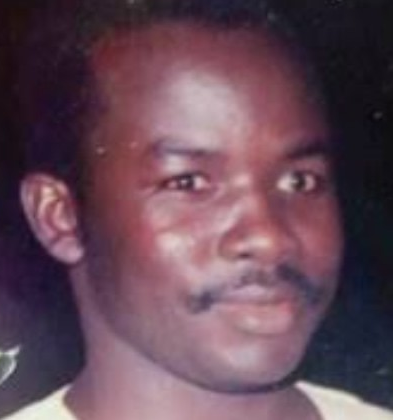
Pix: Late Bagauda Kaltho
Kaduna State Governor, Uba Sani, has stated that investigative journalist Bagauda Kaltho was killed during Nigeria’s military era, attributing his death to the military junta in power at the time.
Kaltho, a journalist known for his critical investigative reporting, disappeared between late 1996 and early 1997 under the regime of former Head of State, General Sani Abacha. His disappearance has remained unresolved for decades, generating sustained public debate and repeated calls for an independent investigation.
In 2024, a Federal High Court in Abuja ordered the Federal Government to investigate and prosecute those responsible for the killing of journalists in Nigeria between 1986 and 2023, a category which includes Kaltho.
Further recognition came in 2025 when President Bola Ahmed Tinubu conferred a posthumous national honour on Kaltho as Officer of the Order of the Niger, a gesture his family described as an affirmation of his legacy and a correction of long standing disputes surrounding his fate.
Speaking in Kaduna on Friday while receiving journalists on a North West tour organised by the Presidency, Governor Sani recounted events linked to the period leading up to Kaltho’s disappearance. He said the journalist had attended a meeting with pro democracy activists in Kaduna before his death.
According to him, Kaltho was part of a gathering involving activists, after which participants went their separate ways. The governor claimed that shortly after Kaltho returned to his hotel, news emerged that he had been killed by the military authorities of the time.
He described the incident as reflective of the dangers faced by journalists and activists under military rule, noting that several media practitioners lost their lives during the struggle for democratic governance. He referenced other figures such as Dele Giwa as part of that historical context.
Governor Sani also used the occasion to caution against actions capable of weakening Nigeria’s democratic institutions, stressing that many contemporary voices on democracy were not directly involved in the struggle that produced it.
He further stated that pro democracy activists of his generation endured detention and political persecution under the late General Sani Abacha, adding that he himself was released only after the death of the former military ruler.
Responding to political narratives suggesting marginalisation of northern Nigeria, the governor rejected such claims and maintained that the region had benefited significantly from current federal policies and development initiatives.
He cited major infrastructure projects in Kaduna State, including a proposed light rail scheme and key road rehabilitation projects, as evidence of ongoing development efforts.
Presidential aide Bayo Onanuga, who also spoke during the visit, commended the Kaduna State Government for what he described as visible progress across the state. He said ongoing reforms under the current administration had enabled increased funding for state level development projects.
Onanuga further noted that improvements in infrastructure delivery reflected strengthened fiscal capacity following national economic reforms, adding that both federal and state governments were working within their mandates to drive development outcomes.