
 Keji Mustapha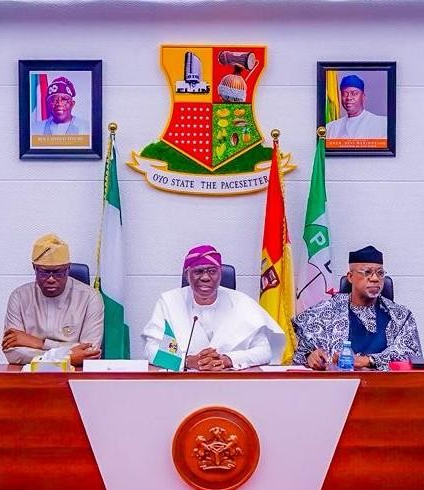
Amid a sharp rise in school kidnappings and attacks across Nigeria, state governors are taking urgent steps to contain the growing security crisis. The 19 Northern governors have scheduled an emergency meeting in Kaduna State on 29 November 2025 to discuss actionable measures against banditry, kidnappings, and other security threats.
The Northern session follows a meeting of South-West governors on Monday at the Oyo State Governor’s Office in Agodi, Ibadan. Governors Babajide Sanwo-Olu (Lagos), Dapo Abiodun (Ogun), Seyi Makinde (Oyo), Lucky Aiyedatiwa (Ondo), and Biodun Oyebanji (Ekiti) attended in person, while Osun State Governor Ademola Adeleke was represented by his deputy, Kola Adewusi. The forum called for the urgent creation of state police to address the escalating insecurity and emphasized regional solidarity in protecting citizens.
Peter Ahemba, Senior Special Assistant to Governor Abdullahi Sule of Nasarawa, confirmed the Northern governors’ meeting, noting it would focus on concrete strategies to curb kidnappings and banditry. He also revealed that the governor had cut short his trip from the G20 Summit in South Africa to oversee security operations in the state. “An emergency meeting was convened to prevent the escalation of insecurity, enhance surveillance, and strengthen support to security agencies,” Ahemba stated.
Recent attacks underscore the urgency of these measures. Last week, gunmen abducted 24 schoolgirls and killed the vice principal of Government Girls Comprehensive Secondary School in Maga, Kebbi State. Days later, over 300 students and staff were kidnapped from St. Mary’s Catholic Schools in Papiri, Niger State, although 50 students later escaped.
South-West governors called on the Federal Government to secure the region’s forests, which have become hideouts for criminals. They also agreed to establish a South-West Security Fund under the DAWN Commission and a joint digital intelligence-sharing platform for Lagos, Ogun, Oyo, Osun, Ondo, and Ekiti States to coordinate rapid responses, share threat alerts, and strengthen security communication.
The governors also addressed interstate migration, illegal mining, and environmental concerns, calling for stricter border monitoring and enforcement mechanisms to prevent criminal exploitation. Agriculture and food security were highlighted as priorities, with praise for farmers’ contributions to stabilizing food supply and reducing prices.
Plateau State Governor Caleb Mutfwang is preparing a comprehensive security plan to counter attacks, while Kebbi State and Kano State have undertaken proactive measures to strengthen internal security. Kano Governor Abba Kabir Yusuf recently allocated 10 vehicles and 50 motorcycles to frontline Joint Task Forces to enhance mobility and operational efficiency in vulnerable councils.
In response to heightened risks, Bauchi State closed all primary, secondary, and tertiary schools to protect students, staff, and infrastructure. The Federal Polytechnic, Bauchi, has also suspended academic activities until further notice. Authorities are calling on residents to remain vigilant and report suspicious activity.
Gombe State Police Command intensified security around schools following a strategic meeting with school principals. Commissioner of Police Bello Yahaya confirmed patrols, surveillance, and rapid response operations, particularly in vulnerable and isolated areas, and emphasized timely intelligence sharing and community policing.
The Academic Staff Union of Universities (ASUU) and the National Union of Teachers (NUT) expressed concern over government inaction, warning that schools in high-risk areas may be forced to shut down if adequate protection is not provided. Prof. Chris Piwuna of ASUU noted, “Education is under attack by bandits in the bush and by leaders undermining the system. Immediate action is required.”
Amnesty International Nigeria warned that repeated school abductions could deter children from attending school, particularly in rural communities, compounding Nigeria’s existing education crisis. Isa Sanusi, the country director, cautioned that millions of children already out of school could face further setbacks due to insecurity.
National Orientation Agency Director-General Mallam Lanre Issa-Onilu emphasized that the crises are rooted in the lack of a shared national identity, calling for renewed focus on national cohesion and value formation, as highlighted during a recent joint NOA-NUC committee inauguration.
Meanwhile, Kebbi State Governor Nasir Idris called on President Bola Tinubu to review Nigeria’s security architecture following the abduction of schoolgirls in Maga. During a visit by the Speaker of the House of Representatives, Tajudeen Abbas, the federal delegation pledged support, including donations to the families of the slain vice principal and a watchman. The governor also announced plans to rename the school in honor of the vice principal.
Christian communities in Borno State held prayer sessions in Maiduguri to seek divine intervention against rising attacks, while the Christian Association of Nigeria announced a five-day peace crusade in Jos, Plateau State, aimed at promoting unity and security.
The coordinated response from governors, security agencies, and civil society underscores the urgency of addressing the country’s growing insecurity. From emergency meetings and school lockdowns to digital intelligence platforms and community engagement, states are intensifying measures to safeguard lives, protect education, and restore public confidence in Nigeria’s security system.