 Keji Mustapha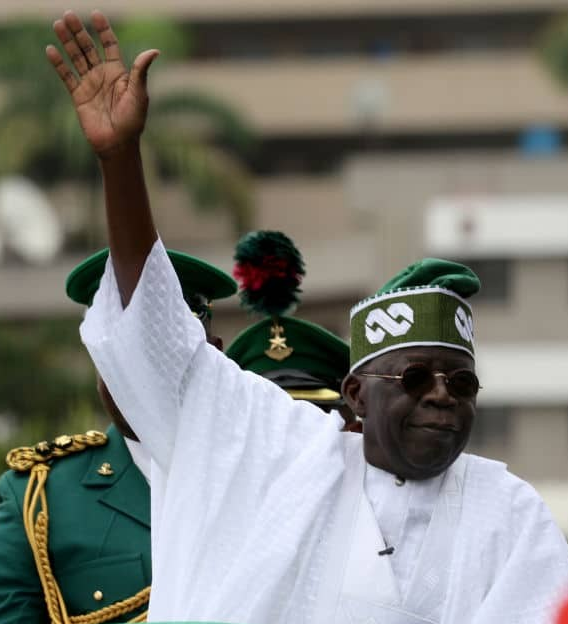
Pix: President Tinubu of Nigeria
The United States House of Representatives Subcommittee on Africa is set to hold a high-profile public hearing on Thursday, November 20, 2025, to review President Donald Trump’s recent redesignation of Nigeria as a Country of Particular Concern (CPC) over alleged religious persecution. The CPC status, if upheld by the Senate, could pave the way for sanctions against Nigerian officials and restrict certain categories of US assistance.
The hearing, scheduled for 11:00 a.m. at Room 2172 in the Rayburn House Office Building, will be chaired by Representative Chris Smith (R-NJ) and streamed live for public viewing. The session will feature two panels, including senior officials from the US State Department as well as prominent Nigerian religious leaders.
According to an invitation sent to members of the House Committee on Foreign Affairs, witnesses expected to testify include Jonathan Pratt, Senior Bureau Official at the Bureau of African Affairs; Jacob McGee, Deputy Assistant Secretary at the Bureau of Democracy, Human Rights, and Labor; Ms. Nina Shea of the Centre for Religious Freedom; Bishop Wilfred Anagbe of the Makurdi Catholic Diocese; and Ms. Oge Onubogu of the Centre for Strategic and International Studies.
The hearing will examine ongoing allegations of religious persecution in Nigeria, explore possible US policy responses such as targeted sanctions and humanitarian aid, and evaluate the extent of cooperation between Washington and Abuja in curbing violent attacks. This development follows Trump’s October 31, 2025 announcement placing Nigeria back on the CPC list, a move that has generated intense debate within diplomatic and religious circles.
Trump had argued that Christians in Nigeria face an “existential threat,” citing thousands of deaths attributed to extremist groups. In a statement on November 1, he warned that the US could cut all assistance to Nigeria and even consider military action if the Nigerian government failed to tackle the killings. He directed the US Department of War to prepare for possible intervention, describing potential action as “fast, vicious, and sweet.”
President Bola Tinubu swiftly rejected Trump’s claims, insisting that Nigeria remains committed to religious freedom as guaranteed by its constitution. In a statement on his official X handle, Tinubu said the US President’s remarks misrepresented Nigeria’s multicultural and multireligious identity, noting that tolerance and freedom of worship remain core national values.
Trump’s renewed CPC designation comes against the backdrop of sustained attacks on Christian communities, including killings, abductions, and church burnings attributed to extremist groups and militant Fulani herders. A related bill, sponsored by Senator Ted Cruz, is currently before the US Senate to reinforce actions against religious persecution in Nigeria.
Bishop Anagbe, one of the key witnesses at the upcoming congressional session, had earlier addressed UK parliamentarians on March 25, 2025, where he condemned the widespread killings and displacement of Christians in Benue State. He recounted how villages were razed, farmlands seized, churches destroyed, and vulnerable populations repeatedly attacked—even those sheltering in internally displaced persons’ camps.
According to the bishop, the attackers “follow orders to conquer, kill, and occupy,” carrying out assaults against defenseless communities with little consequence. His testimony is expected to form a crucial part of the congressional committee’s assessment of the situation in Nigeria as the US intensifies scrutiny of religious freedom violations worldwide.