 Keji Mustapha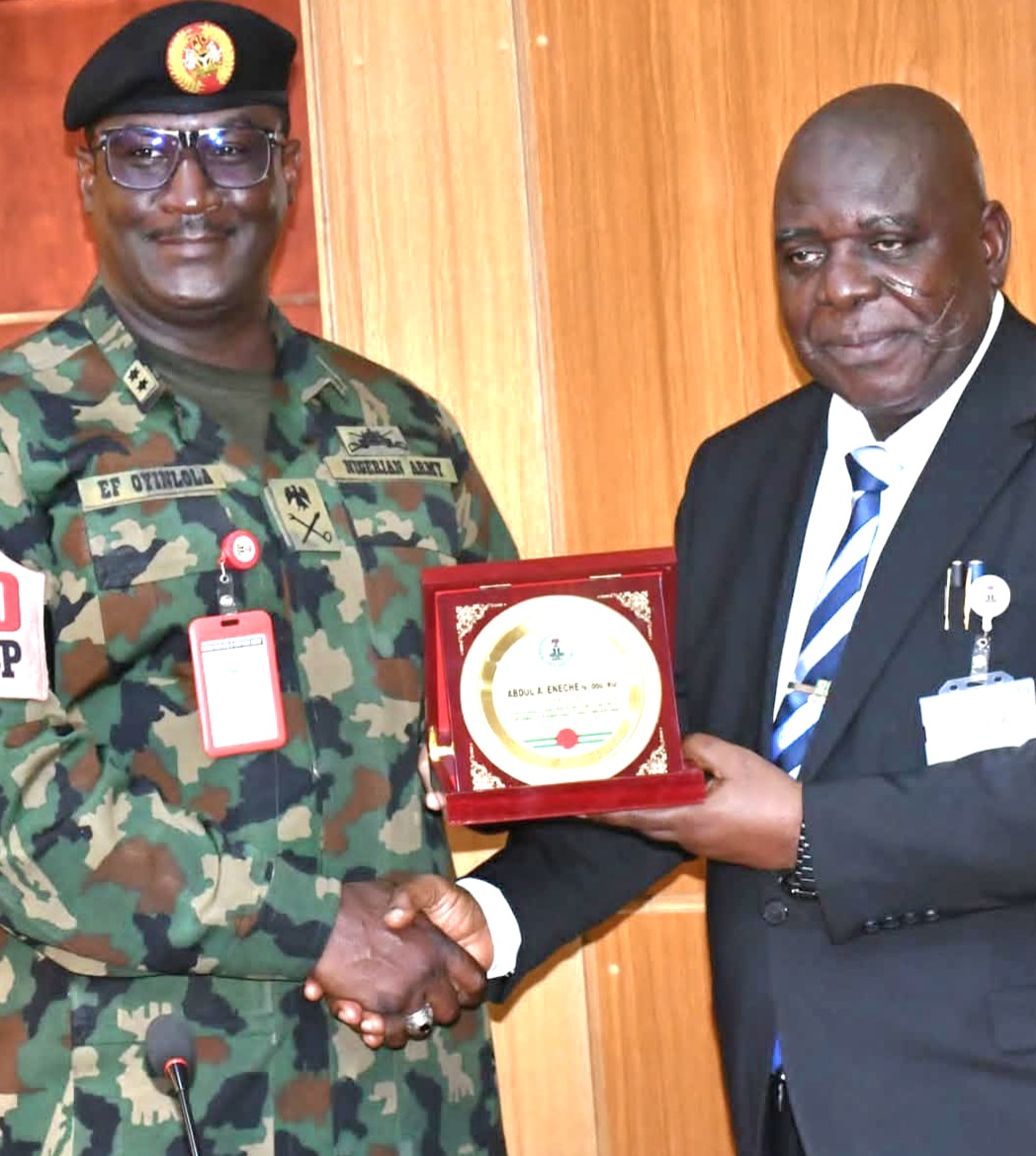
The National Centre for the Control of Small Arms and Light Weapons (NCCSALW) has called for deeper collaboration with the Nigerian Army in the fight against the proliferation of illicit arms across the country. The appeal was made by the North Central Zonal Coordinator of the Centre, Mr. Abdul Adamu Enenche, during a courtesy visit to the General Officer Commanding (GOC) 3 Division and Commander of Operation Enduring Peace (OPEP), Major General E.F. Oyinlola, at Maxwell Khobe Cantonment on September 16, 2025.
Mr. Enenche commended the Nigerian Army for its tireless efforts in addressing security challenges and for its continued recovery of illegal weapons within its area of responsibility. He explained that the Centre was established by the Federal Government as a multi-agency initiative to tackle the rising spread of small arms and light weapons among non-state actors. He highlighted the Centre’s notable achievements in the North Central zone, particularly in Plateau State, where numerous weapons have been seized and destroyed.
The Zonal Coordinator stressed the need for ongoing partnership in training, sensitization, and intelligence sharing. He urged greater vigilance in identifying arms couriers and vehicles used to transport weapons, noting that porous borders remain a major challenge fueling proliferation. He requested the support of 3 Division and OPEP in tracking and apprehending illegal arms manufacturers and traffickers within the zone.
In his response, Major General Oyinlola acknowledged the significant contributions of the Centre and assured of continued support. He described Plateau State as a hotspot for illicit arms and recalled the Army’s recent handover of a large cache of recovered weapons to the NCCSALW. He emphasized that the Nigerian Army remains committed to dismantling the networks of arms manufacturers and couriers while welcoming any intelligence from the Centre to aid in their capture.
The GOC reaffirmed the resolve of 3 Division and OPEP to work closely with the Centre in safeguarding lives and property across the North Central region. The visit ended with the exchange of souvenirs, the signing of the visitor’s book, and a group photograph.