
 Keji Mustapha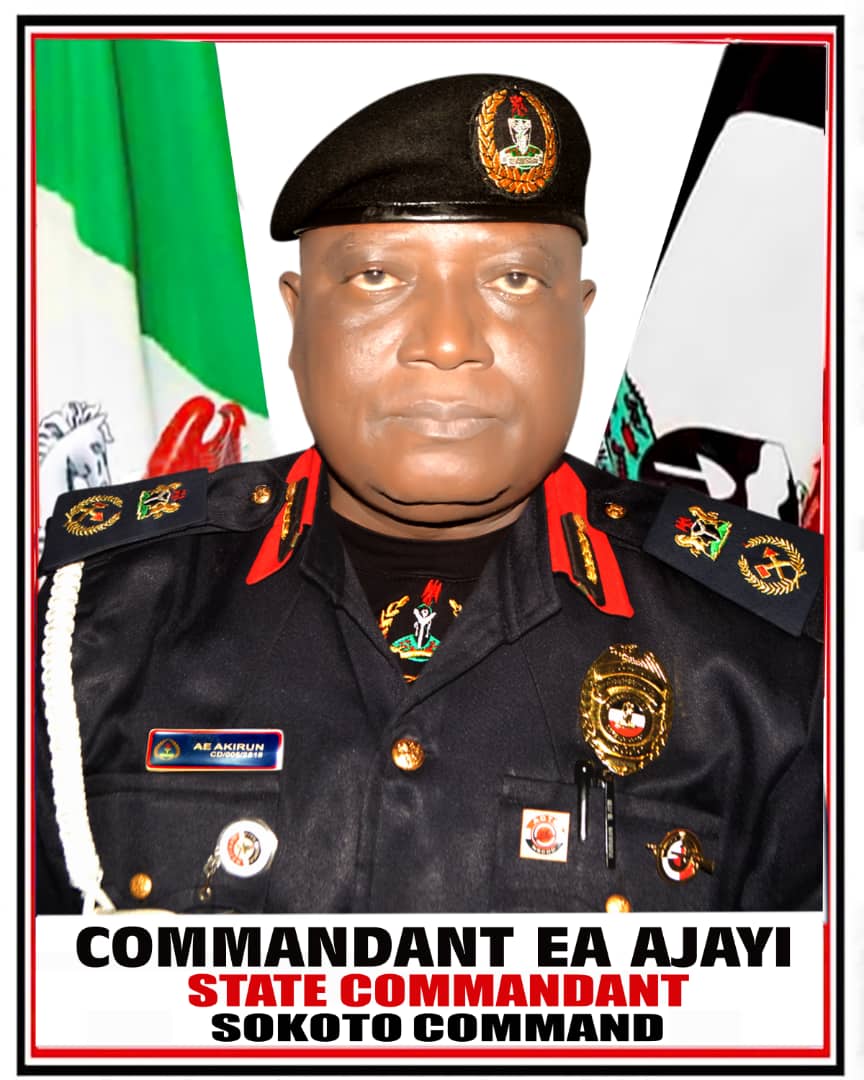
Dr. Shamsudeen Yabo, a security consultant, writes in from Sokoto
When Commandant A. E. Ajayi assumed duty as the Sokoto State Commandant of the Nigeria Security and Civil Defence Corps (NSCDC) a few weeks ago, he stepped into an office with both challenges and expectations. Sokoto, a state with complex security dynamics bordering the Niger Republic, has long grappled with cross-border crimes, vandalism of critical infrastructure, illegal smuggling, and community safety concerns. The task before him was therefore not just to maintain routine security, but to re-energize the command, build public trust, and introduce systems that could endure.
From the outset, Commandant Ajayi outlined a master plan anchored on intelligence-led policing, community cooperation, and inter-agency synergy. His approach has been described by many as deliberate, methodical, and people-focused. He has not only set out to tighten the operational framework of the command but also to reshape the orientation of his officers and men. Two weeks after assumption of duty, he organized capacity-building sessions and internal briefings designed to instill discipline, boost morale, and align his team with the wider national vision of the Corps under the leadership of the Commandant General, Professor Ahmed Abubakar Audi. Officers describe the sessions as morale-lifting and a clear signal that Sokoto NSCDC was moving in a new direction.
Evidence of this fresh direction has already begun to show. Within his first two weeks, the command recorded a number of significant interventions. No fewer than seven illegal smuggling attempts involving petroleum products and contraband goods were intercepted along border corridors, an achievement locals say reflects a more vigilant NSCDC presence. Dedicated anti-vandalism squads deployed to strategic points prevented three attempted attacks on oil and power installations safeguarding assets critical to the state’s economy and everyday life. In addition, a new intelligence-sharing platform was introduced, encouraging members of the public to report suspicious activities directly. In just 14 days, this mechanism yielded over 40 actionable tips, several of which have already informed successful operations.
But Commandant Ajayi’s method is not merely about statistics. It is about building confidence, both within his command and across the communities he serves. Traditional rulers, market leaders, and local associations in Sokoto metropolis and surrounding towns have openly attested to the change in tempo. In Illela, traders say the once-rampant fuel racketeering has reduced noticeably. In Wurno, rural dwellers report increased patrols and a heightened sense of security on previously vulnerable roads. For many residents, these small but visible changes are proof that the Sokoto NSCDC under Ajayi is not just present but active and responsive.
It is no surprise that his leadership is attracting commendation at the national level. Professor Ahmed Abubakar Audi, the Commandant General of the NSCDC, has placed enormous confidence in Ajayi’s ability to reform and strengthen the Sokoto Command. His appointment was part of a broader effort to inject trusted, tested, and visionary officers into sensitive commands nationwide. That confidence, according to observers, is already being vindicated as Ajayi has demonstrated energy, foresight, and a hands-on style of leadership that has won over both his men and the public in record time.
Those close to the command note that Ajayi is not content with quick wins. His strategy emphasizes endurance and sustainability. By focusing on officer retraining, discipline, and welfare, he is laying a foundation for a corps that can respond not just today, but in the future, to the evolving challenges of Sokoto State. His insistence on professionalism and community partnership signals a break from reactive security to a model of proactive service delivery that values accountability and public trust.
In just two weeks, Commandant Ajayi has positioned the Sokoto State NSCDC as a security agency on the rise, visible, reliable, and closer to the people than in recent memory. Locals speak of renewed confidence, officers speak of renewed purpose, and the leadership at the top speaks of renewed faith in his ability to deliver. It is still early days, but the tone has been set. The Sokoto NSCDC under Commandant A. E. Ajayi appears determined to chart a clear departure from the ordinary, and if the early results are any guide, the command may well emerge as one of the standout formations of the Corps under the current dispensation.