 Keji Mustapha
By Isiaka Mustapha, Editor-in-Chief, People’s Security Monitor
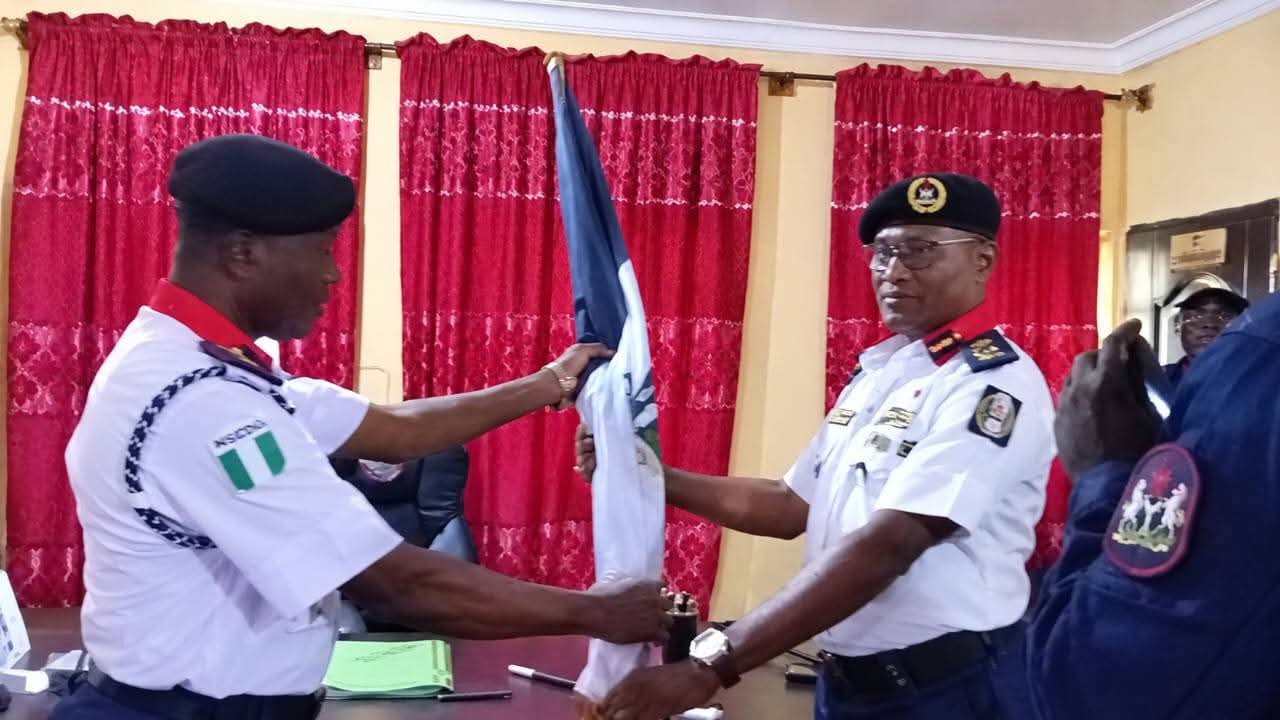
The Nigeria Security and Civil Defence Corps (NSCDC), Nasarawa State Command, has welcomed Commandant Bala Bawa Bodinga as its 12th substantive State Commandant following his assumption of duty on Tuesday, November 24, 2026. He succeeds Commandant Brah Samson Umoru.
Bodinga’s assumption of office marks a new phase in the administration of the Corps in the state, with expectations of strengthened security operations, improved service delivery, greater personnel discipline and enhanced collaboration with relevant stakeholders.
The new State Commandant assumes leadership at a time when the protection of lives and property, security of Critical National Assets and Infrastructure (CNAI), crime prevention and peaceful coexistence remain major priorities in Nasarawa State.A seasoned security and law enforcement officer, Bodinga has accumulated considerable experience in operational management, intelligence gathering, administration and strategic command responsibilities during his service in the NSCDC.
He hails from Bodinga Local Government Area of Sokoto State and holds a Bachelor’s degree in Education, with specialisation in Hausa Language, from Ahmadu Bello University, Zaria. He has also participated in several professional development programmes, including specialised training in intelligence operations.Throughout his career, Bodinga has occupied several strategic positions within the Corps. His previous assignments include Chief Security Officer to the FCT Secondary Education Board and the National Hajj Commission, Head of the Anti-Vandal Unit in Akwa Ibom State, Head of the Critical National Assets and Infrastructure Department in Zamfara State, Head of Operations at the FCT Command and Second-in-Command of the Kogi State Command.He has also served as State Commandant in Kebbi, Jigawa and Kano States before his appointment as National Arm Commander, Special Forces, at the NSCDC National Headquarters in Abuja.
His professional experience covers critical infrastructure protection, anti-vandalism operations, intelligence coordination, security deployments and command administration. These responsibilities are expected to provide a foundation for his leadership of the Nasarawa State Command. As the new head of the Command, Bodinga is expected to provide strategic direction towards strengthening operational capacity, improving personnel performance and advancing the Corps’ statutory responsibilities, particularly in the protection of critical national assets, disaster management and regulation of private guard companies.
His administration is also expected to promote stronger cooperation with sister security agencies, traditional institutions, government establishments, community leaders, civil society organisations and other stakeholders in addressing security challenges across the state.Meanwhile, the Command has acknowledged the contributions of the outgoing State Commandant, Commandant Brah Samson Umoru, who handed over leadership following his tenure in office.
During his administration, Umoru pursued initiatives aimed at improving service delivery, strengthening operational structures, promoting personnel welfare, upgrading infrastructure and encouraging professionalism within the Command.His tenure also featured activities relating to personnel development, security operations, crime prevention, protection of critical national assets and public engagement. The Command commended his contributions and wished him success in his future endeavours.
The NSCDC has urged officers and men of the Nasarawa State Command to give the new Commandant their full cooperation, loyalty and support to ensure a smooth transition and effective implementation of the Corps’ mandate.Personnel were also reminded to maintain discipline, integrity, professionalism, respect for human rights and accountability while carrying out their duties, stressing that all operations must comply with the law and established operational procedures.
The Command further appealed to the Nasarawa State Government, traditional rulers, community leaders, sister security agencies, private organisations, media practitioners and residents to extend their cooperation to the new leadership. It also called on members of the public to remain vigilant and promptly report suspicious movements and activities to the appropriate security authorities, emphasising that intelligence sharing and community participation remain essential to effective security management.
The Command expressed confidence that sustained cooperation between security agencies, government institutions and local communities would contribute to building a safer and more peaceful Nasarawa State.