 Keji Mustapha
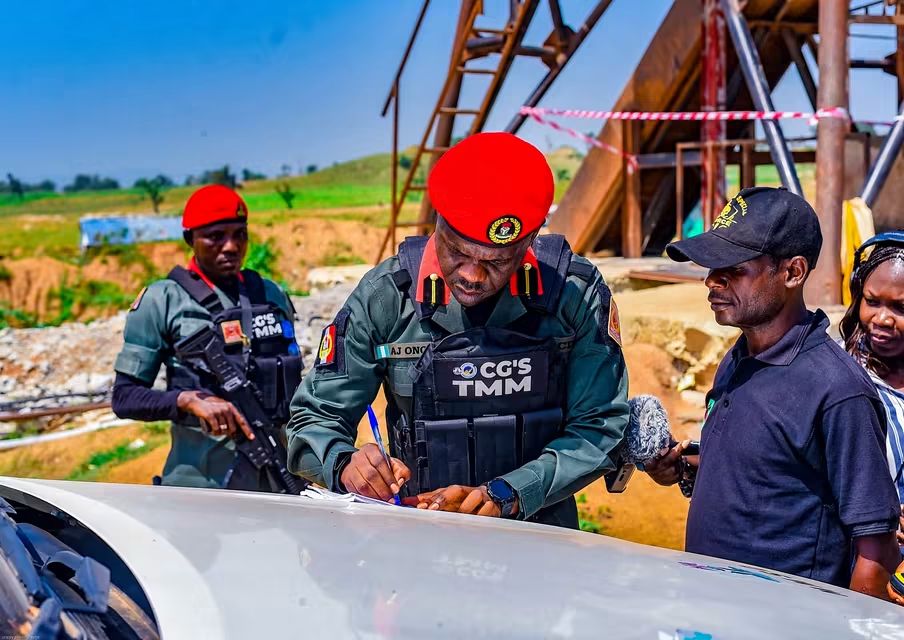
Pix: Commandant Abdulhamid Salisu Kabara
By Isiaka Mustapha, Editor-in-Chief, People’s Security Monitor
Ndagi
The appointment of Commandant Abdulhamid Salisu Kabara as the new State Commandant of the Nigeria Security and Civil Defence Corps (NSCDC), Niger State Command, on September 18, 2026, came at one of the most challenging moments in the history of the command. He inherited an institution struggling with a serious credibility crisis following the tragic deaths of suspected illegal miners in its custody. His emergence therefore carried enormous responsibility, particularly the task of restoring public confidence, strengthening internal discipline and repositioning the command for effective service delivery.
The September 2026 incident, which reportedly claimed the lives of 37 detainees, generated widespread public outrage and raised serious questions about detention procedures, operational supervision and respect for human rights. The victims had been arrested during anti-illegal mining operations around M.I. Wushishi and Lukoto in Niger State. Their deaths in custody exposed serious institutional weaknesses and placed the command under intense national scrutiny. The incident also triggered public protests and a 24-hour curfew in Minna, further highlighting the urgency of rebuilding public trust.
Kabara assumed duty following the suspension of his predecessor, Commandant Suberu Siyaka Aniviye, and other officers pending investigations into the circumstances surrounding the deaths. The Federal Government subsequently constituted a 10-member investigative committee chaired by retired DSS Deputy Director-General Jonathan Kure to establish the circumstances of the incident and recommend appropriate measures. For the new commandant, the challenge was clear: restore confidence in an institution whose reputation had suffered considerable damage.
One of the most important responsibilities confronting Kabara was to ensure that the protection of human life became central to the command’s operations. Security personnel must understand that suspects remain entitled to their fundamental rights, irrespective of the allegations against them. Arrests, detention and investigations must be conducted strictly in accordance with established laws and professional standards. The authority of the Corps must never be used to undermine the dignity and constitutional rights of citizens.
The investigative findings reportedly attributed the deaths to overcrowding, inadequate ventilation, heat stress, dehydration and failures of care and supervision. The panel described the deaths as preventable and recommended compensation of ₦30 million for each bereaved family and ₦10 million for each of 41 survivors. These findings underline the need for comprehensive reforms in detention management, personnel supervision and operational accountability. Kabara’s administration must ensure that the lessons from the tragedy translate into permanent institutional improvements.
Since taking over, the commandant has demonstrated the importance of engaging relevant stakeholders in addressing the security challenges confronting Niger State. His familiarisation visit to the Speaker of the Niger State House of Assembly, Abdulmalik Sarkindaji, in November provided an opportunity to discuss illegal mining, community security and the need for stronger institutional collaboration. The engagement was particularly significant given the security implications of illegal mining activities and the concerns raised by residents in affected communities.
During the meeting, Kabara reportedly expressed concern over the resurgence of illegal mining activities around Minna, warning that some operators had regrouped and were allegedly intimidating residents and forcing them away from their homes. His position reflects an understanding that illegal mining is not merely an economic offence but a serious security threat capable of undermining community stability, environmental protection and government revenue.
His visit to the 013 Quick Response Force in Minna on November 4 was another important step towards strengthening operational supervision. The engagement provided an opportunity to assess the formation’s activities, interact with personnel and reinforce the importance of discipline, intelligence gathering and professionalism. The effectiveness of any security formation depends largely on the preparedness of its personnel, the quality of operational coordination and the ability of leadership to monitor activities at the field level.
Kabara has also recognised the importance of inter-agency cooperation in addressing the state’s security challenges. His familiarisation visit to the Niger State Commissioner of Police, CP Adamu Abdullahi Elleman, provided an opportunity to strengthen cooperation between the two security organisations. Discussions reportedly covered intelligence sharing, joint training and capacity development for NSCDC personnel. Such collaboration is essential in confronting criminal activities that require coordinated security responses.
Personnel development must remain a major priority under the new administration. The command requires officers who understand the legal framework governing arrests, detention, investigations and the protection of human rights. Regular training in operational procedures, conflict management, intelligence gathering and detention management will help strengthen professional standards. Equally important is effective internal monitoring to ensure that officers who violate established procedures are held accountable.
The fight against illegal mining must also continue, but with strict adherence to the law. Niger State possesses substantial mineral resources whose protection is essential to national economic development. Unregulated extraction deprives government of legitimate revenue, damages the environment and creates opportunities for criminal networks. The NSCDC must therefore strengthen intelligence-led operations and cooperate with the Federal Ministry of Solid Minerals Development, Mining Marshals and relevant regulatory authorities. Enforcement must be professional, properly authorised and conducted without compromising human lives.
However, the success of Kabara’s administration will ultimately depend on measurable improvements in the relationship between the Corps and the people. Familiarisation visits and official engagements are important, but they must produce tangible results. Residents must be able to approach the command with complaints, report security threats and seek assistance without fear of intimidation. The command must also maintain transparent channels for receiving and addressing grievances, particularly those involving allegations of misconduct by personnel.
The NSCDC national leadership under Commandant-General Professor Ahmed Abubakar Audi has an important role to play in supporting the rebuilding process. Institutional reforms, improved detention facilities, adequate personnel training and effective supervisory mechanisms require sustained attention from the national headquarters. Kabara must also ensure that the changes introduced under his leadership become established operational standards rather than temporary measures associated with the present administration.
Ultimately, Commandant Abdulhamid Salisu Kabara inherited a command facing one of the most difficult credibility challenges in its history. Since assuming duty on September 18, 2026, his engagements with the legislature, police leadership and operational formations have demonstrated his recognition of the enormous responsibility before him. Nevertheless, restoring the confidence of the people will require sustained commitment, transparent leadership and measurable institutional reforms.
For the people of Niger State, the expectation is straightforward: an NSCDC command that protects lives, safeguards critical national assets, confronts illegal activities and operates within the boundaries of the law. Kabara has an opportunity to transform a painful institutional setback into a defining moment of reform. His ultimate achievement will be measured not by official declarations but by the emergence of a disciplined, accountable and professionally managed command that the people can trust.