 Keji Mustapha

By Isiaka Mustapha, Editor-in-Chief, People’s Security Monitor
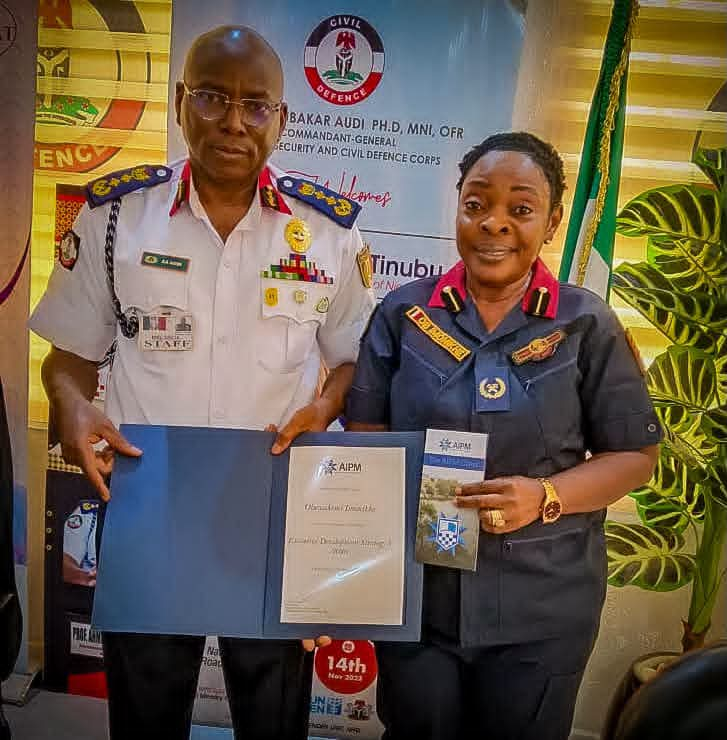
The Nigeria Security and Civil Defence Corps (NSCDC) has reaffirmed its commitment to gender equality, women’s protection and inclusive security through the implementation of its Gender Policy II, with renewed emphasis on combating Sexual and Gender-Based Violence (SGBV) and promoting digital safety among women and young people.
The Commandant General of the Corps, Professor Ahmed Abubakar Audi, stated this in a keynote address delivered on his behalf at a two-day Gender, Women, Peace and Security Capacity-Building Training held at the NSCDC College and Support Staff Service, Udege, Nasarawa State.
The training was organised in partnership with Strengthening Peace and Resilience in Nigeria (SPRING), with support from the United Kingdom’s Foreign, Commonwealth and Development Office (FCDO). Audi explained that Gender Policy II provides an institutional framework for mainstreaming gender considerations into the Corps’ operations, personnel management, leadership structure and community engagement.
He stressed the need for stronger measures to prevent and respond to SGBV, including violence arising from conflicts and abuses facilitated by digital technology. He called for greater participation of women in peacebuilding and security decision-making, equal opportunities within the Corps and stronger partnerships with government institutions, traditional rulers, civil society organisations and development partners.
He also urged Gender Desk Officers and other personnel to strengthen reporting, referrals, monitoring and accountability mechanisms to ensure effective implementation of the policy. In his goodwill message, the Osu Ajiri of Edege Chiefdom, His Royal Highness Alhaji Suleiman Ahmed Eko IV, commended the NSCDC for its presence in the community, noting that the Corps had strengthened the security of residents, particularly those engaged in farming.
He pledged the support of his traditional council in tackling gender-based violence, describing the protection of the people as a major priority.Earlier, the Commander of the NSCDC College, Assistant Commandant General Jamilu Indabawa, welcomed participants and emphasised the importance of cooperation among relevant stakeholders in translating the objectives of Gender Policy II into practical results.Also speaking, the Gender Equality, Diversity and Social Inclusion Lead of SPRING, Mrs Amina Akano-Bello, said the training was designed to promote peaceful and resilient communities through the early identification and prevention of gender-based violence, while encouraging women and young people to participate actively in leadership and decision-making.
The NSCDC National Headquarters Gender Unit Adviser, Deputy Commandant of Corps Ajet Kemi, delivered a presentation on SGBV, examining its different forms, societal consequences and preventive strategies. Participants also received practical training on institutional ethics, gender sensitivity, professionalism and accountability. A former Assistant Commandant General, Ahmed Abodurin, facilitated a session on ethical standards in implementing gender policies, stressing the need for strict adherence to institutional regulations.As part of efforts to extend the campaign beyond the training venue, the NSCDC partnered with TechHer, an organisation committed to advancing women’s empowerment through technology, digital literacy and safer online participation, to conduct sensitisation exercises in selected schools across Udege.
The outreach focused on the theme, Stop Technology-Facilitated Gender-Based Violence, educating students on digital abuse, responsible internet use and practical measures for protecting themselves against online harassment and exploitation.Representatives of the Federal Ministry of Interior, Nasarawa State Ministry of Women Affairs and Social Development, Nasarawa State Ministry of Justice and Gammuo International also delivered goodwill messages, reaffirming the importance of collective action in promoting gender equality, protecting vulnerable groups and strengthening peace and security.