 Keji Mustapha
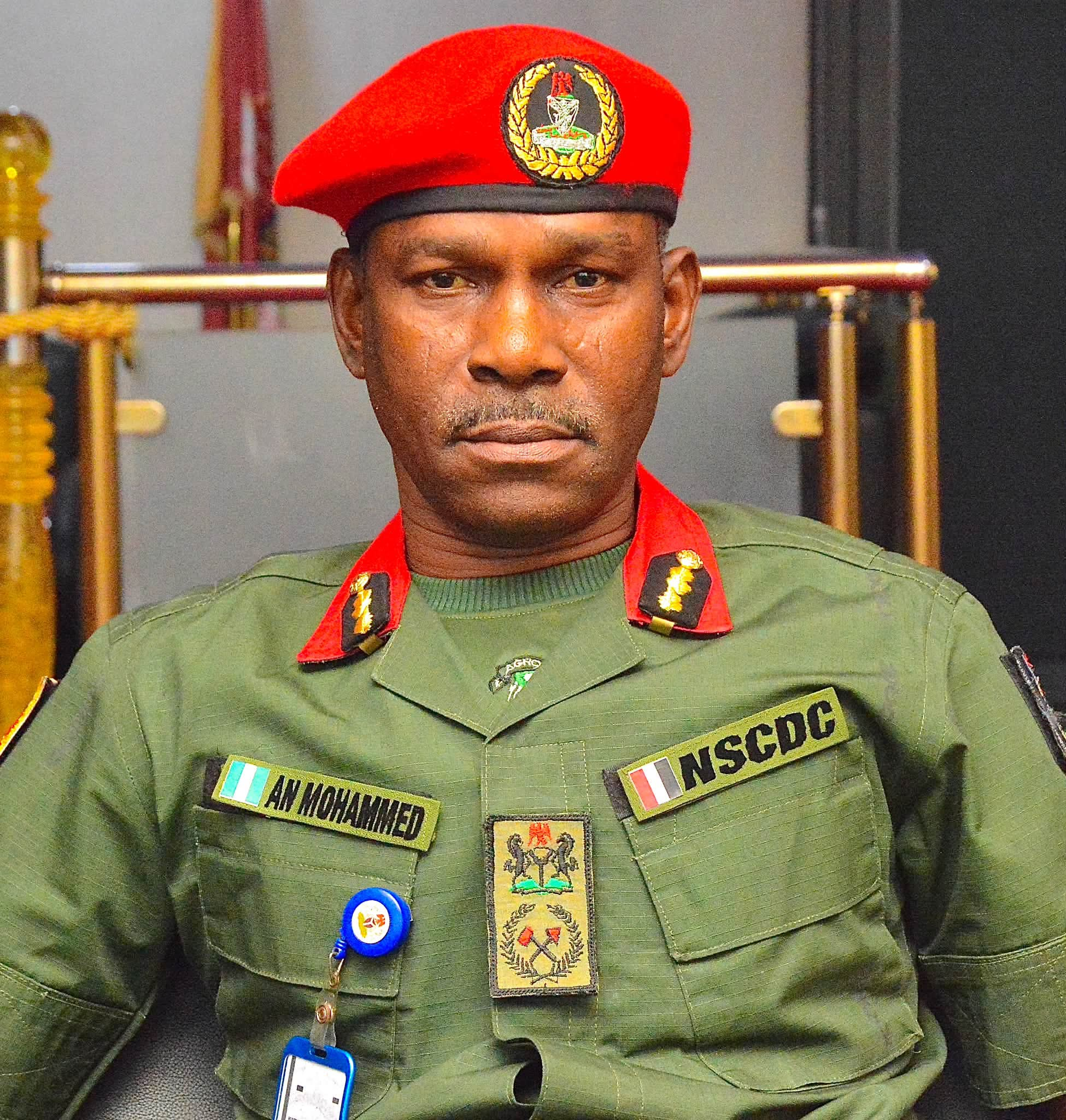
Pix: Commandant Abbas Ndah Mohammed
By Isiaka Mustapha, Editor-in-Chief, People’s Security Monitor
Since assuming office on April 13, 2026, as the 16th substantive State Commandant of the Nigeria Security and Civil Defence Corps (NSCDC) in Kwara State, Commandant Abbas Ndah Mohammed has pursued a leadership approach that places operational efficiency, intelligence gathering, stakeholder collaboration and public engagement at the centre of the Corps’ responsibilities. His first six months in Ilorin have provided an opportunity to assess how effectively the Command has responded to security concerns and represented the NSCDC in the state.
His appointment was not entirely a new experience in Kwara’s security environment. Having previously served as Head of Operations in the state and later as Commandant of Zone 4, Minna, Mohammed came into office with an understanding of the local security terrain and the operational demands of the Corps. That experience has been important in shaping his approach to intelligence-led operations, personnel coordination and engagement with communities and other security institutions.
One of the significant operational developments under his watch was the interception, on May 22, 2026, of approximately 36 tonnes of suspected lithium ore along the Jebba Expressway. The operation reportedly led to the arrest of three suspects. The seizure demonstrated the Command’s attention to the illegal exploitation and transportation of mineral resources, an offence with implications for national revenue, environmental protection and economic security. It also reinforced the importance of sustained surveillance along strategic routes used for the movement of mineral resources.
The Command has also recorded enforcement activities involving the protection of critical national assets and infrastructure. Cases involving the alleged theft or vandalism of transformer cables, streetlight cables, railway components and materials belonging to the Transmission Company of Nigeria have featured among its operations. These interventions are particularly important because the destruction of public infrastructure imposes additional costs on government and deprives communities of essential services. The recovery of stolen materials and the arrest of suspects are necessary steps, but the Command must sustain investigations and ensure that those responsible are brought before competent courts.
In another operation, the Command arrested two suspects over alleged transformer-cable vandalism at Tanke-Iledu on October 5, 2026. Items reportedly recovered included electrical cables, a Bajaj motorcycle, a saw, a knife and electrical gloves. The operation illustrated the need for intelligence, surveillance and prompt response in protecting public utilities. It also showed that infrastructure protection must remain a continuous responsibility rather than an occasional enforcement exercise.
The Command’s enforcement record has extended beyond mineral resources and infrastructure. It has also handled cases involving alleged unlawful security operations, investment fraud and cult-related activities. Two persons were reportedly arrested over alleged unlicensed security operations linked to an organisation identified as Double Razzor, while another suspect was arrested in connection with an alleged ₦78,360,709 PXES investment fraud. A separate cult-related arrest further reflected the Command’s involvement in addressing threats to public order. These cases underline the broad responsibilities of the NSCDC, although allegations must be subjected to diligent investigation and judicial determination.
Mohammed has also given attention to professional development and the quality of personnel performance. In August 2026, the Command organised a three-day seminar on intelligence and investigation. Such training is essential in a security environment where criminals increasingly exploit technology, mobility and weaknesses in information management. Officers must understand evidence preservation, intelligence analysis, lawful arrest procedures and prosecution requirements. The value of such programmes, however, will ultimately be measured by improved investigations, successful prosecutions and respect for citizens’ rights.
The Command’s engagement with the Agro Rangers programme has also been relevant to the protection of farmers, agricultural investments and rural communities. Through sensitisation activities, the Corps has continued to promote awareness of the need for cooperation between farmers, local communities and security personnel. In a state where agriculture remains an important source of livelihood, protecting farmlands and preventing criminal interference with agricultural activities are essential to food security and economic stability.
The Gender Unit has equally remained an important component of the Command’s public protection responsibilities. Available reports indicate that the unit handled more than 100 cases between January and June 2026, covering matters within its mandate, including gender-related complaints and other protection concerns. The figure highlights the demand for accessible security institutions capable of responding to vulnerable persons. It also places a responsibility on the Command to strengthen case documentation, referral systems, confidentiality and cooperation with relevant justice and social welfare institutions.
Beyond enforcement, Mohammed has demonstrated the importance of community engagement and public service through initiatives such as the free medical outreach at Agbabiaka. Such interventions help bring the Corps closer to residents and reinforce the understanding that security agencies have responsibilities beyond arrests and patrols. Public trust is built when citizens see officers not only as law enforcement personnel but also as partners in community welfare, prevention and protection.
His stakeholder engagement has also included a meeting with the Human Rights Committee of the Nigerian Bar Association, Ilorin Branch, led by Hajia Rasheedat A. Hassan-Aribito, on October 9, 2026. The engagement provided an opportunity to discuss cooperation on human rights, the rule of law, accountability and access to justice. This is particularly significant because the credibility of a security institution depends not only on its ability to arrest suspects but also on its commitment to lawful procedures, humane treatment and the protection of constitutional rights.
The Commandant’s participation in the broader security conversation, including the CNAI summit, has further reflected the need for institutional partnerships in addressing emerging threats. No security agency can effectively confront criminality in isolation. The exchange of intelligence, coordination of operations and sustained communication with other agencies, traditional institutions, community leaders and private security stakeholders remain necessary to close gaps exploited by criminal networks.
These activities have helped project the NSCDC as an active security institution in Kwara State and strengthened its visibility among relevant stakeholders. The Corps’ responsibilities in the state extend from the protection of critical national assets and infrastructure to mineral resources, private security regulation, disaster response, agro-ranger operations and the enforcement of relevant laws. Mohammed’s challenge has been to ensure that these responsibilities translate into measurable public value and not merely a catalogue of official engagements.
Nevertheless, six months in office should be assessed not only by the number of arrests, seizures, seminars and courtesy visits recorded. The Command must continue to publish verifiable operational statistics, including the number of suspects charged, convictions secured, infrastructure protected, illegal mining sites disrupted and cases successfully investigated. It must also strengthen internal discipline, ensure that officers respect human rights and deepen cooperation with the Nigeria Police Force and other security agencies. Public confidence will be sustained by transparency, professionalism and results that citizens can independently assess.
For Governor AbdulRahman AbdulRazaq, major security stakeholders and the people of Kwara State, the expectation is a Civil Defence Command that is visible, responsive, disciplined and firmly committed to protecting lives, property and public infrastructure. Mohammed’s first six months have featured operational interventions, capacity building, community outreach and institutional engagement. The next phase must consolidate these efforts, address existing security gaps and deliver even more measurable results. His lasting achievement will be determined not by the length of his official engagements but by the extent to which his leadership makes Kwara safer and strengthens public confidence in the NSCDC.