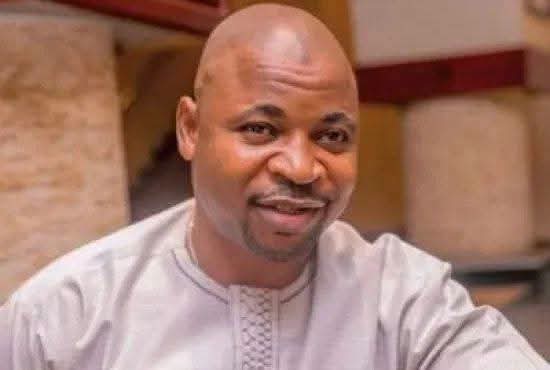
 Keji Mustapha
By Isiaka Mustapha, CEO/Editor-In-Chief, People’s Security Monitor
The bitter truth about Nigeria’s insecurity is that it is not the handiwork of armed groups alone but also the product of a political class that thrives on chaos. Politicians deliberately manipulate ethnic and religious fault lines, turning diversity into division, and stoking violence, displacement, and mistrust. Nigeria’s insecurity, therefore, is not just the failure of guns and bullets—it is, at its core, the failure of politics.
Politicians across different regions routinely instrumentalize ethnicity and religion as tools of political mobilization. Nigeria has more than 250 ethnic groups and is roughly split between Islam and Christianity. Instead of using this diversity as a strength, many political actors amplify differences, portraying rival groups as threats. This has been particularly evident during election seasons. For instance, pre- and post-election violence in 2011 claimed over 800 lives in the north and displaced more than 65,000 people, according to Human Rights Watch. Much of that violence was triggered by politicians who used inflammatory language and mobilized thugs to enforce their dominance.
Religious bigotry has also been weaponized. Boko Haram’s insurgency, which has killed over 35,000 people and displaced more than 2 million since 2009, began as a fringe sect but grew into a large-scale conflict partly because politicians in Borno and Yobe initially courted the group for political advantage before losing control. Similarly, in the Middle-Belt, political elites have often framed resource conflicts between herders and farmers in religious terms, “Muslim herders versus Christian farmers” even though the root issues are competition over land and climate stress. This framing has escalated violence, with the Armed Conflict Location & Event Data Project (ACLED) estimating that farmer-herder clashes alone killed over 3,600 people between 2018 and 2022.
Beyond ethnicity and religion, politicians exploit insecurity for financial and electoral gain. For instance, during the 2019 elections, the Nigeria Civil Society Situation Room documented 626 deaths linked to election-related violence. Many of those acts were perpetrated by armed groups sponsored by politicians who later abandoned them. Once elections ended, these gangs morphed into kidnapping rings or bandit networks, feeding the larger insecurity problem. Similarly, the Niger Delta militancy of the 2000s was worsened by politicians who armed youths to rig elections, then left them with weapons and grievances. This cycle repeats across regions.
Obviously, the multiplier effects are staggering. Insecurity linked to political manipulation reduces investor confidence, cuts GDP growth and bleeds government revenue through security spending. According to SBM Intelligence, ransom payments for kidnapping alone were worth ₦653.7 million in 2021, and by 2024, broader reports estimated over ₦2 trillion lost to ransom payments. These figures underline how insecurity has become both a criminal enterprise and a political bargaining chip.
The solutions require more than just military action; they demand political courage. First, Nigeria needs stronger laws against hate speech and political incitement. Politicians who deploy ethnic or religious rhetoric that sparks violence must be prosecuted, not protected by immunity. Secondly, electoral reforms must cut off the incentive for politicians to arm thugs. A robustly enforced campaign finance law, coupled with biometric voting systems, can reduce the need for politicians to rely on violence to secure office. Thirdly, there must be community-driven peacebuilding. Religious and ethnic leaders should be empowered with resources to counter divisive rhetoric, especially in flashpoint states like Plateau, Kaduna, and Benue.
Finally, accountability is crucial. Security reports have long shown links between political elites and armed groups, yet prosecutions are rare. Unless there is a deliberate move to expose and punish these connections, politicians will continue to manipulate insecurity for gain. Nigeria’s military and police cannot win the war against insecurity if the political class continues to fuel the fire.
In sum, the connection between Nigerian politics and insecurity is undeniable. Ethnic sentiment, religious bigotry, and political thuggery have all been used as tools by the elite, escalating violence and weakening national unity. Until Nigeria severs this connection by enforcing accountability, reforming elections, and uniting communities, insecurity will remain both a political weapon and a national tragedy.